
It wasn’t long ago that Tatyana Kim, founder of the online retailer Wildberries and Russia’s richest woman, was speaking exuberantly about her company’s steady growth. Wildberries had launched a slew of new projects, and Kim reflected in an interview that everything she does in her role “fills me with such immense energy and happiness.”
That confident tone, voiced just before a major Russian economic conference in June, makes the developments of the past few days even more shocking.
After being slapped with European Union sanctions last week, Kim abruptly resigned from the company she helped build, shaking up the leadership of Russia’s largest online retailer. The move caps off a precipitous fall for someone who was until recently at the top of the Russian business world.
Who is she?
Kim, 51, was born in Grozny, the capital of the North Caucasus republic of Chechnya, in 1975 to an ethnic Korean family. Her father was an engineer and her mother was a teacher. When she was young, they moved to Moscow.
Before she launched her career in business, Kim worked as a teacher. Then, in 2004, she and her now ex-husband, Vladislav Bakalchuk, founded Wildberries as a way to bring the convenience of retail shopping into people’s homes.
“The idea was born out of my own need and has proven useful to hundreds of thousands of women in the same situation,” Kim said in an interview quoted by the RBC news outlet.
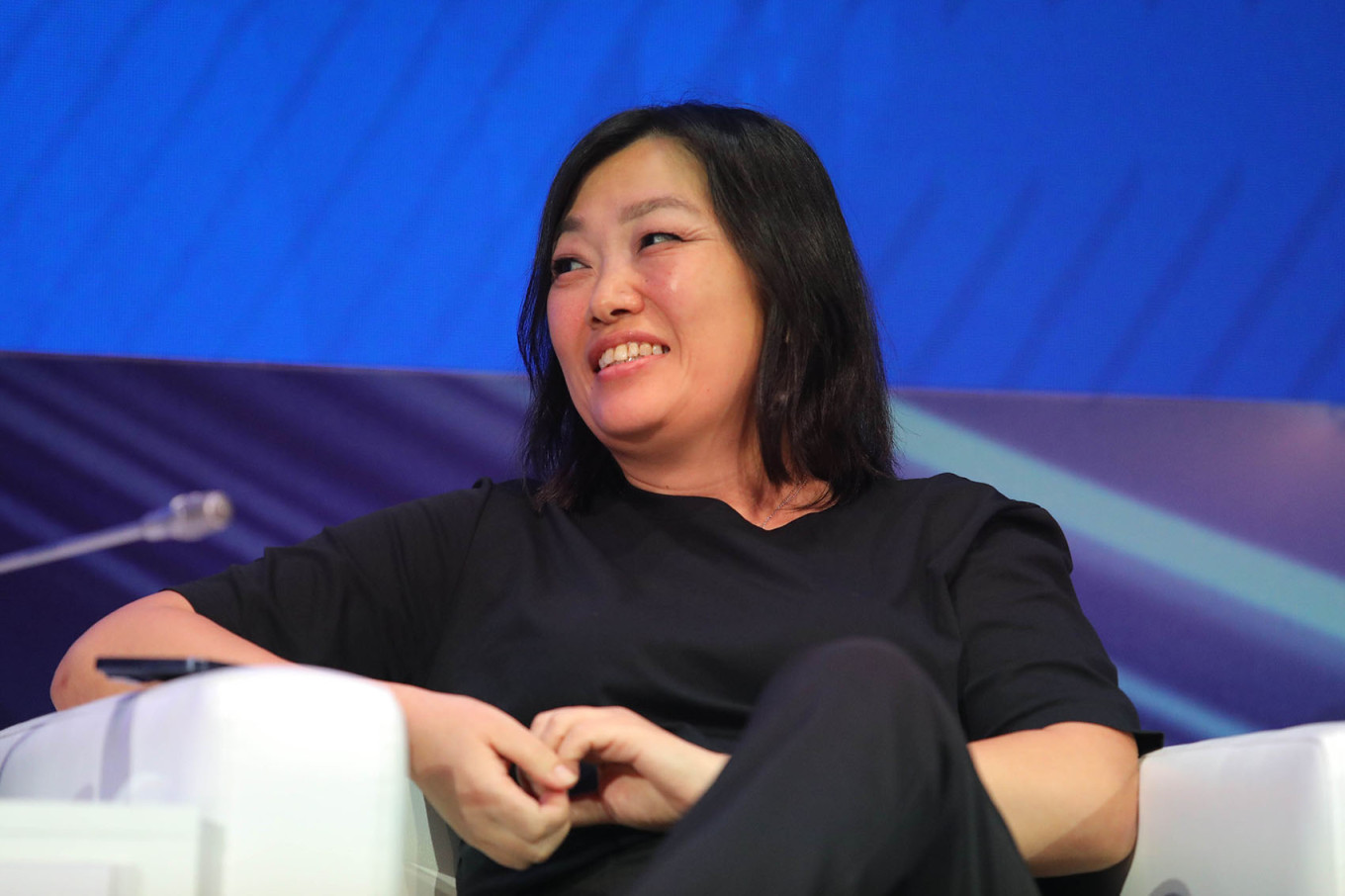 Tatyana Kim.
Arthur Novosiltsev / Moskva News Agency
Much like the trajectory of Amazon, a company to which it has drawn comparisons, Wildberries’ growth exploded. By the mid-2010s, it had become Russia’s largest online shopping destination, wrestling for control of the market with major competitor Ozon, and one of the country’s most valuable companies of its kind.
In 2024, Forbes estimated that Wildberries generated $9 billion in revenue, a number that may have reached as much as $15 billion the following year if unconfirmed reports are to be believed.
The concept of Wildberries is familiar to anyone who has ordered from Amazon before: customers navigate a website full of beauty products, home goods, clothes, books, toys and anything else they could want. Sellers, in turn, make money by listing their products in their digital “stores.”
In recent years, the company has also grown into the travel services, digital banking and social media spaces, and expanded into other countries. While these locations are predominantly in former Soviet republics, Wildberries services also cropped up in France, Italy and Spain. After the invasion of Ukraine, its operations in Europe ceased.
Kim grew fabulously wealthy from her business ventures. She was reportedly worth $8.1 billion as of early 2026, according to Forbes.
War and turmoil
The launch of Russia’s full-scale invasion of Ukraine in 2022 coincided with rising troubles for Wildberries, not all of it to do with the war.
Notably, in 2024, a messy public split with Bakalchuk and disagreement over how to split the ownership of Wildberries culminated in a dramatic shootout at the company’s headquarters.
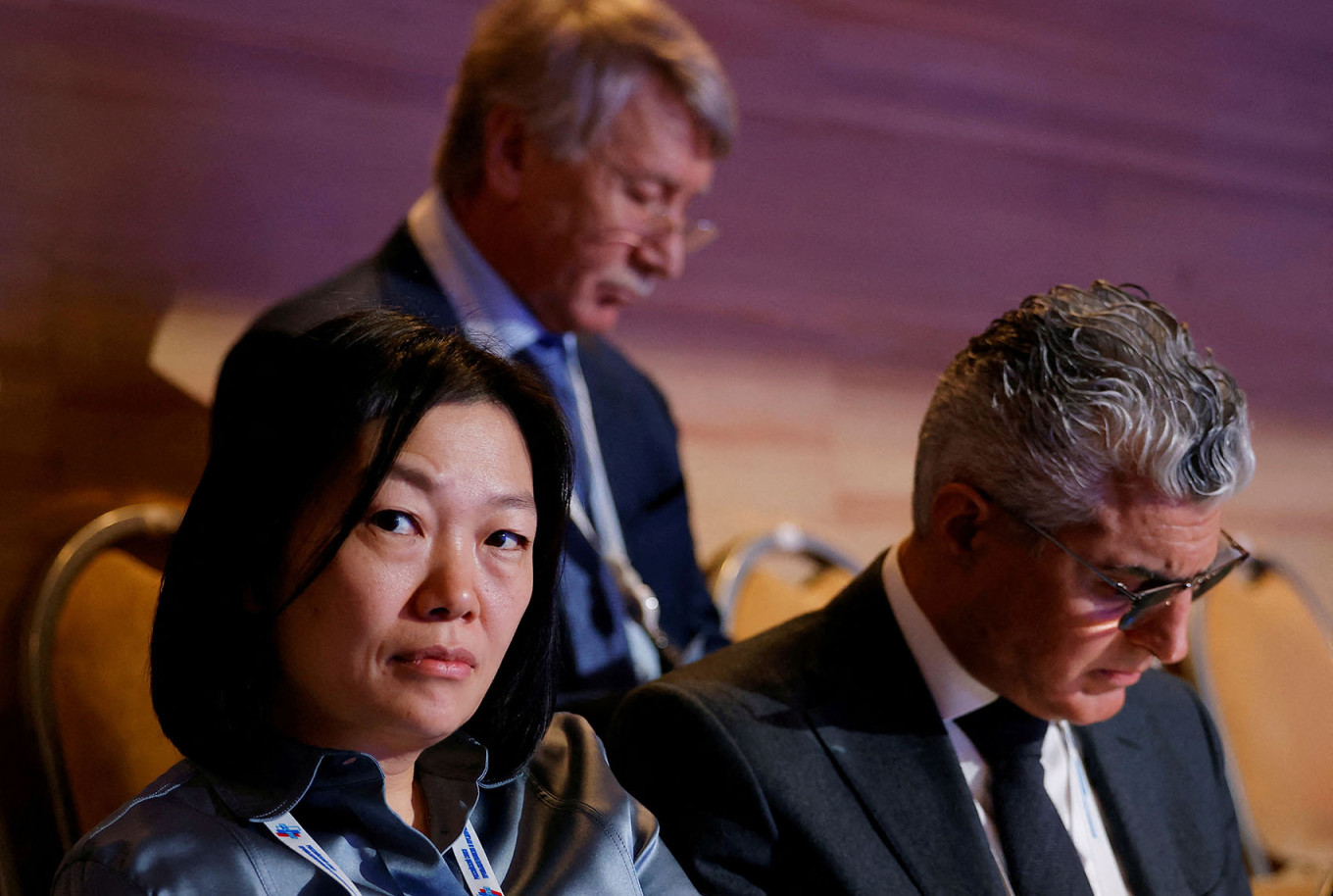 Tatyana Kim attends the Congress of the Russian Union of Industrialists and Entrepreneurs in Moscow.
REUTERS / Maxim Shemetov
Bakalchuk, accompanied by two so-called “colleagues,” claimed he came to the building looking to discuss the construction of new warehouses, but instead his men got into a fight with security guards, killing two and wounding seven others.
Chechen leader Ramzan Kadyrov also got involved in the spat, declaring a “blood feud” against two lawmakers he claimed were trying to sabotage Bakalchuk by supporting a Wildberries merger with outdoor advertising group Russ.
Kim released a tearful video explaining her confusion at the series of events.
“Vladislav, what are you doing?” she said. “How will you look into the eyes of your parents and our children? How could you bring the situation to such absurdity?” It was at this time that she reverted back to using her maiden name.
Kim ultimately came out on top, but the episode marked the beginning of a run of bad news.
This year, Wildberries came under pressure from a different source: the war in Ukraine. Kyiv started striking company warehouses over the summer as part of a campaign to disrupt supply lines for so-called dual use goods — components that can be used in the production of weapons, namely drones, that Ukraine said Wildberries was helping to distribute.
Kim and the Kremlin have denied that Wildberries is involved in the invasion of Ukraine.
The effects have been disastrous. Warehouse workers were killed, sellers lost hundreds of thousands of rubles’ worth of goods and more than a fifth of the company’s total warehouse space was destroyed. An industry source told independent outlet The Bell that Wildberries would likely remain unprofitable for years as a result of the attacks.
Kim tried to provide a steady hand through the turmoil. She told sellers that while the company was not required to compensate them for their damaged goods, she would provide some financial assistance to cover their losses. She also said she would travel across Russia to meet with sellers and reportedly considered opening new warehouses in other countries that would be safe from drone attacks.
But the pressures of being thrust into the international spotlight appear to have proven too much. On Nov. 16, the EU added Kim to its list of sanctioned individuals, claiming that she supported and was benefitting from the Russian government and military in her role as head of Wildberries. Kim immediately resigned and was replaced by Alexei Kulikov as CEO.
The Council of Europe did not respond to a request for comment on why it had only decided to sanction Kim now.
The development throws Kim’s future into doubt. Wildberries has been Kim’s sole focus and source of wealth, and whether or how she can pivot is uncertain.
What makes that prospect even more difficult is how intertwined her identity is with the company she helped build.
“The last year has been a period of transformation, both for me and for the company,” Kim said in an interview with the business newspaper Vedomosti last year. “In fact, the company has long been an integral part of me, and it’s hard to say where I end and Wildberries begins.”
We are facing unprecedented challenges. Russia's Prosecutor General's Office has designated The Moscow Times as an "undesirable" organization, criminalizing our work and putting our staff at risk of prosecution. This follows our earlier unjust labeling as a "foreign agent."
These actions are direct attempts to silence independent journalism in Russia. The authorities claim our work "discredits the decisions of the Russian leadership." We see things differently: we strive to provide accurate, unbiased reporting on Russia.
We, the journalists of The Moscow Times, refuse to be silenced. But to continue our work, we need your help.
Your support, no matter how small, makes a world of difference. If you can, please support us monthly starting from just $2. It's quick to set up, and every contribution makes a significant impact.
By supporting The Moscow Times, you're defending open, independent journalism in the face of repression. Thank you for standing with us.