
Two of the most interesting new electric bicycle companies in the world made headlines on the same day last week, and for two very different reasons.
Amflow, the electric bicycle brand that emerged from the same engineering ecosystem responsible for DJI’s revolutionary Avinox drive system, just launched its first commuter e-bike to widespread acclaim. Meanwhile, ALSO, the high-tech electric bicycle startup spun out of Rivian, announced that it was halting deliveries of its futuristic TM-B electric bicycle amid mounting software problems.
Both companies set out to build something arguably similar: a premium, high-performance electric bicycle that uses sophisticated technology to make riding easier, more enjoyable, and more practical. Both have deep engineering roots and were incubated by successful technology companies. And both have developed impressive proprietary systems that set their bikes apart from the competition.
But their dramatically different launches offer an interesting lesson about the difference between innovation and execution, and which has proven to be more successful in the real world.
 Amflow’s new UE line of commuter e-bikes was launched last week
Amflow: Making the bicycle better
Amflow’s story actually begins before the brand launched its first electric mountain bike.
DJI, the Chinese drone giant, had spent years perfecting the art of building small, lightweight, powerful electric motors, sophisticated electronic controllers, and advanced battery management systems. Those are all technologies that translate remarkably well to electric bicycles, even if the applications are quite different.
That expertise helped give rise to the Avinox e-bike drive system, which quickly earned a reputation as one of the most impressive electric bicycle drivetrains on the market. The mid-drive motor and control system rapidly ate away at the huge market share long held by Bosch and other leaders.

The motors offered an almost ridiculous amount of power in a lightweight package, paired with sophisticated sensors and software that delivered smooth, natural-feeling pedal assistance. The system was also designed as a tightly integrated ecosystem, with displays, controllers, batteries, and motors working together.
Amflow’s first electric mountain bikes demonstrated just how well that technology could work in the real world.
And now, with the launch of the new Amflow UE commuter series, the company is taking that proven technology and applying it to an entirely different kind of riding.
 Amflow’s new UE commuter series applies the brand’s mountain bike expertise to a city-focused ride
The new bikes bring Avinox’s powerful pedal assistance and intelligent electronic controls to a more practical urban platform, adding commuter-focused features designed to make everyday riding more convenient.
There’s plenty of proprietary technology here, but perhaps the most important thing about Amflow’s approach is what the company didn’t reinvent.
The bikes still fundamentally work like bicycles.
You pedal, a conventional mechanical drivetrain transfers that power to the rear wheel, and an electric motor provides assistance. It’s the same basic arrangement that has worked on electric bicycles for decades, just refined with much more advanced engineering.
Amflow didn’t need to fundamentally change the bicycle to make it feel futuristic. Instead, the company focused on making the familiar bicycle experience better.
And while the new commuter models are still too fresh to judge their long-term reliability, early impressions have been overwhelmingly positive. That’s an encouraging start, especially considering the company’s already established reputation in the demanding electric mountain bike market.
 ALSO’s TM-B electric bicycle is perhaps the most innovative e-bike we’ve seen launched this year
ALSO: Reinventing the bicycle itself
ALSO, on the other hand, took a dramatically different approach.
The company emerged from Rivian, the American electric vehicle manufacturer known for its technologically advanced electric trucks and SUVs.
Like DJI, Rivian has extensive experience developing sophisticated electric drivetrains, battery systems, power electronics, and software. And like Amflow, ALSO wanted to bring that expertise to a new generation of electric bicycles.
But instead of using those technologies to improve a conventional bicycle, ALSO decided to rethink the entire machine.
The company’s TM-B electric bicycle uses a pedal-by-wire system, meaning the pedals aren’t mechanically connected to the rear wheel. Instead, pedaling turns a generator that sends data signals and power through an electronic system, while software determines how the rear motor responds.
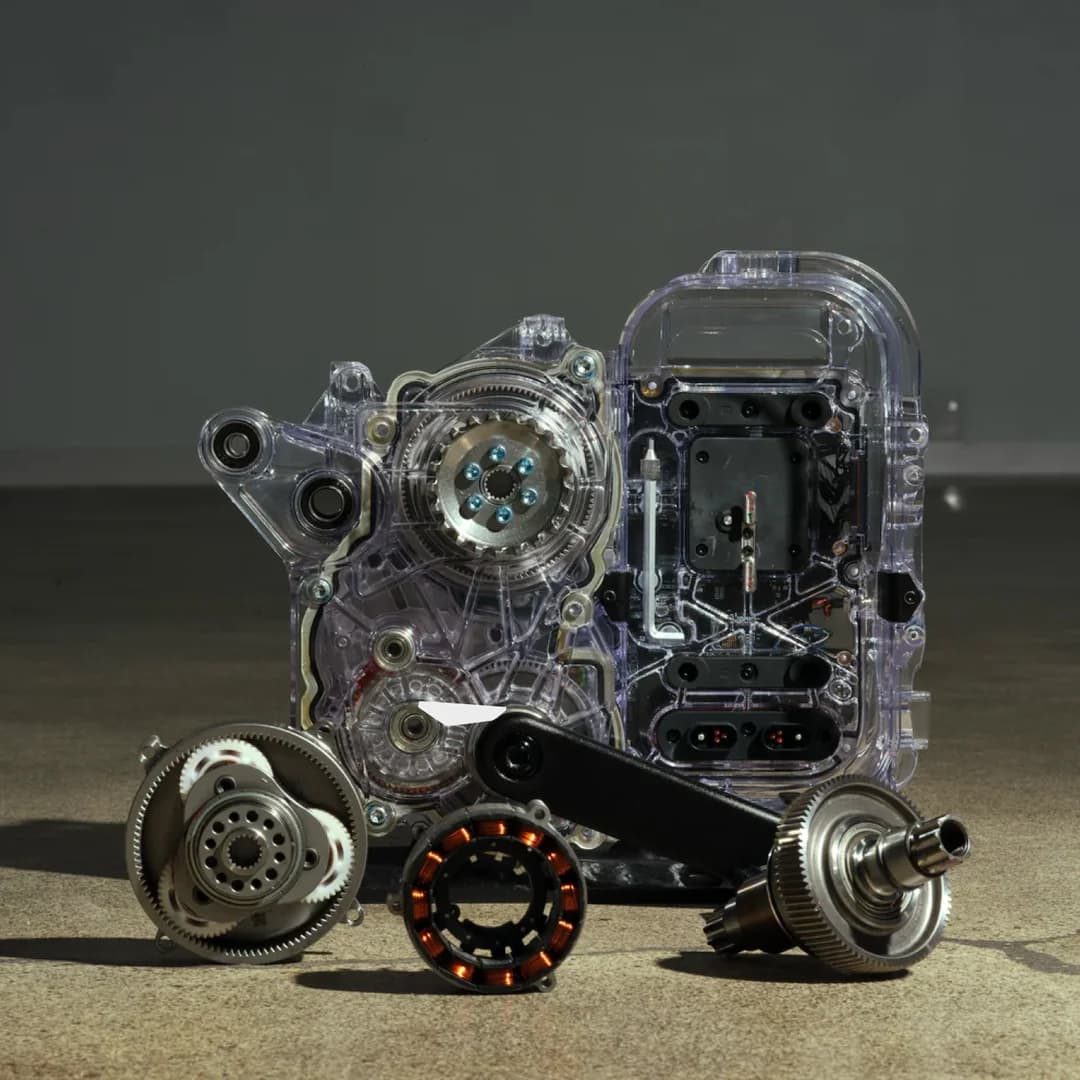 ALSO’s pedal-by-wire system is a fascinating marvel of engineering
Pedal-by-wire systems have some genuine potential advantages. They can eliminate traditional chains, belts, derailleurs, and other mechanical drivetrain components, which has helped land them on many unconventional e-bikes such as extremely long cargo e-bikes and truck-like electric bicycles that would otherwise require ridiculously long chain runs.
They can also allow engineers to completely customize the relationship between pedaling effort and motor response, creating riding experiences that wouldn’t be possible with a conventional bicycle drivetrain.
But there’s a catch. When you replace a relatively simple mechanical system with a sophisticated electronic one, you’re also introducing a lot more opportunities for things to go wrong.
And unlike a conventional bicycle, where many drivetrain problems can be diagnosed and repaired with basic tools, a highly proprietary software-defined bicycle can become much more dependent on its manufacturer to keep it running.
That’s not inherently a bad tradeoff. Modern electric cars have demonstrated that software-defined vehicles can offer tremendous benefits. But it puts enormous pressure on the manufacturer to get the hardware, software, and integration right.
Unfortunately, ALSO’s early rollout suggests that the company hasn’t quite managed that yet.
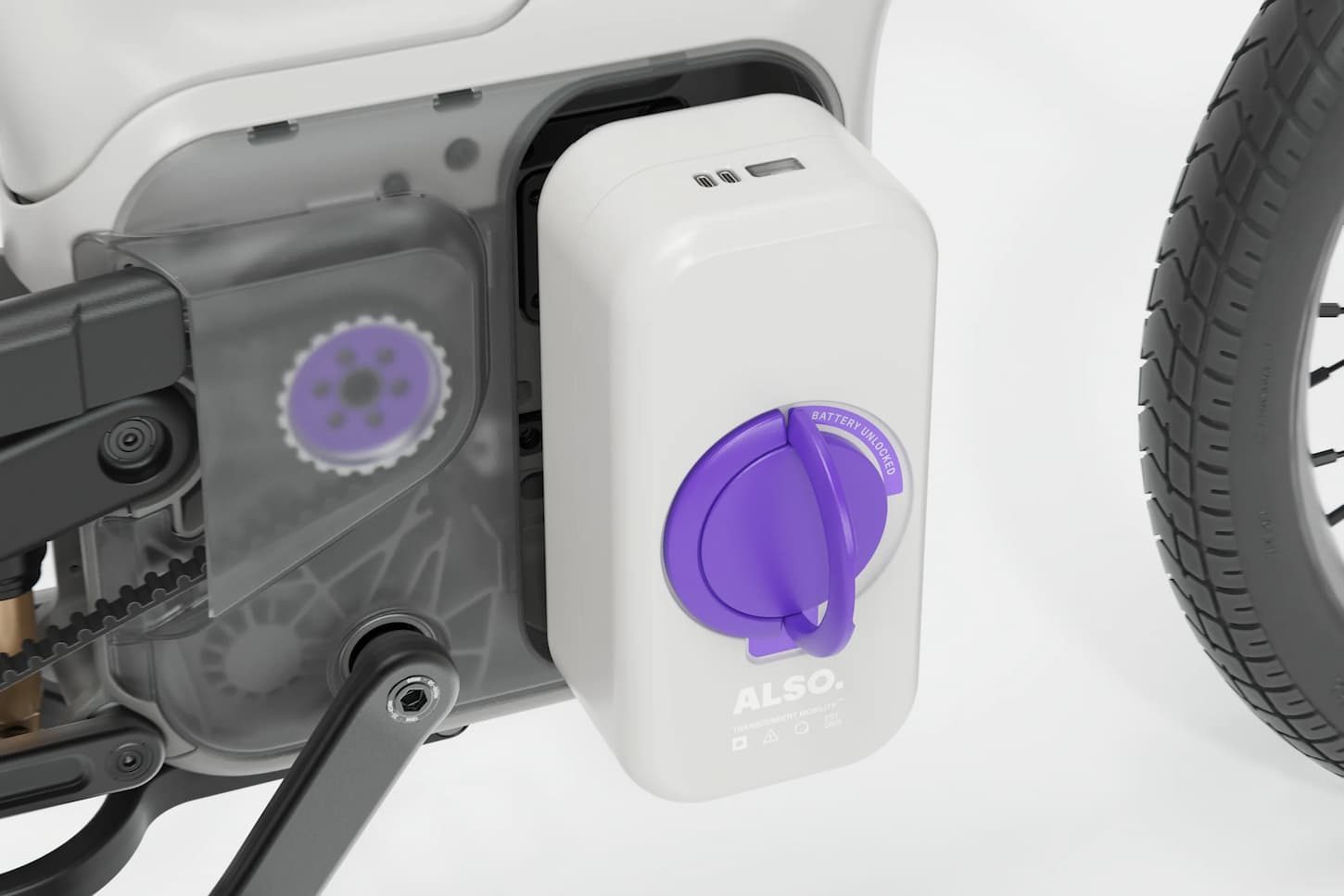
Two very different launches
The contrast between the two companies became particularly striking last week.
Amflow unveiled its new commuter models, building on the reputation of its successful electric mountain bikes and earning enthusiastic early reviews.
ALSO, meanwhile, confirmed that it was pausing deliveries of its TM-B electric bicycle due to software-related issues. That’s on top of earlier delivery delays and reports of customers having to send their new ALSO TM-B bicycles back for repairs.
We’ve also previously reported on some unusual charging and discharging behavior with the TM-B, raising questions about how the bike’s sophisticated electronic systems were managing energy. Those concerns now look particularly relevant in light of the company’s latest announcement.
To be fair, we don’t know how widespread the problems are across ALSO’s delivered bicycles, and it’s entirely possible that the company will resolve these issues relatively quickly with updates on delivered bikes and reflashing software on bikes yet to be shipped.
Nor should we assume that Amflow’s new commuter bikes will be trouble-free simply because their initial reviews are positive. Long-term reliability is something that can only be established over time. But the difference in their respective launches is hard to ignore.
Both are examples of tech-focused startups attempting to reinvent the future of e-bikes. One company is expanding its lineup after successfully establishing its technology in the market. The other is struggling to get its first product consistently into customers’ hands.
And that brings us to what I think is the most interesting part of this story.
Innovation is only half the battle
There’s a fundamental difference between developing impressive technology and successfully turning that technology into a dependable consumer product.
Both Amflow and ALSO have accomplished the first part.
The engineering behind the Avinox drive system is genuinely impressive, and the TM-B’s pedal-by-wire architecture is one of the more ambitious attempts to rethink the electric bicycle in recent years.
But Amflow appears to have taken a more measured approach to bringing that technology to consumers.
The company first developed and refined a sophisticated electric bicycle drivetrain, proved it in the demanding electric mountain bike market, and then adapted it to commuter applications.
ALSO attempted something much more ambitious right out of the gate: launching an entirely new bicycle architecture with numerous interdependent proprietary systems.
Neither approach is inherently wrong. In fact, if nobody ever attempted the latter, we’d probably miss out on some genuinely revolutionary products. But there’s a reason that so many successful technological innovations are evolutionary rather than revolutionary.
 Two very different takes on physical design
Sometimes the smartest engineering decision isn’t figuring out how to replace something that already works. It’s figuring out how to make it work better.
And there’s a certain irony in the fact that Amflow’s new commuter bike looks relatively ordinary, yet appears to deliver an extraordinary riding experience.
ALSO’s TM-B, meanwhile, looks like something from the future, but its early ownership experience has been considerably less impressive.
Electrek’s Take
I want to be clear that I’m not rooting for or against either company here.
Quite the opposite. Both ALSO and Amflow are working to accelerate the state of the industry. I’ve been fascinated by the TM-B since it was first unveiled, and I genuinely hope the company succeeds. And Amflow has taken the fresh perspective brought by its parent company, DJI, and turned it into real-world progress. The e-bike industry needs more innovation to help push everyone forward.
I love seeing companies take big swings in the electric bicycle industry, especially when they’re attempting something more interesting than slapping a bigger motor and battery onto an otherwise generic frame.
And I think pedal-by-wire technology has real potential. The ability to electronically control the relationship between pedaling and propulsion opens up fascinating possibilities, even if it also introduces new challenges.
I should also mention that I have not personally ridden either of these bikes, and thus this is analysis from the sidelines. The Amflow UE Carbon was only unveiled a few days ago, though I’ve got one on the way and am excited to begin testing it soon and to report back here on the experience. As for ALSO, the bike was unveiled a year ago, and I was slated to be at the launch for test riding, but barely an hour after I posted an exclusive article revealing that ALSO had accidentally leaked its own images of its yet-to-be-unveiled bike on its website, I received an email uninviting me to the upcoming event and test ride.
So keep in mind that all of this is being said as an analyst with nearly two decades in the e-bike industry and hundreds of different e-bikes under my belt, not from personal experience with either bike model.

But as someone who spends an enormous amount of time riding, testing, and working on electric bicycles, I also appreciate the value of simplicity. A bicycle is an inherently elegant machine. It’s lightweight, efficient, relatively easy to maintain, and remarkably dependable considering how few components it needs to function.
Electric assistance has already made that machine dramatically more useful for millions of people. The question is how much more complexity we should introduce in pursuit of further improvements.
Amflow seems to be asking, “How can we use advanced technology to make riding a bicycle better?”
ALSO seems to be asking, “What if we could completely rethink how a bicycle works?”