On Nov. 27, 1885, an astronomer made the first known photograph of a meteor.
The picture was taken by Austro-Hungarian astronomer Ladislaus Weinek. He captured the trail of the meteor on a photographic plate in the Czech Republic.
The meteor he captured was part of the Andromedid meteor shower. The Andromedids were associated with Biela's Comet, which broke apart in the 1850s.
When Weinek observed the meteor shower in 1885, it was in the middle of a meteor storm. This means that there were way more meteors than usual. Skywatchers could see thousands of meteors per hour.
The November 1872 incidence of the Andromedid meteor shower, as seen over France, in a painting. (Image credit: Alto Vintage Images/Alamy)Why it mattered
Not many stargazers may be be acquainted with the Andromedid meteor shower. What used to be a spectacular annual meteor shower is now hardly even visible.
But in 1885, the Andromedids were an annual treat for skywatchers hoping for a chance to see the remains of Biela's comet (a comet first spotted in 1772 and then found - for the third time - in 1826 by the German astronomer Wilhelm von Biela, from whom it gets its name).
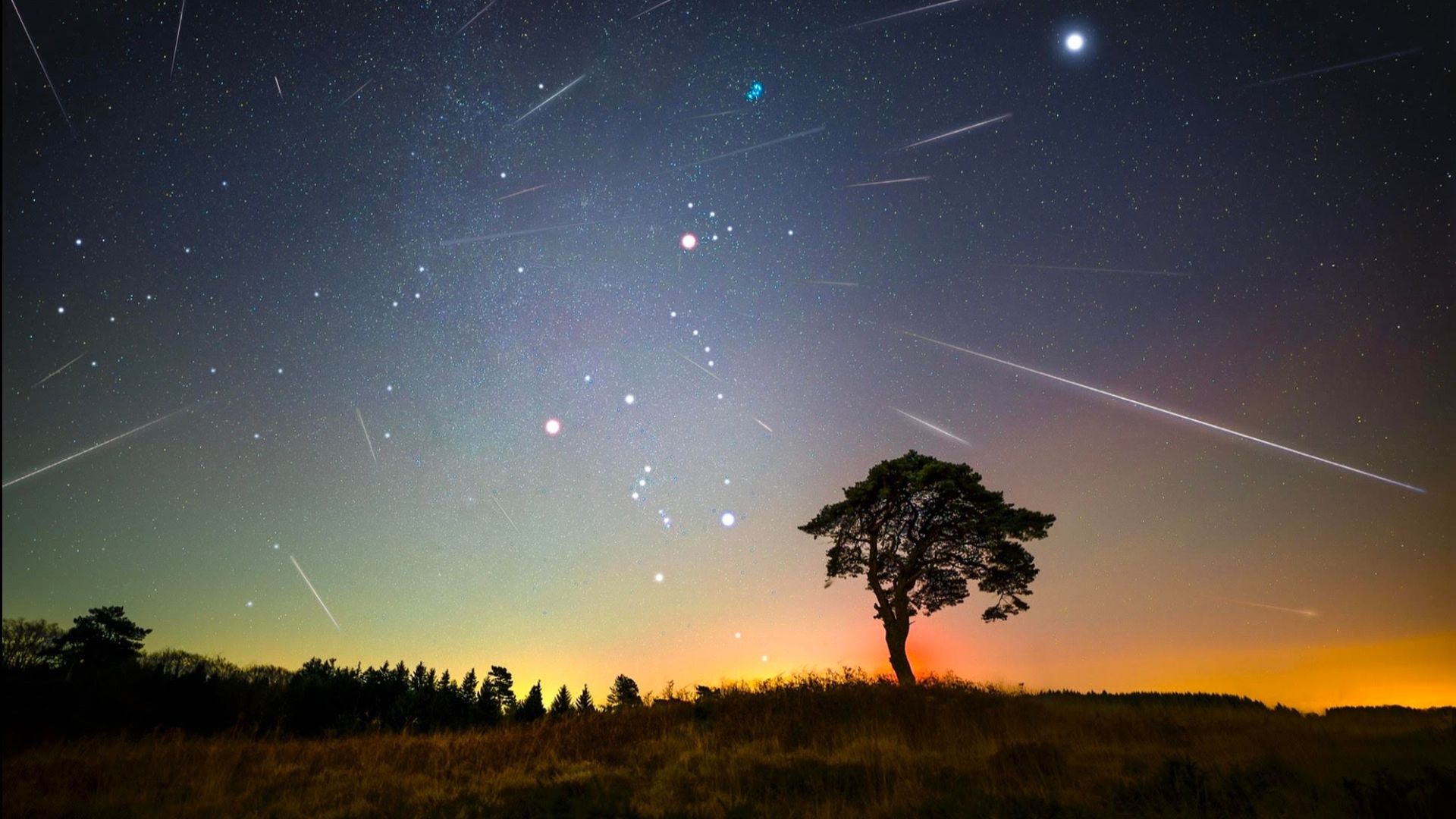
Camera technology has come a long way since 1885, which is good since it is a bit harder to see the Andromedids these days. Instead of photographic plates or digital cameras, astronomers now have to use special tracking equipment to record images of Andromedid meteors.
In 2011, astronomers announced that the meteor shower seemed to be undergoing a resurgence of activity, with 50 meteors per hour, and upticks were expected in 2018 and 2023.
Want more space history? Check out our full On This Day In Space Story archive and watch our On This Day In Space videos on YouTube.