Sony still makes Xperia phones, but buying one in the US now isn’t so seamless.
From our pockets to our living rooms, Sony used to have a presence in most aspects of life. As of late, though, its US mobile store has been reduced to three products, and not one of them is a phone. This is quite different from what we used to see from the maker of the Xperia Z1, an early water-resistant flagship phone that could be charged with a magnetic dock. A somewhat odd convenience feature, maybe, but certainly very Sony-esque.
After its release in 2023, the Xperia 1 V became the last high-end Sony phone sold officially in the US. Its successors have skipped the US market since 2024. While the Xperia line is still active, Americans have to jump through some hoops to buy and use one.
Why Sony struggled to compete
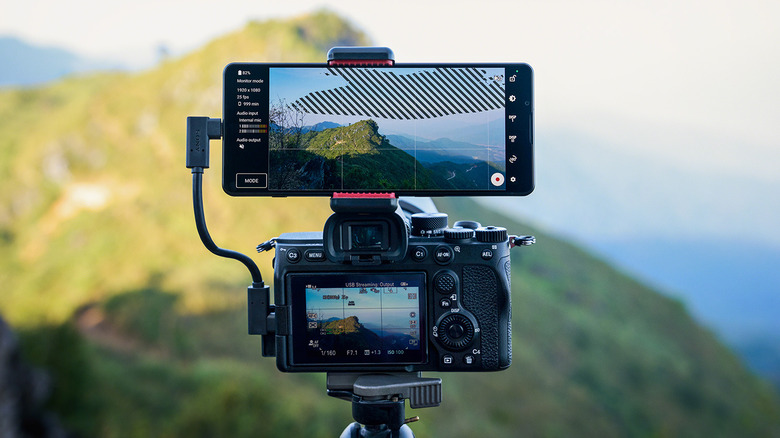
Sony's focus on photography led to extensive manual camera controls, a physical shutter button and the ability to use the Xperia 1 V as a display for compatible Alpha cameras. These features are a huge benefit to photographers, but were difficult to market to someone who only wants to purchase a solid phone when they sign up for a new carrier plan.
Even within Sony's home country, Apple was able to take over 50 percent of all smartphone purchases in Japan in October and November 2014. Back in the States, by the end of 2022, Apple's iPhones had taken up half of all smartphones being used. While Chinese-based companies such as Xiaomi, Oppo and Vivo have been growing their presence on a global scale, competing brands like LG shuttered its smartphone market in 2021.
Sony sold 39.1 million smartphones during the fiscal year ending in March 2015. However, by fiscal year 2020, its sales had plummeted to only 2.9 million. In 2023, Sony released the Xperia 1 V unlocked for approximately $1,400 through authorized US retailers, rather than the three major carriers. Per Counterpoint Research, in Q2 2026, Apple and Samsung accounted for 84 percent of US smartphone shipments, and Sony's share dropped so low it wasn't even listed separately.
Sony wasn't alone. After Microsoft acquired Nokia's phone business in 2014, the Nokia name eventually returned on HMD-made Android phones, although without anything close to its former market dominance. Sony took a slightly less high-profile approach and retained Xperia, although with far fewer buyers.
Xperia phones aren't extinct yet
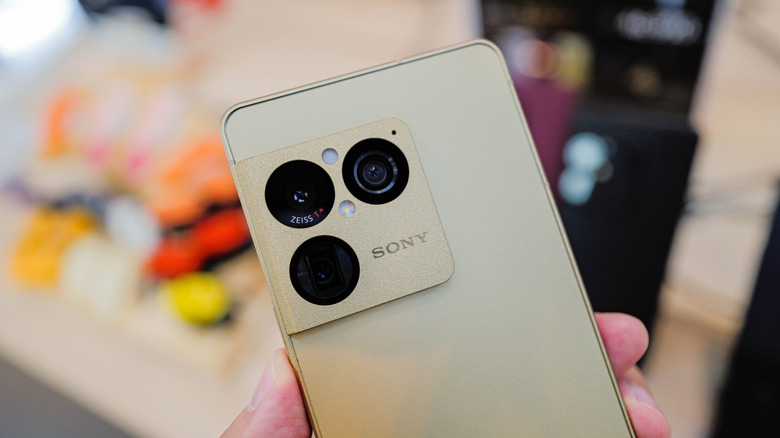
Sony announced the Xperia 1 VIII in May 2026, followed by the Xperia 10 VIII in August. The flagship starts at £1,399 ($1,880) in the UK and includes a dedicated shutter button, a headphone jack and expandable storage through microSD cards. The midrange Xperia 10 VIII is available for £549 ($737). It appears as though Sony did not get the message that all of today's premium phones should have removed some of the most useful features.
The phones are still sold in Japan and selected European countries, including the UK, Germany and France. Sony has not indicated a US release for either model, so Americans who want one will have to import it.
Several US-based Xperia 1 VIII owners on Reddit reported receiving LTE service but not 5G. Another user said they lost 5G on T-Mobile after updating an Xperia 1 VI, despite it working previously. While these are only a few reports and don't prove that all imported Xperias have the same issues, Sony's own carrier documentation shows that network compatibility was already complicated when it still officially sold phones in the US.
Sony has not given up on the Xperia line, and its latest flagship promises up to four Android OS upgrades and six years of security updates. However, it would be quite costly to purchase a flagship phone that may not offer full carrier support just to stay loyal to Sony.