Our new intelligent eyewear can give you fast answers about what you see, all while staying hands free. Learn more about how we’re building eyewear designed to protect the privacy of you and the people around you.
Your browser does not support the audio element.
Shahram Izadi, VP and GM of XR, explains how we are building privacy protections into intelligent eyewear to safeguard both wearers and bystanders. These features include physical indicator lights, automatic face redaction, and strict data encryption to ensure your information remains secure. You can visit the Google Safety Center to learn more about our approach to privacy and how we handle data across our wearable devices.
Shahram Izadi, VP and GM of XR, explains that our intelligent eyewear uses Gemini to help you translate signs, read menus, and navigate your day. We built these glasses with privacy for everyone in mind, including physical indicator lights for bystanders and automatic face redaction. Your visual data is encrypted, never used for ads, and not saved in your history. You also keep full control over your settings and can turn the device off anytime.
Intelligent eyewear with Gemini 1 can help you understand another language, make sense of a confusing parking sign, or know when to take the next step in your recipe, all thanks to its ability to see what you see. And with experiences like Guided Vision in Gemini Live, these glasses can provide audio descriptions to people who are blind or have low vision as they read small print or find everyday items. 2
But when technology can see the world around you, it has a responsibility to the people around you, too.
Throughout our years of research on glasses, we listened closely to wearers, bystanders, and privacy experts. We found that wearers were constantly calculating using glasses like these out-and-about during their day, while bystanders noted concerns about being filmed without their knowledge. This led us to the conviction that privacy protections on glasses must cover both the person behind the lenses and those in front of them.
Privacy designed for both sides of the lens
With this in mind, we set out to design the glasses so that personal help doesn’t come at the expense of anyone’s privacy. Here are some of the key features we’ve built into both the hardware and software to protect wearers and those nearby.
Protecting your visual data
You choose what you share
Privacy protections for those around you
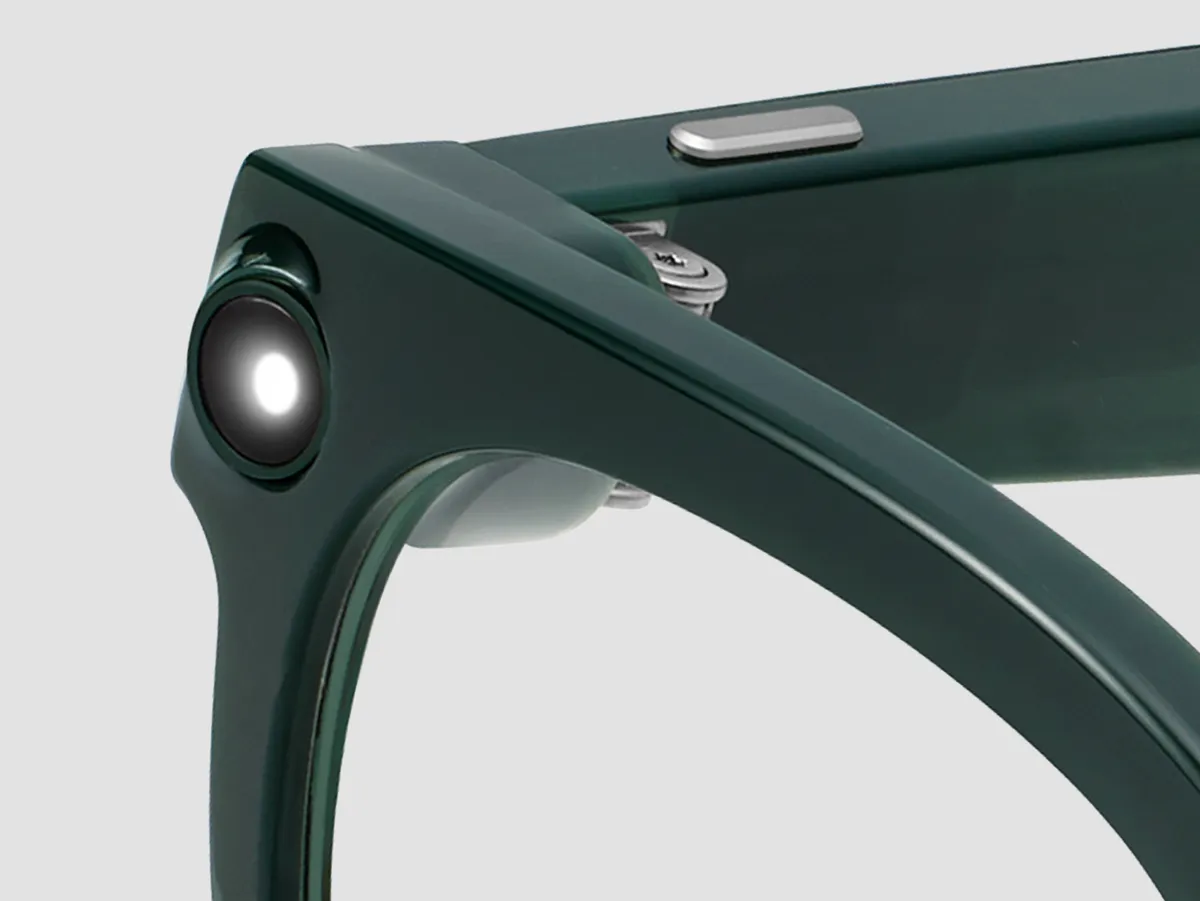
These are a few examples of the privacy features built into the intelligent eyewear experience. Learn more about our approach in the Google Safety Center.
Protections and restrictions across Google
In addition to these features, there are also protections across Google apps and services to deter misuse of the glasses.
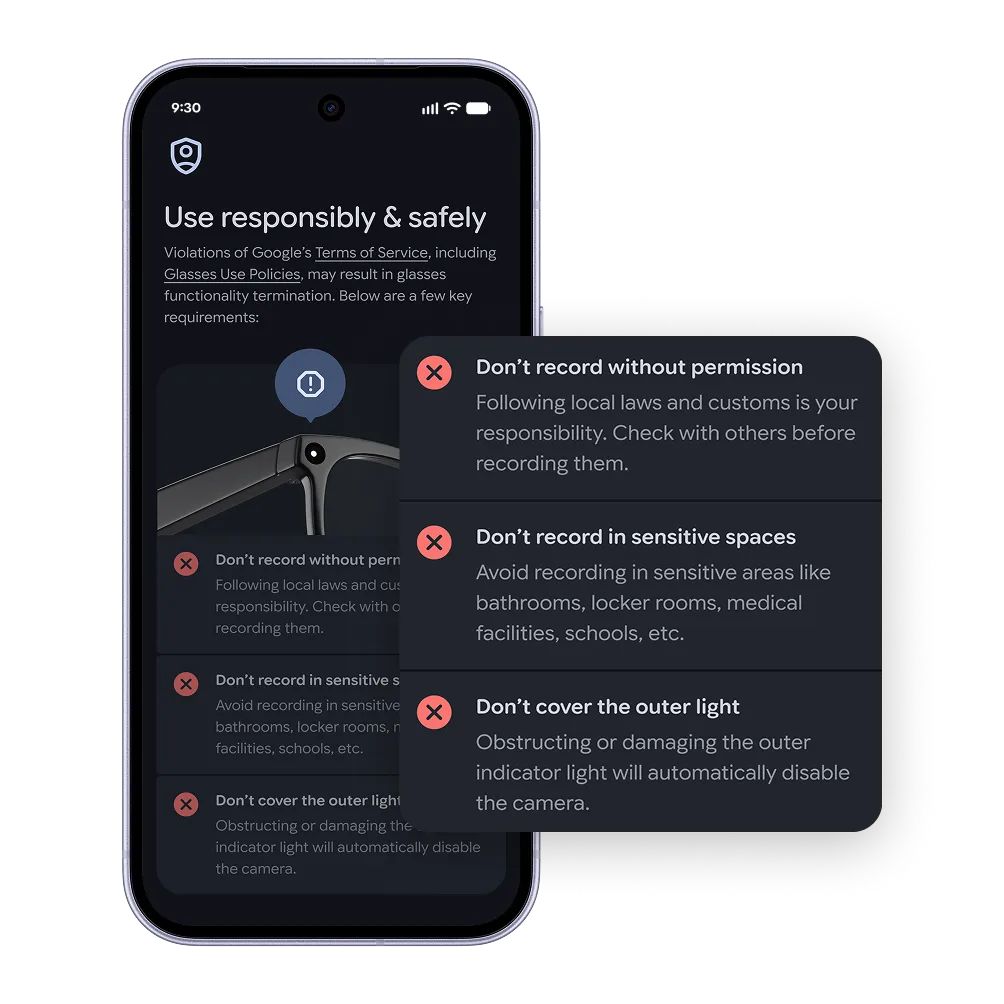
This is just the beginning. Privacy is foundational to how we design, build, and evolve wearable technology. As glasses become more capable, our focus is on creating helpful experiences that make both wearers and bystanders feel protected. We look forward to advancing this work in collaboration with privacy experts and others across the ecosystem to further protections for everyone on both sides of the lens.
Check your inbox to confirm your subscription.
You can also subscribe with a different email address.