Like a budget-minded phoenix, the Bolt is back — but not for long.
 Pros
- Affordable
- Big utility
- Good performance
- No smartphone projection
- Few frills
- Won't be around for long
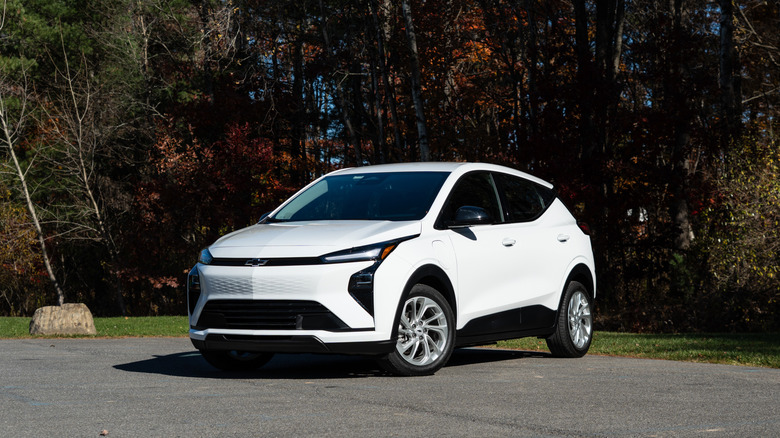
Since its debut a decade ago, the Chevrolet Bolt has offered a value-minded EV in a simple, practical package. Today, at $28,995 (including destination fees), the 2027 edition is the cheapest EV on the American market. It's about $10,000 less than that original Bolt, and a killer deal.
A deal that is, sadly, more or less dead. This stalwart EV is not long for this world, risen from the ashes of a disastrous, multi-billion-dollar recall and eventual production hiatus, but set to return to them in just a few months' time. That's a shame, because this is no-frills, no-emissions motoring at its finest.
History lesson
The current-generation Bolt is the latest in a line of notable, electrified hero cars with a bowtie on the front. Chevrolet got in the game with the EV1 way back in 1996, but it was the 2010 Volt that signaled the brand's intent to find new, affordable ways to propel our cars.
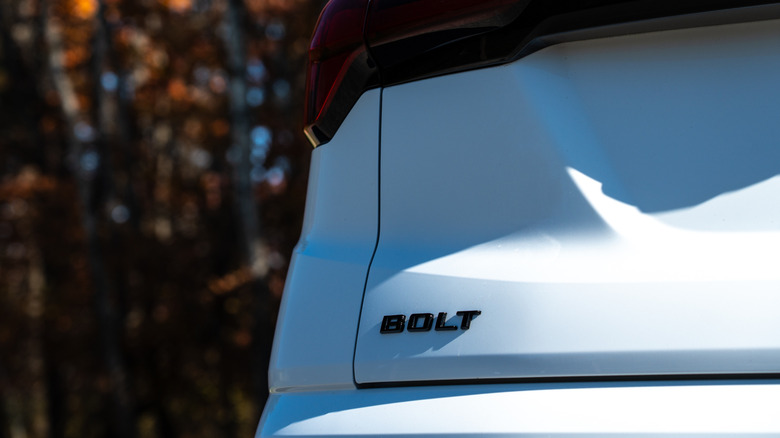
When the Bolt came along in 2016, it not only forced vehicle pundits worldwide to improve their enunciation, but showed that Chevrolet was just getting started on its electrification journey. Starting at under $40,000, the Bolt was a compelling package, and it got even better in 2021 with the release of the second-generation model and its upscaled version, the Bolt EUV.
Then came the fires, the recall, and before long all that brand equity Chevrolet had been building went right out the window.
Current-gen
That stop-sale of the Bolt was a painful thing, so much so that I figured we'd never see another one. But here it is, the 2027 edition, with a few choice updates meant as a strong send-off for this significant but sadly stymied machine.
The biggest upgrade is a wholly new, lithium iron phosphate (LFP) battery pack. It's rated for 65-kilowatt-hours of capacity, providing an EPA-estimated 262 miles of range for the LT trim I tested. It has a single motor that delivers 210 horsepower and 169 pound-feet of torque to the front wheels.
Quickest EV on the road? Hardly. Fun and torquey? Yes indeed, just like the earlier Bolt and even Volt before it.
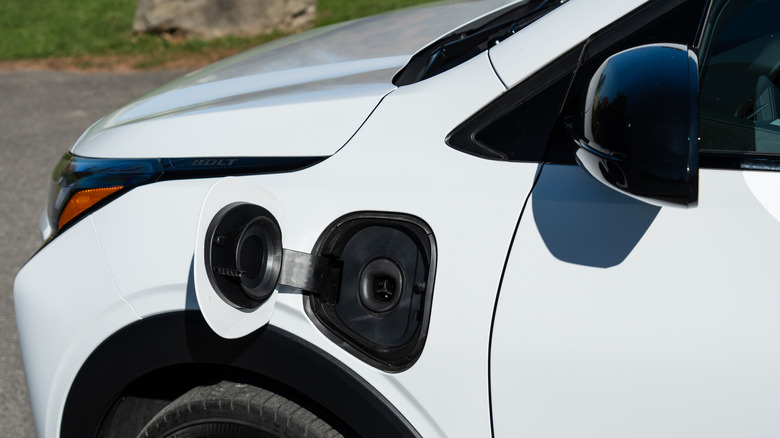
It now charges via NACS port, so Supercharger support is baked in, and it should go without saying that the unfortunate battery woes that plagued the model have now been fixed. But otherwise it's much the same as it was before, in the same hatchback shape that's every bit as practical as the various crossover SUVs swarming dealership lots.
Buttons are still here
The Bolt you see here is about as basic as it gets. Its only option is the $995 Comfort Package, which provides a few extra features like heated front seats and a heated steering wheel, things that, even at this price, feel like they should come standard.
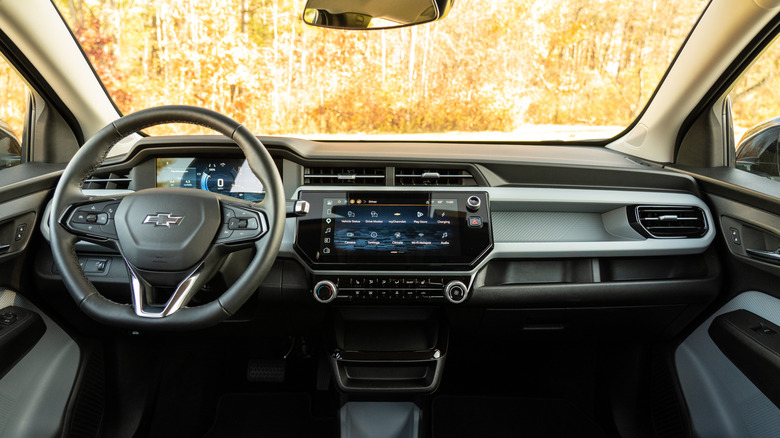
There's not much luxury to be found here. Textured rubber is as good as it gets from a materials standpoint, with hard plastics dominating the interior. That said, I genuinely like the shadows cast by the patterned lines on the inside of the doors and storage cubbies, along with the matching pattern on the upholstery. I just wish the other surfaces weren't all covered with the same pebbled leatherette texture.
There's plenty of room in the second row, and the flat floor means fitting three across is realistic for short distances. Or, drop the 60/40 split rear seat and open up 56.3 cubic feet of cargo space. That's comparable to Volvo's EX40 SUV. With the seats up, you still get 16.2 cubic feet.
Front seating is even more generous. I'm six feet tall with short legs and had plenty of headroom, and while some would lament the lack of a sunroof on my test car, I don't miss it.
On the dashboard, the 11.3-inch touchscreen is of average size for a modern car, but more importantly, the Bolt still offers a good selection of physical buttons for everything from toggling those (extremely toasty) heated seats to enabling the lane-departure system.
Even the steering wheel has real buttons and rollers at play, not the unfortunate capacitive touch controls that have swept the industry. Some will call it all a bit old-school, but I appreciate the tactility.
Software experience
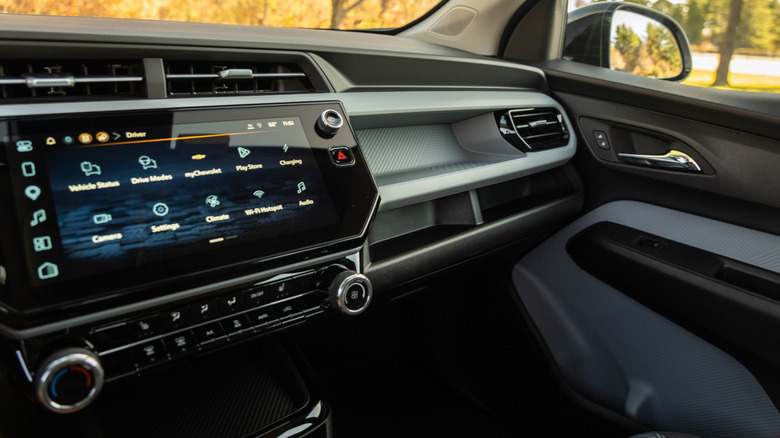
That 11.3-inch touchscreen is running a flavor of Chevrolet's Android Automotive-based infotainment system, which means Google Maps is built right into the car. So too is the Google Play Store, enabling you to install car-optimized apps directly into the dashboard.
What's missing, sadly, is Android Auto or Apple CarPlay. Unfortunately, the Bolt is one of the cars swept up in Chevrolet's curious crusade against phone projection. Want to use a media app that hasn't been updated to run directly in Android Automotive? You're stuck pairing your phone over Bluetooth and streaming the old-fashioned way.
Beyond that frustration, Chevrolet's software is a bit sluggish to use, and while Google's Gemini AI assistant is baked into the dashboard, I still wish I could run it from my phone.
On the go
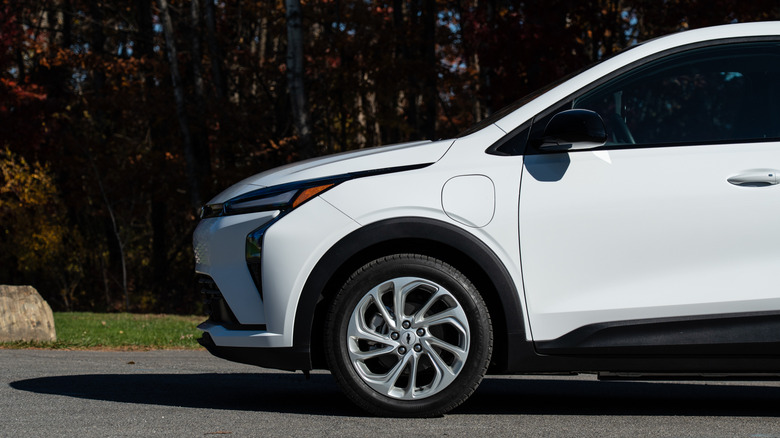
Suffice to say, the stuff running in the dashboard is my least favorite part of the 2027 Bolt. Everything else, though, I really like. You have a few different drive modes here, and while I confess I couldn't really tell the difference between Normal and Sport, either way I found the car punchy and fun zipping from one intersection to the next.
It's no Lucid Air Sapphire, and its acceleration does start to feel flat as you approach highway speed, but the Bolt still has plenty of power for anyone's needs. Likewise, the handling won't win any awards, but it offers reasonably good ride quality for a car in this category. It's perfectly pleasant cruising over road work or highways with separation joints.
The adaptive cruise control works well too, as do the auto-dimming headlights, but the lane-keep assist system is disappointing. Even on well-lit, well-painted roads, the Bolt struggled to identify lane markings. This left the little EV wandering way over the line before the car applied any corrective feedback.
If you want more support, hands-free Super Cruise is available, but it's sadly locked in a big bundle of options, including ventilated seats and automatic wipers, that costs $6,600. That's a shame considering Super Cruise is a standalone option on many other Chevrolets, usually costing less than $2,500.
When it comes to all-important efficiency, this Bolt is again officially rated for 262 miles on a charge. That's a nice boost from the 238 miles the Bolt originally promised. In my mixed testing, with some highways and some secondary roads, I saw 4.0 miles per kilowatt-hour, for a theoretical maximum range of 260 miles on a charge. So, right on the money.
Wrap-up
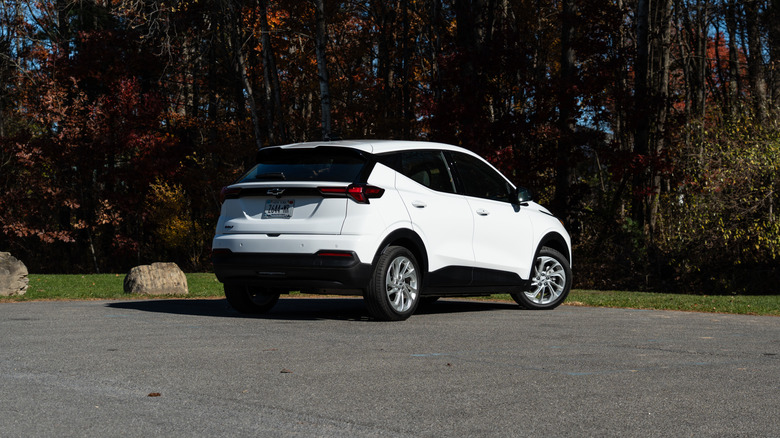
The dodgy lane-keep assist function is frustrating, but the lack of smartphone projection is the big bummer here. Otherwise, the Bolt remains a solid car. Maybe it's because I've driven so many variations of these things over the past decade, but cruising around in the Bolt just feels easy and familiar.
It's comfortable, simple and best of all, it's cheap. The average transaction price of a new car this year is knocking on the door of $50,000. That makes the 2027 Bolt a downright steal. I'm sure that value will continue forward on the second-hand market, which is sadly where you'll have to go if you don't get one soon.
Production of the Chevrolet Bolt ends early next year, which is unfortunate, as in many ways it feels like it's finally hitting its stride. But that doesn't mean the age of the affordable EV is dead. The Slate Truck enters production soon, with Ford's Fathom following not too terribly far behind. The market is about to have even more compelling and cheap EVs, and that's a very good thing.