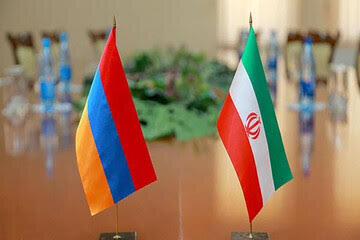
TEHRAN- The 19th Iran-Armenia Joint Economic Committee meeting began in Yerevan with the formation of eight specialized committees, and the two countries are negotiating the expansion of trade, transportation, and energy cooperation.
According to a Mehr News Agency report citing the Planning and Budget Organization of Iran, Seyyed Hamid Pourmohammadi, Head of the Planning and Budget Organization, who traveled to Yerevan at the head of a high-ranking delegation to participate in the 19th Iran-Armenia Joint Economic Committer meeting, referring to Armenia’s approach toward the Islamic Republic of Iran, said: “The Republic of Armenia’s approach, especially during the Ramadan War and the 12-day war, has been a committed one.”
Referring to the holding of the 19th Iran-Armenia Joint Economic Cooperation Committee meeting in Yerevan, the Head of the Planning and Budget Organization stated: “At this meeting, eight working committees have been formed with the aim of developing joint cooperation in the areas of infrastructure, customs, trade, culture and art, health and treatment, industry, mining, and technology.”
He added: “The work of these committees began today, Monday, and will continue until tomorrow afternoon, and at the end, the joint cooperation document of the two countries will be signed.”
Pourmohammadi, referring to the importance of developing transportation infrastructure between the two countries, said: “Currently, the operation to complete the road from Jolfa to Nordooz in Iran is being carried out rapidly, and Iranian contractors have also undertaken the implementation of the Nordooz-Yerevan route on Armenian soil. Also, the construction of a new bridge over the Aras River, the development of border terminals, and increasing the customs capacity of the two countries are among the plans envisioned to facilitate traffic and trade.”
The official further cited the facilitation of truck traffic and an increase in the movement of Iranian and Armenian tourists as other important axes of the negotiations and said: “The development of economic and border cooperation can pave the way for increasing trade exchanges and strengthening communication between the two countries.”
He also announced the expansion of cooperation between the two countries in the energy sector and stated: “Iranian contractors are implementing the electricity transmission line from Armenia toward Iran, and we hope this project will be completed as soon as possible. On the other hand, supplying Armenia’s needed petroleum products from Iran is another capacity for developing bilateral cooperation in the energy sector.”
Referring to Armenia’s mining and industrial capacities, the Head of the Planning and Budget Organization said: “Cooperation in the fields of mining, industry, trade, and technology is among other topics examined in the specialized meetings of this commission, and the two countries can provide the ground for expanding cooperation by using mutual capacities.”
Pourmohammadi, referring to his planned meeting with Nikol Pashinyan, Prime Minister of Armenia, said: “In this meeting, we will discuss important issues of bilateral cooperation, the results of the negotiations of the specialized committees, and solutions for strengthening relations between the two countries. Specialized negotiations with the Deputy Prime Minister and the Armenian head of the joint committee will also be pursued.”
At the end, emphasizing the friendly and historical relations between Iran and Armenia, the Head of the Planning and Budget Organization noted: “With a shared civilizational and cultural background and long-standing neighborliness, the two countries have abundant capacities for developing cooperation, and we hope the results of this commission will lead to operational agreements and hopeful news for economic and trade actors of the two countries.”