
In brief: German Defense Minister Boris Pistorius has announced that Berlin’s exhausted domestic stockpiles mean it can no longer supply additional Patriot air defense systems or missiles to Ukraine without creating unacceptable gaps in its own national security. Pistorius has urged other international allies to step up air defense transfers ahead of a Ramstein-format meeting in mid-November.

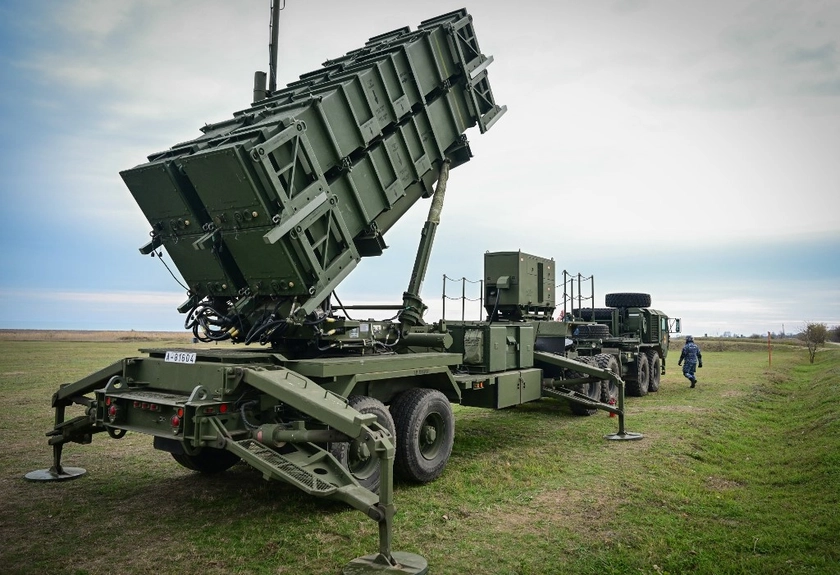
Germany has exhausted its domestic stockpiles and can no longer supply additional Patriot air defense systems or interceptor missiles to Ukraine without compromising its own national defense, German Defense Minister Boris Pistorius has announced.
Speaking to Focus, Pistorius confirmed that Berlin has reached its absolute limit regarding transfers from Bundeswehr arsenals after delivering multiple Patriot batteries and munitions packages to Kyiv over the course of the war.
JOIN US ON TELEGRAM
Follow our coverage of the war on the @Kyivpost_official.
“Everything we provide now, we would not be able to replenish for the time being; this would lead to gaps in our own defense for which we cannot take responsibility. More is not possible right now,” Pistorius stated.
Pistorius emphasized that other international allies and partner nations must assume greater responsibility in supplying Ukraine with advanced surface-to-air missile systems and interceptor stocks.
The defense minister indicated that air defense burden-sharing will form a central priority during the upcoming Ukraine Defense Contact Group meeting in the Ramstein format scheduled for mid-November.
How did Zelensky propose pausing refinery strikes for Patriots?
Pistorius’s confirmation of Germany’s supply constraints coincides with proposals from President Volodymyr Zelensky to secure urgent air defense munitions ahead of the winter heating season.
In a recent interview with Fox News, Zelensky stated that Ukraine would be willing to halt long-range drone interdictions against Russian oil refineries if Moscow suspended attacks against Ukrainian energy infrastructure, or if Washington supplied Kyiv with a dedicated package of Patriot missiles.

ISW Russian Offensive Campaign Assessment, November 7, 2026
“We said that if you want us not to attack Russia’s refineries, they must not attack our energy system,” Zelensky told Fox News, confirming he raised the proposal during discussions with US President Donald Trump and his team.
Zelensky proposed that Washington provide an emergency package of Patriot interceptors covering a single month, noting that Ukraine is prepared to purchase the munitions commercially rather than request them as military assistance.
“Give us this package. We need the package, and you can give us for one month, not for three months,” Zelensky said. “For one month, if you need us not to attack their refineries one month, give me Patriots for one month.”
Asked whether US President Donald Trump might interpret the proposition as diplomatic pressure, Zelensky said he maintained direct and transparent communication with American interlocutors.
Ukraine’s proposed missile swap mechanism
The acute deficit in European stockpiles also follows Zelensky’s announcement of an emergency “queue-swapping” mechanism to acquire between 10 and 30 interceptors from partner nations’ active inventories.
Speaking to Ukrainian journalists during a briefing in Istanbul, Zelensky explained that Ukraine aims to borrow operational missiles from allied inventories, guaranteeing replenishment once new missiles roll off American production lines.
“Several times during this war, during various dialogues, we executed an operation where you swap queues,” Zelensky explained.
“I will try to do this with certain partners, where against that 500-missile package we could take 10, 20, 30 missiles somewhere, sign appropriate guarantees and contracts stipulating that we will later return them from that American package – with some interest, or perhaps without interest.”
The initiative follows the Trump administration’s approval on Oct. 30 of a possible $2.1 billion Foreign Military Sale of 500 Patriot Advanced Capability-3 Missile Segment Enhancement (PAC-3 MSE) interceptors to Ukraine.
However, diplomatic sources confirmed that the contracted interceptors represent newly manufactured hardware with deliveries not scheduled to begin until after 2030, offering zero immediate protection against incoming strikes this winter.
Scale of Russian attacks on the energy grid
The scramble for air defense interceptors comes as Russian forces escalate standoff strikes against Ukrainian civil life-support networks.
Government figures indicate that during the final two weeks of October alone, Russian tactical and strategic aviation executed more than 30 coordinated strikes against electrical generation stations and high-voltage transmission substations.
Zelensky has previously stated that Ukraine requires an operational baseline of at least 100 PAC-3 interceptors per month to establish an effective defensive shield protecting municipal power grids, district heating networks, and high-density population centers against ballistic salvos.
Kyiv Post is Ukraine’s first and oldest English news organization, reporting since 1995. Its international reach – 90% of readers are outside of Ukraine – make it truly Ukraine’s global voice.
Zelensky: Ready to Meet Putin in Turkey, Rules Out Concessions
Ukraine Knocks Out 15 Russian Refineries, $23 Billion in Damage
Kremlin Says Ukraine Peace Talks Hinge on Battlefield, Rejects European Role
China Rejects Ukraine Talks With Trump and Putin

Zelensky: 2 Ways to Halt Strikes on Russia

Zelensky Eyes Missile Loans Against 500 US Patriot Deal
Newly Approved $2.1B Patriot Missile Sale Faces Post-2030 Delivery
