The Swiss luxury group reported stronger-than-expected profits as its jewellery maisons continued to grow and its specialist watchmakers showed signs of recovery.
Strong demand for Cartier jewellery has helped parent company Richemont buck the wider luxury downturn. (Photo: iStock/Robert Way)
Strong demand for Cartier jewellery has helped parent company Richemont buck the wider luxury downturn. (Photo: iStock/Robert Way)
Richemont said strong demand for its jewellery and a recovery in watch sales helped profits jump more than a third as the Swiss luxury group continued to defy a prolonged downturn in the sector.
The owner of Cartier and Van Cleef & Arpels said net profit for the six months to the end of September rose 39 per cent to €2.5 billion (US$2.76 billion; S$3.55 billion), beating expectations. Sales rose 17 per cent organically to €12.3 billion.
The results underscore how Richemont, along with a handful of luxury rivals including Burberry, has managed to outperform in a sector that has been hit by weaker Chinese demand and instability in the Middle East, with a pullback in spending by aspirational shoppers.
Jewellery has been particularly resilient, as wealthy consumers continue to spend on high-end pieces even as demand for luxury handbags and fashion has faltered.
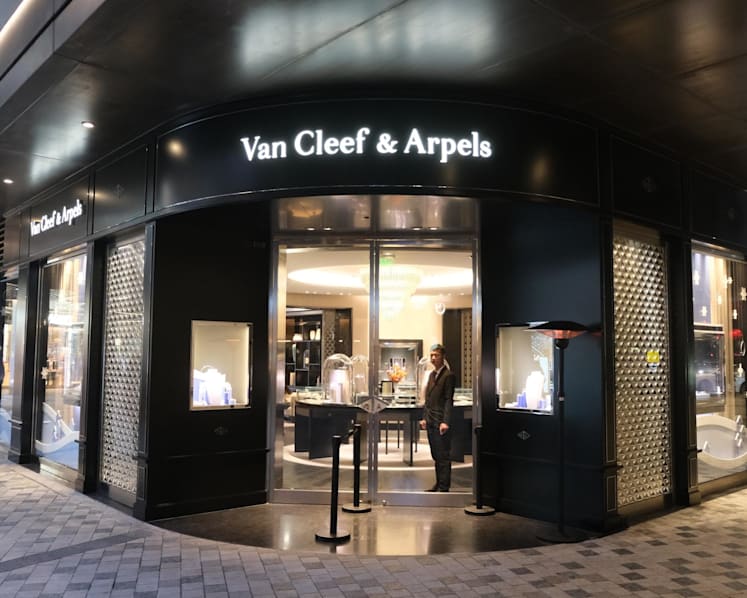 Van Cleef & Arpels is part of Richemont’s jewellery portfolio, which accounts for the bulk of the Swiss luxury group’s revenue. (Photo: iStock/Robert Way)
Richemont’s jewellery businesses, including Cartier, Van Cleef & Arpels and Buccellati, remained the main engine of growth, with sales rising 19 per cent organically to €9.1 billion.
“We see an overall very positive trend for jewellery brands,” said Richemont’s chair Johann Rupert.
Analysts at RBC said the results were “reassuring in a difficult luxury operating environment”, but noted that jewellery sales growth in the second quarter was slightly below expectations.
“Solid margin delivery was tempered by early signs of jewellery growth normalisation,” said Thomas Chauvet, an analyst at Citi.
Richemont’s specialist watchmakers, including Vacheron Constantin and Jaeger-LeCoultre, also showed signs of recovery, with second-quarter sales rising 12 per cent organically, well ahead of analysts’ expectations of 4 per cent.
Japan was the strongest-performing market in the quarter, with organic sales growth of 23 per cent, followed by the Americas at 19 per cent and Europe at 15 per cent.
However, demand in mainland China remained subdued, while sales in the Middle East and Africa fell 7 per cent as the regional conflict weighed on tourist spending.
Rupert declined to comment on Richemont’s potential involvement in the management of De Beers. The luxury group has considered joining a consortium bidding for the diamond producer, which is being sold by mining group Anglo American, according to reports.
Richemont announced earlier on Friday that its results would be delayed following an outage at Microsoft, which has disrupted services to businesses around the world.
By Mercedes Ruehl © 2026 The Financial Times. Additional reporting by Adrienne Klasa.
This article originally appeared in The Financial Times.
Recommended Read

A single handpicked story that we think you shouldn't miss. Just one a day.
Week in Review

Our chief editor shares analysis and picks of the week's biggest news every Saturday.