Behind Mr Edmund Khong's exuberant performances are years of struggles with his health, unhealthy gaming habits and the pressures of running a business.
Children's entertainer Edmund Khong on Nov 7, 2026. (Photo: CNA/Lim Li Ting)
Children's entertainer Edmund Khong on Nov 7, 2026. (Photo: CNA/Lim Li Ting)



Barely a minute into his performance, Mr Edmund Khong had a roomful of children screaming and jumping with excitement.
As the professional entertainer spun plates on the ends of sticks, some children scrambled towards him, eager to grab his props.
The 45-year-old children's entertainer had only just begun his act for a seven-year-old's birthday, but he already had his young audience eating out of his hand.
He put his hat on upside down, drawing peals of laughter, and when he dropped a ball while juggling, the children laughed even harder.
CNA Games
 Guess Word
Crack the word, one row at a time
 Buzzword
Create words using the given letters
 Mini Sudoku
Tiny puzzle, mighty brain teaser
 Mini Crossword
Small grid, big challenge
 Word Search
Spot as many words as you can
Show More
Show Less
Mr Khong was loud, animated and unafraid of making a fool of himself.
At one point, he swapped a juggling ball for an orange before jokingly asking who would clean up the mess – him or the children.
"Me!" the children shouted in unison, their hands shooting into the air.
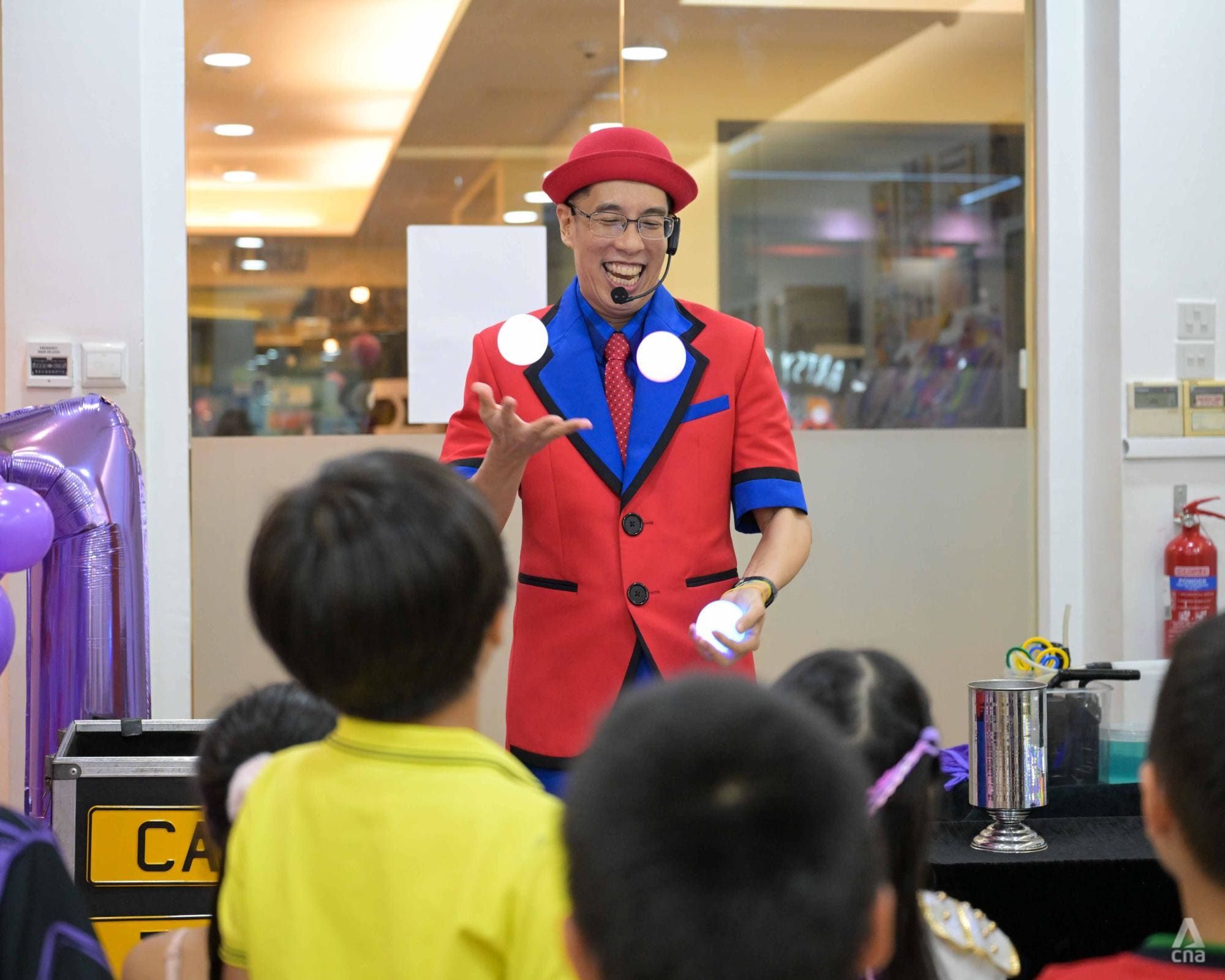 Mr Khong performing at a birthday party for a seven-year-old. (Photo: CNA/Lim Li Ting)
Watching him, it was difficult not to smile and I found myself laughing along with the other adults. The room was chaotic, noisy and, frankly, a little overstimulating, but the children were having the time of their lives.
It was hard to believe that just moments earlier, he had been concerned about whether he could win over the children.
Harder still to imagine that behind this exuberant persona was a man who had once struggled with his health, marriage and the pressures of running a business.
THE MAGIC OF PERFORMING
Mr Khong's fascination with magic and performing began at eight years of age, when he was growing up in a three-room Housing and Development Board flat in Ang Mo Kio.
His father worked as an electrical technician, while his mother babysat children in their family home. Money was tight, and he and his younger brother were allowed to buy toys only about twice a year.
On weekends, while their mother shopped for essentials, the brothers would browse the toy department.
Fascinated by the magic sets on display, he began experimenting with tricks inspired by American magician David Copperfield, often making his own props because buying them was too expensive.
He taught himself through library books and children's television programmes, while practising on the children his mother babysat.
"I've always had to look for ways to entertain these children," he recalled.
"At the same time, I liked magic. I simply put these two together."
His interest in magic stayed with him through school and National Service.
He eventually pursued a history degree at the National University of Singapore (NUS) because it was one of the few subjects at school he had enjoyed and excelled at.
However, even before entering university, he had begun taking magic more seriously, inspired by another American, street magician David Blaine. He taught himself by reading books and watching video tapes.
He began busking along Orchard Road, entertaining passers-by with magic tricks and balloon sculptures. Word spread, and he soon began getting bookings for birthday parties.
His parties were a hit. While he was an undergraduate, he was earning around S$4,000 (US$3,100) a month, performing at five to six birthday parties on the weekends.
With his weekend gigs already bringing in a decent income, he saw little reason to pursue a career related to his degree and registered his entertainment business, Star Dazzle Concepts, shortly after graduating in 2005.
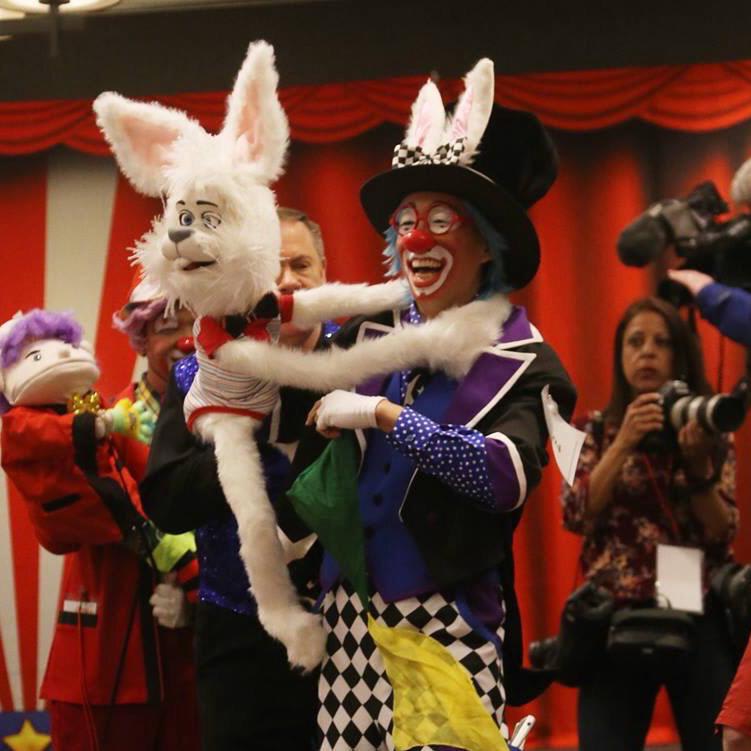 With clowns increasingly associated with frightening characters in popular culture, Mr Khong rarely performs in traditional clown makeup on his face these days. (Photo: Edmund Khong)
THE SERIOUS BUSINESS OF CLOWNING AROUND
Initially, he dreamt of becoming Singapore's own David Copperfield or David Blaine – cool, charismatic performers who could leave audiences awestruck.
"I wasn't as cool as them. I wasn't as handsome as them," he said with a laugh, adding that unlike those of his idols, his magic tricks did not quite elicit the same admiring reactions from girls.
"But I managed to connect much better with children."
This realisation led him to embrace a more comedic style of magic, and in 2005, he travelled to the United States to attend a two-week camp, learning both the craft and business of clowning.
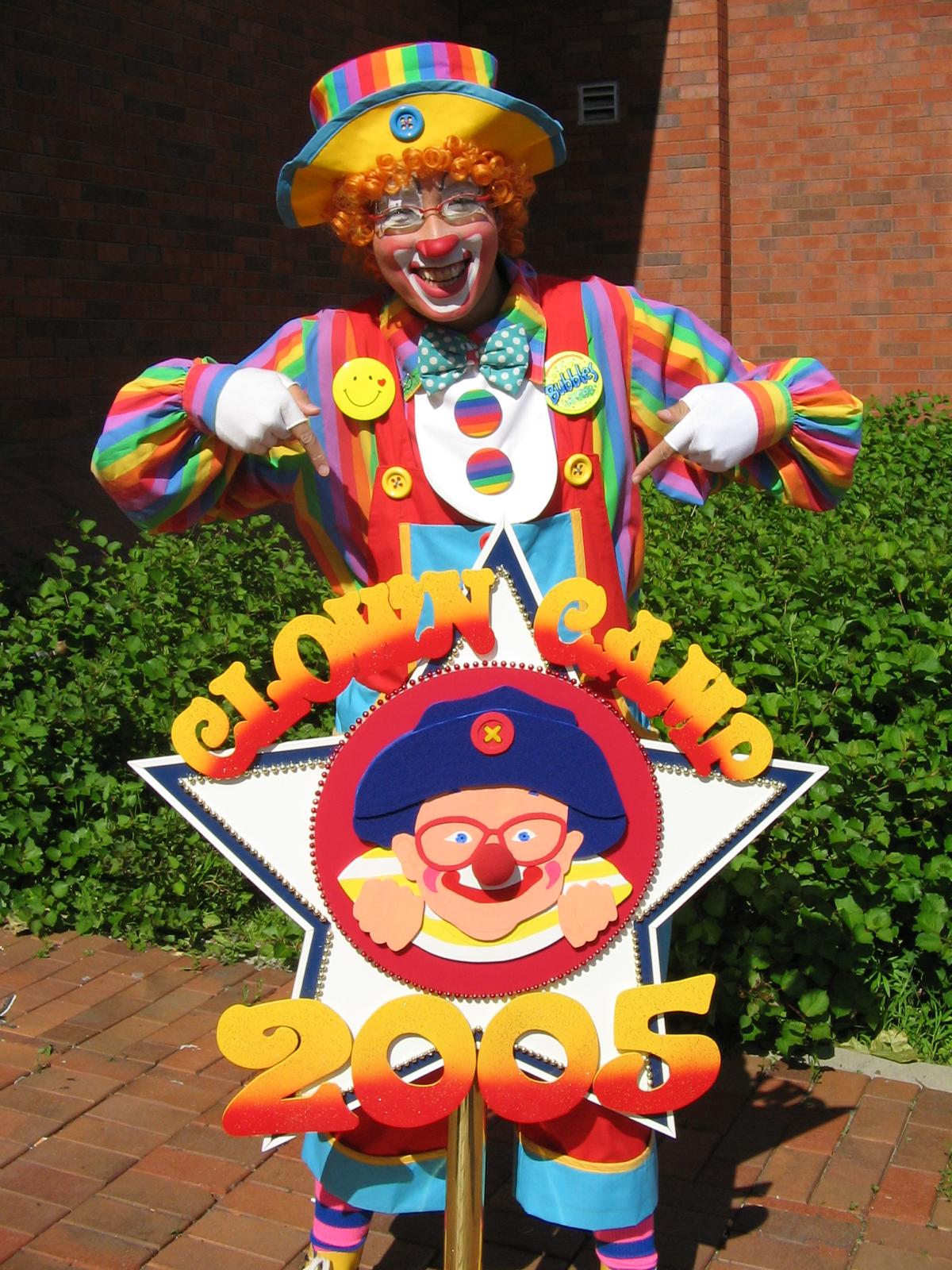 A picture of Mr Khong taken in June 2005, the year he registered his business and got married. (Photo: Edmund Khong)
For years, his weekends revolved around rushing between events, with Mr Khong sometimes performing as many as four shows in a day, along with his wife, who worked behind the scenes at his performances.
His father-in-law would drive them between venues, occasionally buying food so they could eat in the car before their next engagement.
Over time, the relentless pace took a toll on his health.
Long working days meant little exercise and unhealthy eating habits.
He recalled sometimes eating a plate of chicken rice, as well as a bowl of noodles for lunch, or having dessert after his meals.
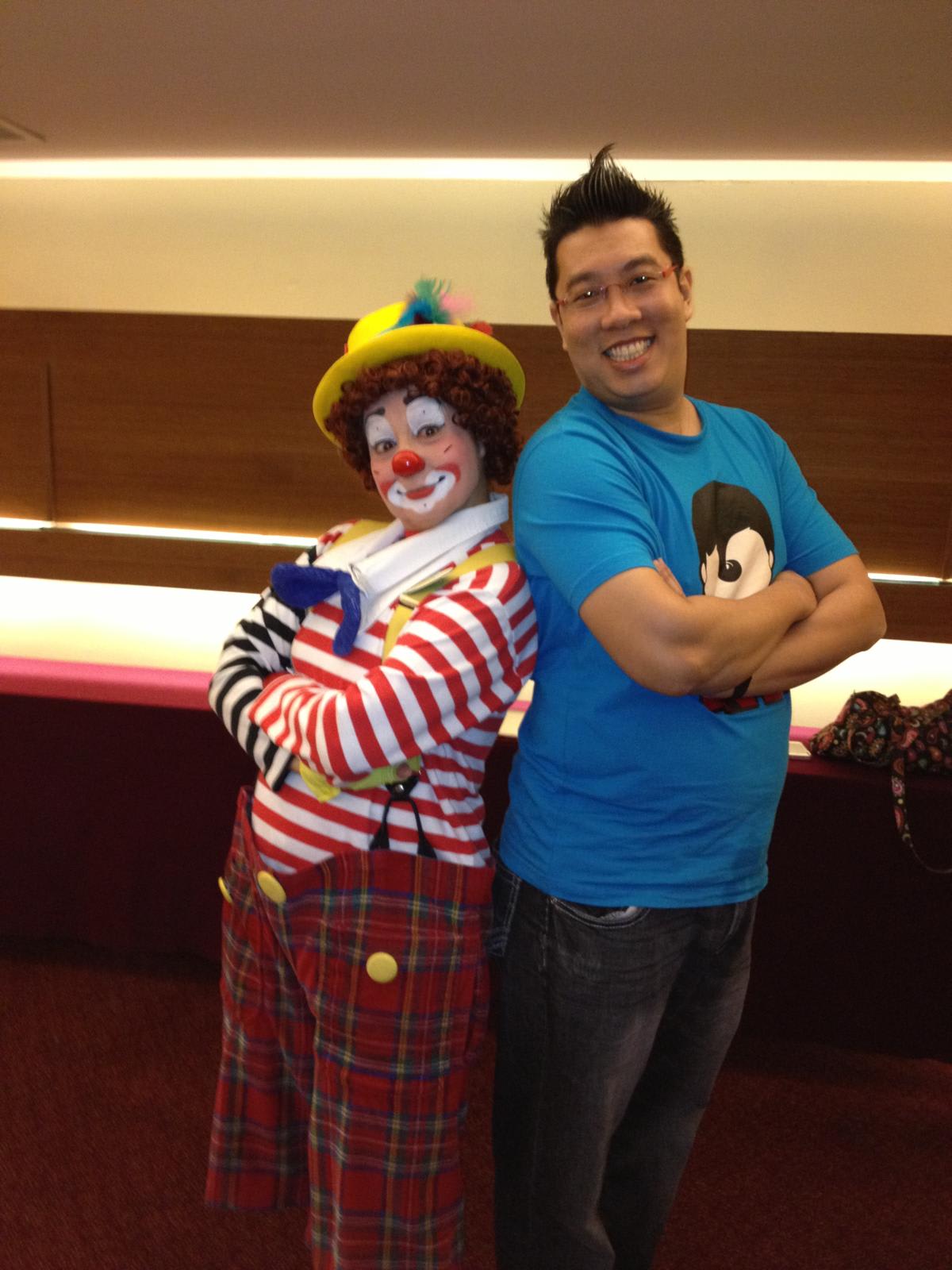 At his heaviest, Mr Khong (right) weighed 93kg after years of little exercise and unhealthy eating habits. (Photo: Edmund Khong)
His weight eventually climbed from around 65kg during his army days to 93kg, which led to back problems that made performing increasingly difficult.
One physically demanding act involved squeezing his body into a giant balloon.
"Every time I finished the show, I would be gasping for breath, asking for water," he recalled, adding that he came close to collapsing a few times.
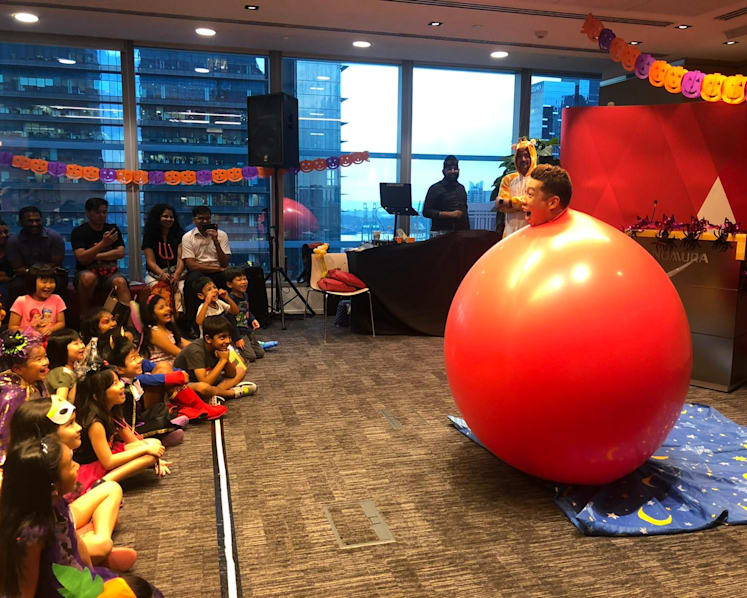 One of Mr Khong's more physically demanding acts involves squeezing himself into a giant balloon. (Photo: Edmund Khong)
SMILING OUTSIDE, HURTING INSIDE
Around the same period, he turned to online trading card games as a way to cope with the stress of work and his unhappiness over his increasing weight.
At the height of his addiction, he would spend up to 16 hours a day gaming on weekdays.
What began as a way to escape his worries gradually became a habit that was difficult to break.
He estimated spending around S$5,000 on the games, although he said the biggest cost was the time he lost.
"I would play pretty much morning till night, with breaks to do my work," he recalled.
Although he continued fulfilling his professional commitments, he acknowledged that gaming took time away from developing his craft.
"I was simply just in maintenance mode and not progressing," he said.
His marriage also suffered. Mr Khong recalled leaving household chores undone despite repeated reminders from his wife.
"Nagging led to scolding but nothing moved me. So she stopped (trying to help me)," he said, adding that his addiction put a strain on their marriage during that period.
He was not medically diagnosed with gaming addiction, but experienced withdrawal symptoms when he was not online, including shaky fingers, difficulty concentrating and an inability to stop despite recognising he had a problem.
By around 2015, he was falling ill frequently and his family doctor warned him that if he did not change his lifestyle, he might not live past 55.
The warning unsettled him, but it was a blunt remark from his wife that finally prompted him to take action.
While watching a movie together, he had commented on an actress' looks, only for his wife to respond that someone like her would never be interested in a man of his size.
"It hurt to see myself getting so obese and unfit, knowing that I shouldn't be this way," he said.
He joined a gym the following day and began exercising regularly.
Today, he weighs around 66kg and exercises twice a week. He said his health indicators have improved, and he finds performing physically easier.
With more time and energy to devote to his craft, Mr Khong found himself enjoying clowning again.
"Since I wasn't spending time on my games, I was spending my time on clowning and creative work," he said.
He began taking part in clowning competitions, winning several accolades, including the World Clown Association's Best Clown of the Year award twice.
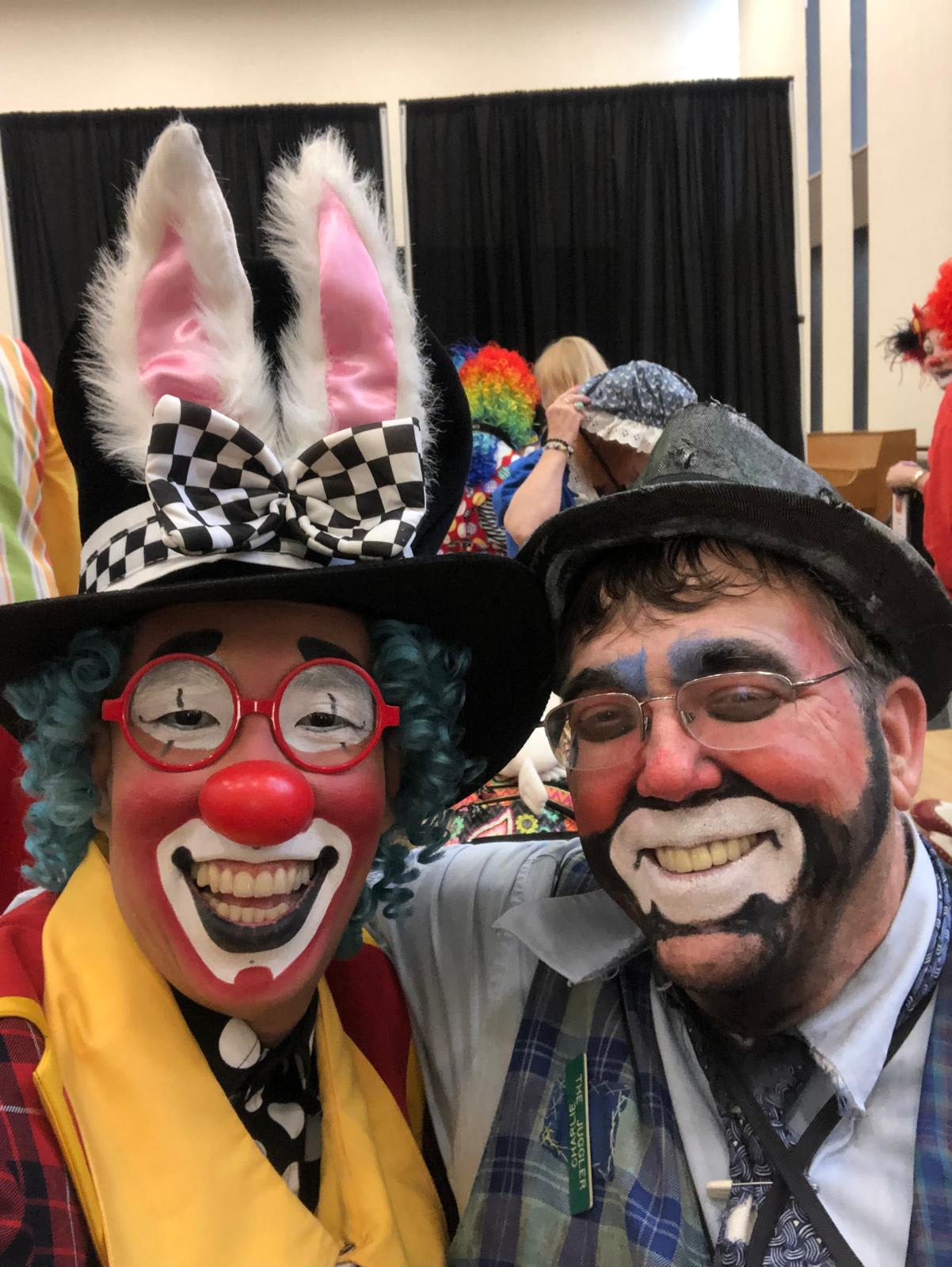 A picture of Mr Khong (left) in June 2019, when he was invited back to teach at a clown camp in the US. (Photo: Edmund Khong)
ANOTHER STUMBLING BLOCK
Just as he regained his enthusiasm for performing, the COVID-19 pandemic brought live entertainment to a halt.
He and his wife offered online shows and magic workshops over Zoom, but Mr Khong struggled to recreate the spontaneity of interacting with children in person.
Their combined monthly income fell to about S$2,000 – roughly a quarter of their pre-pandemic earnings – forcing them to cut their spending and rely on their savings.
Mr Khong even emailed the Ministry of Education to inquire about becoming a teacher, hoping to put his history degree to use, but decided to stay in entertainment as the industry recovered.
Looking back, he said the pandemic was also a turning point in how he viewed life, particularly after several clown performers and teachers died during this period.
One friend died of cancer within three months of being diagnosed, while two others died from strokes – and they were all around his age.
When he was younger, Mr Khong believed that having plenty of money was the key to a fulfilling life.
"An older me now pursues a life of balanced happiness: a healthy mind and body with sufficient income for living, creative work and hobbies, and even casual gaming," he said.
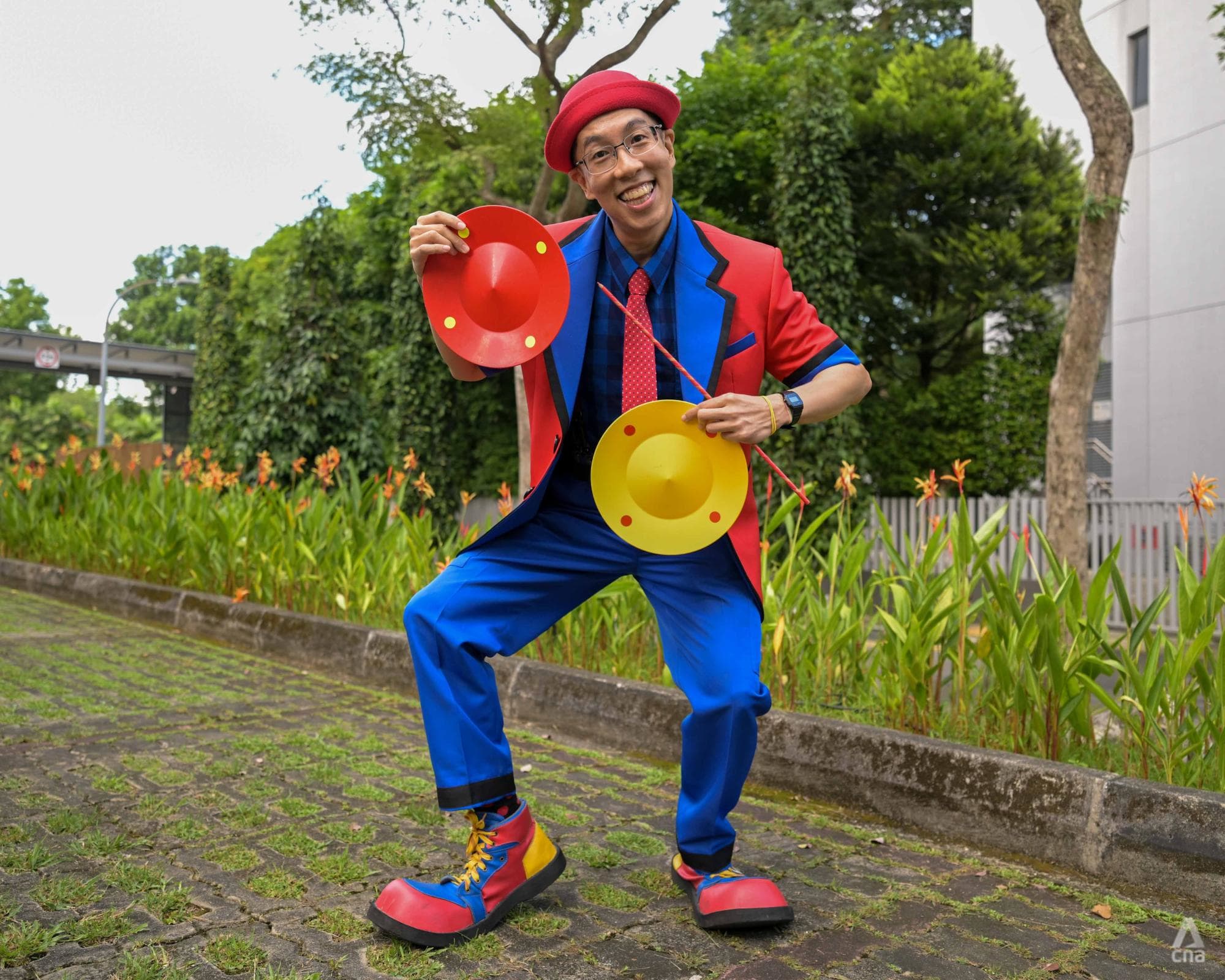 After two decades of challenges and successes, Mr Khong has found a healthier balance between pursuing his passion for entertaining children and looking after his well-being. (Photo: CNA/Lim Li Ting)
These days, Mr Khong generally performs two shows a day on Saturdays and Sundays, charging more per performance to maintain a comfortable income.
He believes slowing down has also benefited his marriage.
"In many ways, she likes how COVID-19 has taught me to slow down a bit and consider the other things in life that bring happiness," he said.
JUGGLING LOVE AND WORK
Mr Khong said that while he commands the children's attention, his wife quietly makes sure everything runs smoothly.
Known to the children as Ms Jenny, the 48-year-old sets up props and helps behind the scenes. Unlike her husband, she is camera-shy and asked not to be photographed or interviewed.
Yet she has been part of his career from the beginning.
The couple, who do not have children, met at NUS' juggling club, where Mr Khong recalls positioning himself during practice so he could look at her while juggling.
Jugglers, he explained, do not need to look directly at the balls, but can focus on a point ahead.
For him, that point happened to be a girl he fancied. "Of course, she never noticed me," he said, laughing.
They eventually began dating, and she joined his busking sessions along Orchard Road, helping to twist balloons into shapes.
They married in 2005, the same year he registered his business. Since then, she has played an integral role in running it, handling the finances, helping with balloon sculptures and filming many of his performances.
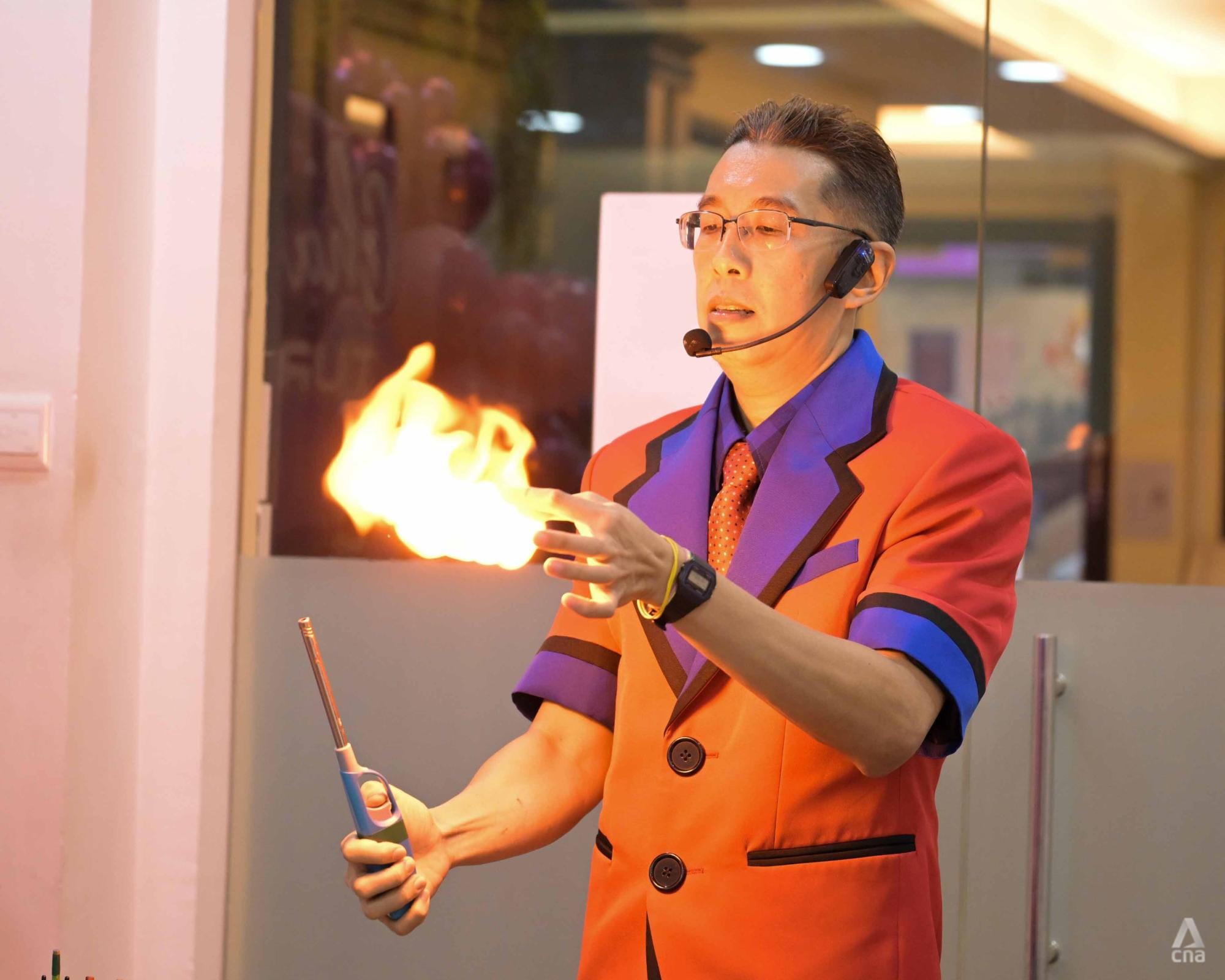 Mr Khong dazzling the children with an act involving fire at a birthday party. (Photo: CNA/Lim Li Ting)
NOT JUST A 'CLOWN'
Today, Mr Khong's repertoire combines comedy, magic and juggling, although he rarely uses the word "clown" to market his services.
He believes the term has increasingly become associated with frightening characters from horror films like Stephen King's IT, rather than playful entertainment.
"The difficulty is trying to get my customers or my clients to buy my shows and buy my services, yet at the same time not mentioning the clowning," he said.