
In brief: The Russian-occupied Zaporizhzhia Nuclear Power Plant was plunged into a complete blackout early Sunday morning, Nov. 8, after its final working 330 kV line, Ferrosplavna-1, disconnected from the Ukrainian grid, state operator Energoatom announced. The event marks the 16th external power blackout recorded at the station in 2026.
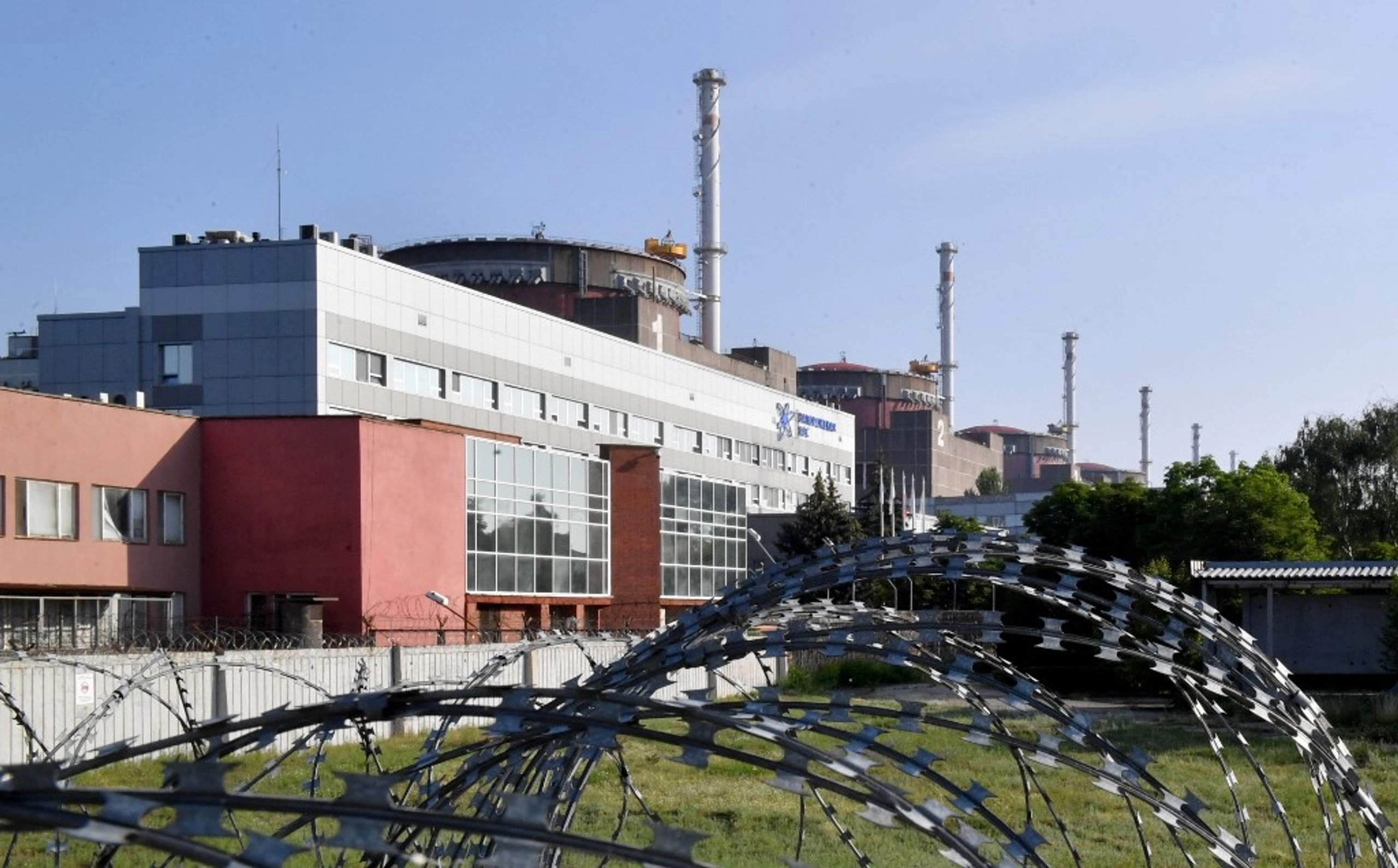
The Russian-occupied Zaporizhzhia Nuclear Power Plant (ZNPP) suffered a complete loss of external electricity early Sunday morning, Nov. 8, forcing the facility to switch to emergency backup diesel generators, Ukrainian state nuclear energy operator Energoatom announced.
The incident marks the 16th external power blackout recorded at the occupied facility since the beginning of 2026.
JOIN US ON TELEGRAM
Follow our coverage of the war on the @Kyivpost_official.
Energoatom reported that the station lost external transmission at 2:36 a.m. local time after the last operating 330-kilovolt (kV) overhead line, “Ferrosplavna-1,” was disconnected from Ukraine’s unified power grid.
“An attempt to automatically re-engage the line was unsuccessful,” Energoatom said in a statement.
“Currently, the station’s internal auxiliary power needs are being supplied exclusively by the operation of backup diesel generators.”
External power loss threat to nuclear safety
Nuclear power stations depend on continuous external electricity supplies to drive high-capacity coolant circulation pumps, maintain reactor cooling circuits, and power radiation diagnostic sensors, even when all reactor units are in cold shutdown.
Energoatom emphasized that reliance on diesel generators creates a severe risk of equipment failure, fuel exhaustion, or cooling degradation, which could trigger an uncontrolled radiation accident.
“Operating in blackout mode creates a direct risk of failure of life-support systems and nuclear fuel cooling in the event that diesel generators break down or exhaust their fuel reserves, which could lead to a radiation accident,” Energoatom warned.

Russian Strike on Odesa Kills 1, Hits Infrastructure
“The systematic loss of external power is a direct consequence of the occupation of the ZNPP.”
All six reactor units at Europe’s largest nuclear generating station remain in cold shutdown, requiring uninterrupted circulation of cooling water to prevent decay heat from damaging fuel elements stored in reactor pressure vessels and spent fuel pools.
Satus of the plant’s backup systems and cooling pond
Ukraine’s Military Intelligence (HUR) previously reported that a minimum staffing complement of approximately 1,150 technicians operates the facility’s safety systems under Russian occupation.
Intelligence data indicates that sustained blackouts place immense operational pressure on local fuel reserves, with the station requiring approximately 150 metric tons of diesel fuel per day to power emergency generator arrays during a full grid disconnection.
The station has faced repeated disconnections of the 330 kV Ferrosplavna-1 line throughout the year, including three separate outages logged in August alone.
In June, engineering detachments reconnected the facility after an extended 65-hour blackout that left the station dependent on emergency generators for nearly three full days.
Safety risks at the facility have been exacerbated by declining water levels in the station’s primary cooling pond. Ukrainian intelligence recorded pond levels dropping from 12.9 meters in July to 12.6 meters in late August, significantly below the 15-meter threshold required for optimal facility operations.
Kyiv Post is Ukraine’s first and oldest English news organization, reporting since 1995. Its international reach – 90% of readers are outside of Ukraine – make it truly Ukraine’s global voice.