Social service organisation Kampong Kapor Community Services plans to grow its fractional workforce by more than 60 per cent over two years, while other employers are exploring similar arrangements to retain experienced workers.
A counselling session at Kampong Kapor Community Services. (Image: CNA)
A counselling session at Kampong Kapor Community Services. (Image: CNA)





SINGAPORE: After retiring from the social work sector in 2023, Mr M Hindran, 68, returned to Kampong Kapor Family Service Centre (KKCS) this year to help manage its caseload under a fractional work arrangement.
He initially worked about two-and-a-half to three days a week at the social service organisation, handling triages and a limited number of cases. He was paid according to the hours he worked.
Fractional work lets people with specialised skills take on specific responsibilities or a reduced scope of work, rather than the range of duties of a full-time employee.
Mr Hindran said the model worked well for both him and the organisation, giving him time for personal activities while allowing him to continue contributing his experience.
CNA Games
 Guess Word
Crack the word, one row at a time
 Buzzword
Create words using the given letters
 Mini Sudoku
Tiny puzzle, mighty brain teaser
 Mini Crossword
Small grid, big challenge
 Word Search
Spot as many words as you can
Show More
Show Less
“I get to do my own things. I get to do some volunteer work. I get to run my errands," he told CNA.
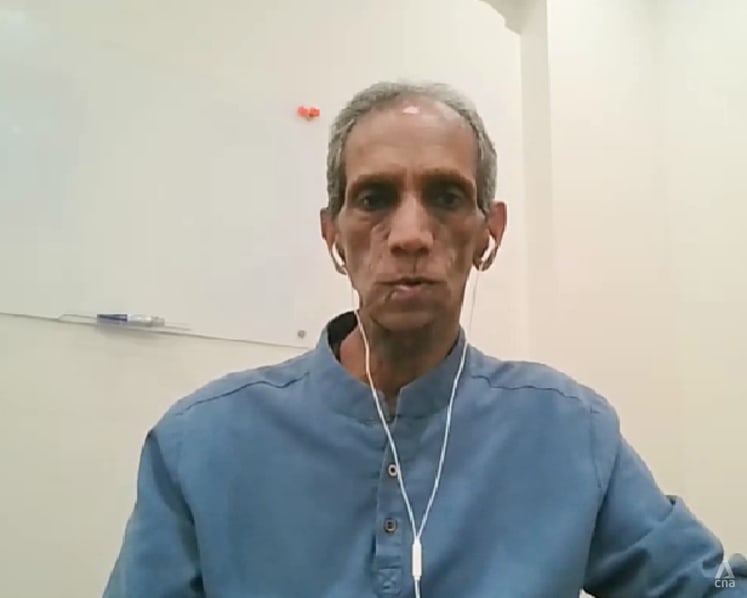 Mr M Hindran, assistant senior social worker at Kampong Kapor Family Service Centre, speaking to CNA. (Image: CNA)
Mr Hindran has since moved from fractional work to a part-time position as an assistant senior social worker.
He said he agreed to increase his hours at the organisation’s request, provided he could still make time for personal activities.
"I like the work that we are doing … (I’ve been) doing this for many years, and I feel that I can still contribute not just to the community, but also to the staff. They get to tap my knowledge and consult with me," he said.
Such arrangements are gaining interest among employers looking to retain experienced workers while addressing manpower shortages.
MORE FIRMS EXPLORING FRACTIONAL WORK
KKCS aims to increase its fractional workforce from six to around 10 workers over the next two years, an increase of more than 60 per cent. Half of its current fractional workers are seniors.
Its fractional roles include counselling and social work, with workers taking on caseloads or time slots based on their availability and the organisation's needs.
Unlike full-time staff, they are not expected to handle responsibilities outside their agreed scope, such as additional administrative duties or organisation-wide activities.