
In brief: Strong leaders helped Ukraine survive. Strong parties will help its democracy last. As reconstruction moves beyond roads and power grids, party-building deserves its place too: organisations that can produce new leaders, survive defeats and outlive their founders. The timing of elections is for Ukrainians alone to decide, but the parties that will compete in them cannot be improvised in a campaign's final weeks.
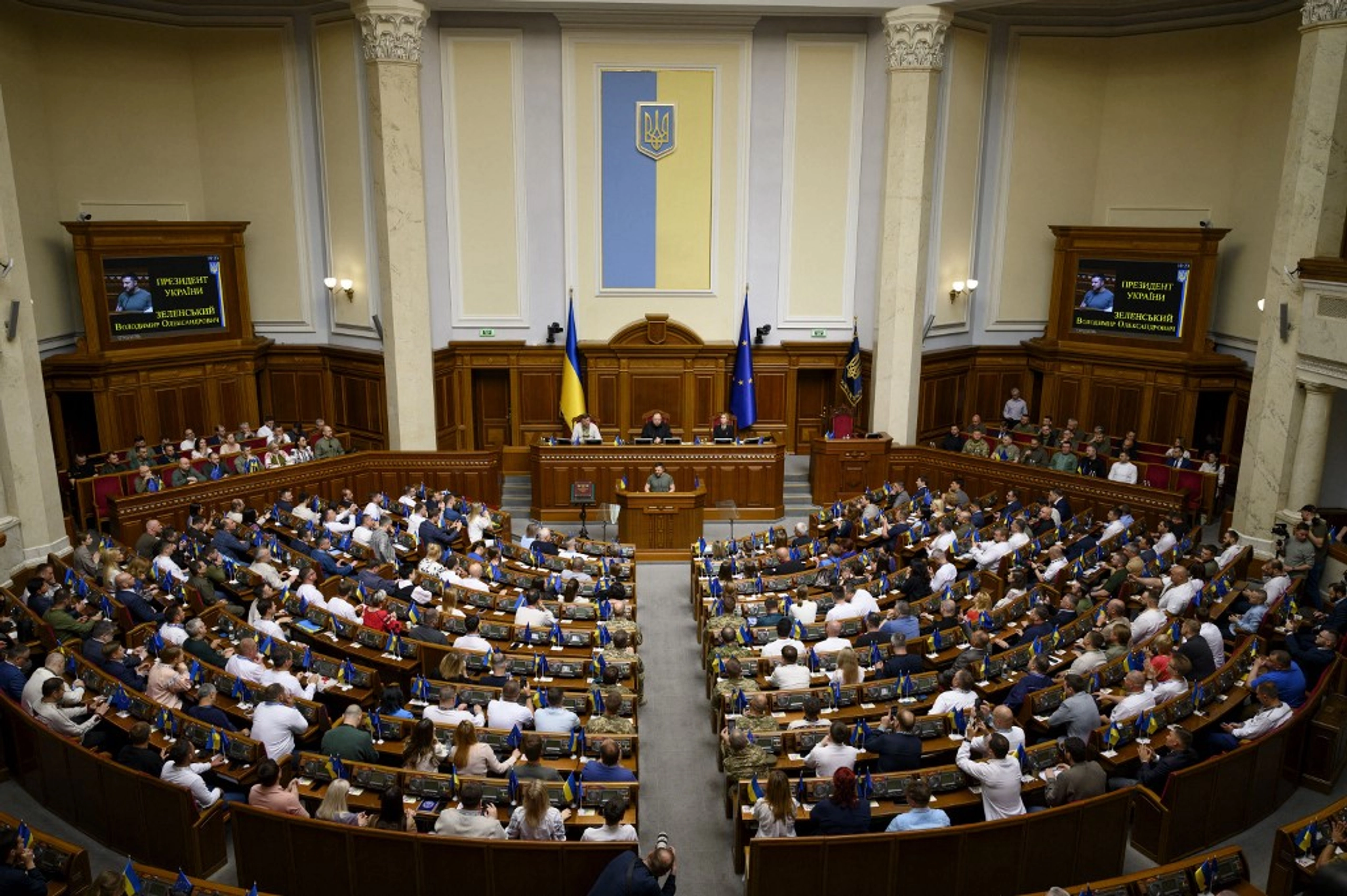
Ukraine has shown the world what leadership can do under fire. The next question is how to turn that strength into democratic institutions that last.
Volodymyr Zelensky’s wartime leadership is recognized everywhere. So is the resilience of Ukraine’s mayors, officials, civil society, and ordinary citizens. But no democracy, however brave, should rest indefinitely on the shoulders of a few people.
JOIN US ON TELEGRAM
Follow our coverage of the war on the @Kyivpost_official.
This is not an argument against strong personalities. Extraordinary times call for extraordinary leaders. The task is to make sure their achievements become institutional legacies, not just personal ones.
Reconstruction will mean roads, housing, energy, and public services. It will also mean something less visible: Political parties able to produce leaders, write policy, compete fairly, and survive a change at the top.
Strong leaders make history. Strong parties make democracy last.
The institutionalisation paradox
Personal parties are not a Ukrainian invention. Across democracies, charismatic founders have broken stale party systems and brought new voters into politics. In Ukraine, Petro Poroshenko’s European Solidarity and Zelensky’s Servant of the People are two very different versions of the same pattern.
Servant of the People’s 2019 breakthrough, as scholars Paul Chaisty and Stephen Whitefield have argued, was also a verdict on the weakness of the established parties.
That is the strength of personal leadership. It also creates what I call the institutionalisation paradox. The more popular the leader, the less urgent it seems to build a real organization. Why invest in internal structures when one name wins elections? Why grow alternative leaders when one personality already defines the brand?
Kuleba: 2022 Istanbul Talks Were Capitulation
The bill comes later, when the leader steps aside, popularity fades, or the party goes into opposition. The answer is not weaker leaders. It is stronger institutions around them.
Moldova’s experiment
Next door, Moldova offers an instructive case. Maia Sandu founded the Party of Action and Solidarity (PAS) in 2016. Her leadership made it. Yet PAS has since governed under other formal leaders, including Igor Grosu, and in September 2025 it won 55 of 101 seats to renew its majority.
That is not a finished success story, and Sandu’s influence remains decisive. But it is a serious attempt to convert personal political capital into organizational capacity. The best legacy a founder can leave is a party that can function without them.
No single model
Germany and the Nordic countries have parties that routinely outlive their leaders. Poland mixes durable organizations with powerful personalities. Italy’s Forza Italia showed how completely a founder can define a party. In Asia, Taiwan built more institutionalized parties than South Korea, where mergers, splits, and leader-driven realignments became routine.
The lesson is not to import a template. Democratic consolidation and party institutionalization are related, but not the same. A country can hold competitive elections while its parties stay fragile. Ukraine’s goal should be neither to copy Western Europe nor to sideline charisma, but to build parties that combine leadership with accountability, participation, and continuity.
The long game
This takes longer than a campaign, usually longer than a mandate. It starts with the basics: clear internal rules, ethics, transparent candidate selection, real policy work. It continues with local branches, membership, leadership programs, and genuine space for women, young professionals, and community leaders.
The real tests come over several cycles. Can the party change leaders peacefully? Can it keep its members after a defeat? Can it stand for something without one face on the poster? Those answers matter more than membership numbers or a polished headquarters.
They also address a familiar CEE disease: political migration. When parties rise and fall with their founders, politicians keep shopping for new vehicles, and voters stop trusting all of them. A party becomes an institution when losing an election does not mean losing its reason to exist.
Ready for the day after
The timing of Ukraine’s next elections is for Ukrainians to decide, under their constitution and security conditions. The Verkhovna Rada’s working group on post-war elections is already tackling the hard questions: How soldiers, displaced citizens, and refugees abroad will vote, and how to run a credible ballot on damaged infrastructure. None of this is a case for rushing to the polls.
But electoral readiness has a twin: organizational readiness. When competition resumes, parties will need credible candidates, local networks, policy expertise, and the ability to speak for a society transformed by war, from veterans to displaced families to a new generation. None of that can be improvised in the last weeks of a campaign.
Elections can be scheduled. Political institutions must be cultivated.
Party-building as democratic infrastructure
Organizations such as the National Endowment for Democracy, IRI, and NDI have long experience here. The question is whether party-building gets the place it deserves in the reconstruction debate. I would set three priorities. Support institutions rather than personalities, investing in governance, accountability, and leadership pipelines that survive any single leader. Stay strictly nonpartisan, so that outside help strengthens pluralism instead of picking winners. And think in cycles, not campaigns, so parties learn to govern, oppose, and renew themselves.
None of this means building parties from abroad. Real parties grow out of societies. Partners can support the environment – Ukrainians must own the institutions.
Ukraine has already proved that extraordinary leaders and citizens can defend a nation’s freedom. Its next democratic investment should make sure that freedom rests on institutions built to outlast any single generation.
Strong leaders help nations survive history. Strong parties help democracies handle what comes next.
The views expressed in this opinion article are the author’s and not necessarily those of Kyiv Post.
Zelensky: Ready to Meet Putin in Turkey, Rules Out Concessions
Ukraine Knocks Out 15 Russian Refineries, $23 Billion in Damage
Kremlin Says Ukraine Peace Talks Hinge on Battlefield, Rejects European Role
‘We Will Not Implement It’: Kallas Rejects US-Russia Security Deal Negotiated Without Europe

OPINION: Nobody Knows Anything

Trump Jr. Discusses Deals With Russian Oligarch, Report Says
