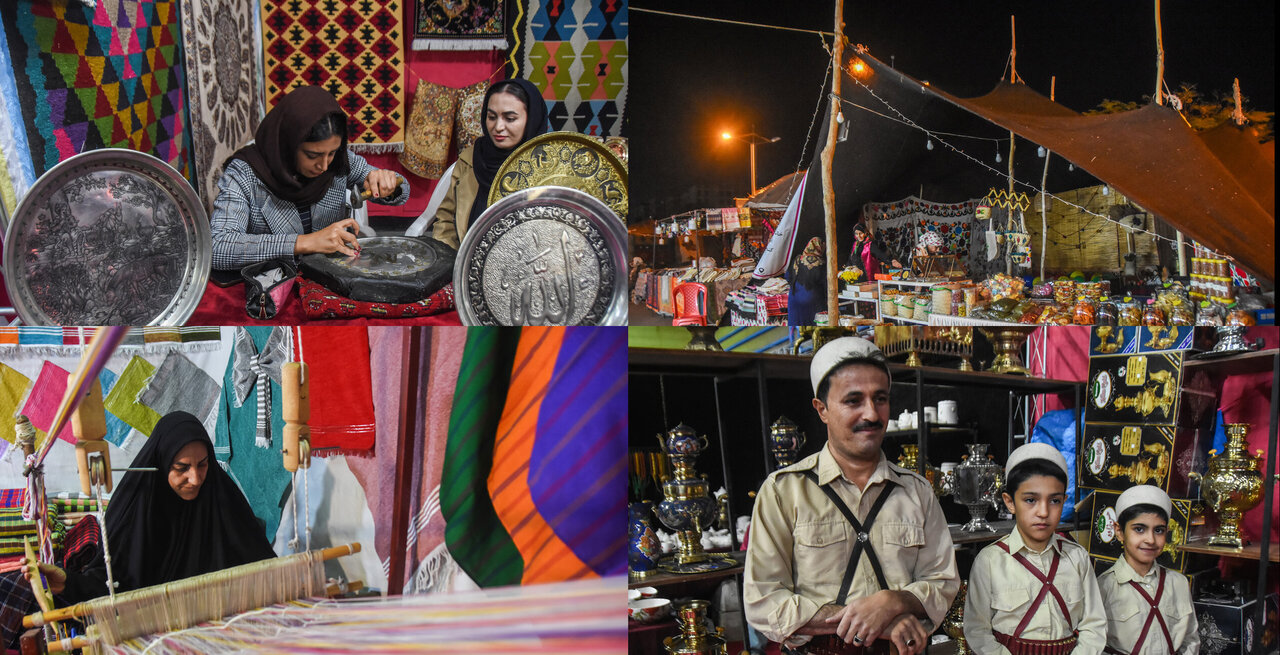
TEHRAN – A major handicrafts exhibition in Semnan is showcasing the traditional crafts, local products and cultural heritage of artisans from across Iran, with more than 150 booths and nine Siah-Chadors -- traditional nomadic tents -- set up as part of the event.
The exhibition, which was inaugurated on Sunday in the presence of Barzin Zarrghami, deputy minister of Cultural Heritage, Tourism and Handicrafts, will run until November 20 at the Ghadir Exhibition Hall in Semnan.
Samaneh Soltanipour, deputy director of handicrafts and traditional arts at the Semnan provincial department of Cultural Heritage, Tourism and Handicrafts, told IRNA that 120 booths have been allocated to handicraft products made by artisans from different provinces.
Another 20 booths are dedicated to regional souvenirs, traditional foods and locally produced goods, offering visitors an opportunity to explore the culinary traditions and cultural diversity of participating regions.
The exhibition also features nine traditional nomadic tents in its outdoor area, representing the provinces of Semnan, Kohgiluyeh-Boyer-Ahmad, South Khorasan, Golestan, Tehran and Chaharmahal-Bakhtiari.
According to Soltanipour, the tents offer visitors an insight into nomadic culture, including traditional lifestyles, customs, local products and the cultural and tourism potential of different regions.
She said the presence of the nomadic tents alongside handicraft and local-product booths has expanded the event beyond a conventional marketplace, turning it into a platform for introducing aspects of Iran’s intangible cultural heritage and regional diversity.
Live demonstrations highlight traditional skills
The exhibition also includes live demonstrations of around five handicraft disciplines, allowing visitors to observe artisans at work and learn about production techniques, tools and the skills involved in making traditional products.
Soltanipour said such demonstrations provide an opportunity, particularly for younger generations, to better understand the craftsmanship and cultural value behind handmade works. They can also help introduce lesser-known traditional crafts and encourage more people to learn these skills.
Direct sales and new market opportunities
The event aims to strengthen the market for Iranian handicrafts by establishing direct links between artisans and consumers, providing opportunities for sales without intermediaries and helping producers better understand customer preferences, Soltani-Pour said.
She added that bringing artisans from different provinces together also creates opportunities for exchanging expertise, transferring traditional knowledge, building professional networks and developing cooperation among craftspeople.
Such exhibitions can help identify new markets, improve the competitiveness of Iranian handicrafts and create additional opportunities for artisans to promote and sell their products, she noted.
Soltanipour said the event also provides an opportunity to introduce Semnan's own handicraft traditions and the capabilities of its local artisans to a wider national audience.
Iranian handicrafts reflect the country's cultural diversity and centuries-old artistic traditions. From carpets and ceramics to metalwork and handmade textiles, traditional crafts embody the skills and creativity passed down through generations and remain an important expression of regional identity.