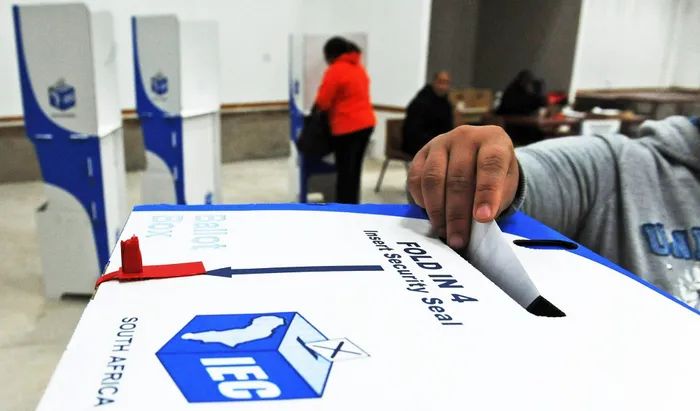
Experts weighed in on youth voter turnouts
The noticeable absence of young voters at polling stations during Wednesday’s local government elections has raised concerns among political analysts, who believe unemployment, distrust in political parties and growing frustration with government are contributing to youth disengagement.
While some first-time voters in Mitchells Plain expressed excitement about exercising their democratic rights, others were disappointed by the limited presence of younger voters, particularly those under 30.
Previous Ipsos research into youth political participation highlighted concerns about voter registration and political engagement among young South Africans, providing context to the apparent lack of younger voters at polling stations.
Ipsos research highlights weak youth registration and party support
The research found that only 53% of South Africans aged 18 to 24 reported being registered to vote, while 50% of registered young voters felt no political party represented their views.
Political analyst Dr Kuhle Zwakala said youth voter apathy reflected deeper frustrations among young South Africans who felt the political system had failed to address their challenges.
"The issue of the youth voter apathy is primarily because it seems that government and the system, as it were, it does not have a solution to youth challenges."
Zwakala pointed to high youth unemployment, unemployed graduates and medical doctors struggling to secure employment as examples of the challenges discouraging younger generations from participating.
He said young people increasingly viewed political parties as offering similar promises without meaningful solutions.
"Regardless of who occupies governance, they do not seem to have solutions to youth challenges," he said.
Zwakala argued that political leaders needed to demonstrate that government could work for young people, while warning that staying away from elections would not resolve their frustrations.
"Staying away from voting will not bring any immediate solutions to youth problems."
Fragmented politics could affect local election outcomes
Political expert Sipho Seepe described the absence of young voters as unfortunate, particularly because young South Africans were among those most affected by unemployment.
"The absence of young voters at the polling stations is unfortunate given that they are the main victims of ANC failure to transform South Africa into a free and prosperous society."
Seepe said the lack of participation reflected a failure by political parties to address issues important to younger generations, while also questioning voter education efforts.
"Third, it reflects badly on the IEC voter literacy campaigns. Lastly, some have become disillusioned with parties that seem to care more about votes than them."
Youth political disengagement
Policy analyst Nkosikhulule Nyembezi said the elections were taking place against a fragmented political landscape, with undecided voters representing an unpredictable factor in determining outcomes.
Describing this group as a "wild cat", Nyembezi said political shifts needed to be examined at ward level rather than relying exclusively on broader polling trends.
"These elections are where opinion polls and segment tracking count," he said.
Nyembezi suggested that local elections offered voters an opportunity to break established voting patterns, hold underperforming councillors accountable and place their hopes in new municipal leadership.
While the Ipsos findings provide insight into existing patterns of youth political disengagement, official voter turnout figures would be needed to establish the extent of youth participation in Wednesday's elections.
The IEC said it would confirm the youth voter turnout once the votes are tallied.