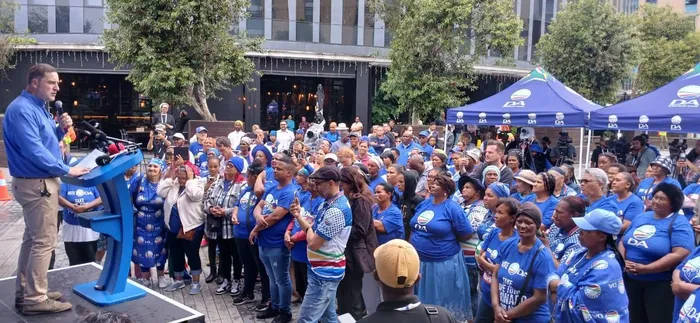
The DA will approach political parties for coalition talks in municipalities where no party secured an outright majority in the 2026 local government elections.
The Democratic Alliance (DA) is preparing to enter coalition negotiations with political parties across South Africa following its performance in the 2026 Local Government Elections, as municipalities without an outright majority prepare for coalition governments.
In a statement, the party said its Federal Executive had resolved to engage political parties in municipalities where no party had secured an outright majority.
The DA said it had emerged as the largest party in many of these municipalities, often with a significant lead over its nearest competitor.
The party's Federal Executive has mandated it to initiate discussions with parties that share its commitment to clean and accountable government, fighting corruption, service delivery, the rule of law and non-racialism.
These principles, the DA said, would form the foundation of its approach to coalition negotiations.
DA outlines coalition priorities
The party said its objective was to establish stable and effective municipal governments that prioritise residents, restore accountability and improve service delivery.
"The DA approaches these discussions with humility, and we will respect the will of the voters," the party said.
It added that voters had given a clear mandate and that it wanted to ensure the governments formed after the elections reflected the need for stability and service delivery.
The DA also confirmed that coalition discussions would be coordinated nationally under the authority of its Federal Executive.
This approach, it said, was intended to ensure a consistent and principled position across the country.
The party said it was ready to govern and work with other political parties that shared its commitment to building municipalities that worked for all residents.
Coalition negotiations will be central to determining who governs municipalities where election results have not delivered an outright majority, with parties needing to secure sufficient support to form municipal administrations.