Eighteen editions on, China’s biggest annual shopping festival is growing up. As the sales frenzy gives way to longer promotions and more cautious spending, brands and platforms are rethinking how to win over shoppers.
Taobao Singles' Day advertisements spotted at Nanjing West metro station in Shanghai, China, on Nov 1, 2026. (Photo: CNA/Tan Wen Lin)
Taobao Singles' Day advertisements spotted at Nanjing West metro station in Shanghai, China, on Nov 1, 2026. (Photo: CNA/Tan Wen Lin)



SHANGHAI: Three models in wool coats stand before a wall of glass bricks as a cinema camera rolls past.
Behind a partition, operators in headsets monitor a bank of screens.
Nearly 400,000 people are watching the livestream by Chinese fashion brand CHICJOC on online shopping platform Taobao.
One viewer asks to see the grey outerwear. Another wants to know what to pair with an oatmeal coat. In the corner of the screen, a coat is listed for 3,499.99 yuan (US$526).
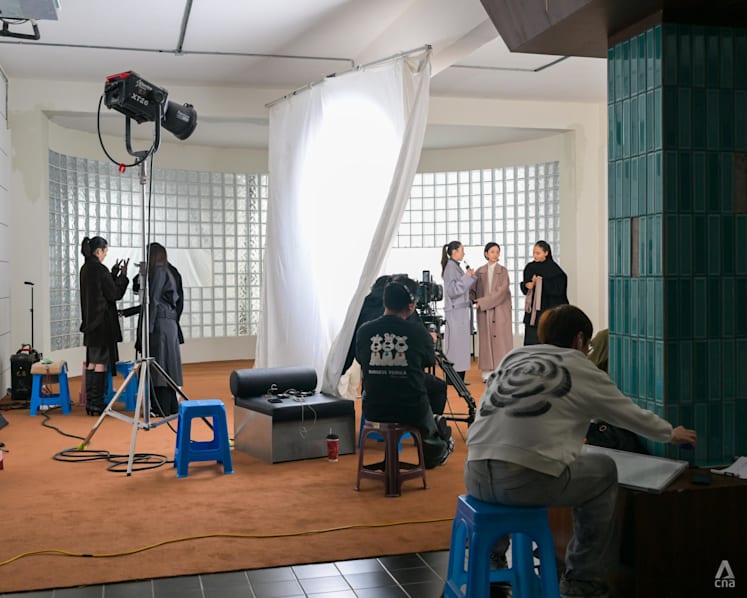 Taobao's Super Live backstage operations for Chinese brand CHICJOC, during a livestream on Oct 25, 2026. (Photo: CNA/Tan Wen Lin)
For CHICJOC co-founder Wei Yujing, 36, the carefully choreographed livestream is a far cry from the frantic sales race that once defined Singles’ Day.
Back in 2017 or 2018, orders opened as Nov 11 began, she recalled, with Taobao ranking brands by sales for all to see.
“It felt like the Olympic Games, with every brand starting from the same line on that one day,” she told CNA. “All the brands were like racehorses.”
“I remember some shops crossed 10 million yuan within an hour, or within a day,” she said.
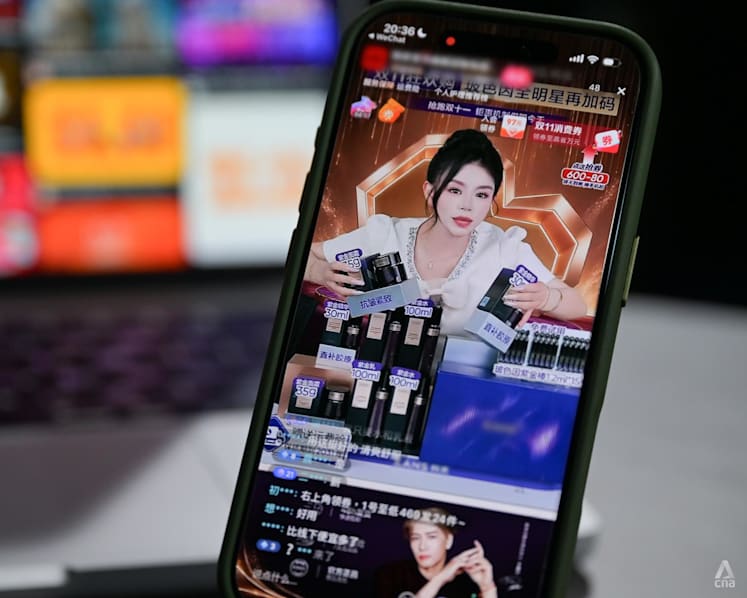
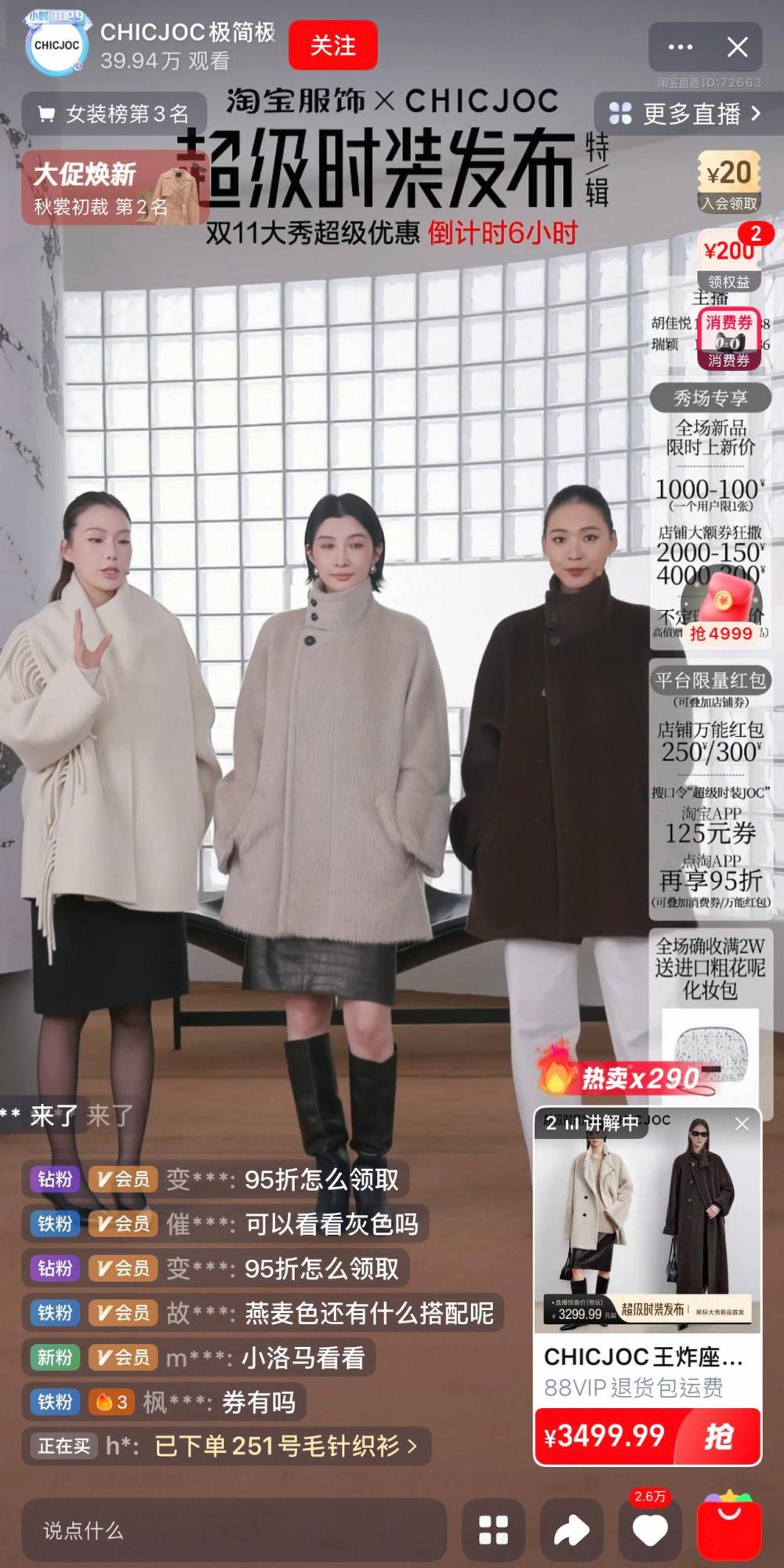 A screengrab of a video livestream by fashion brand CHICJOC on Chinese online shopping platform Taobao.
Launched in 2009 by Chinese e-commerce giant Alibaba, which operates Taobao, Singles’ Day has grown into the world’s biggest online shopping festival.
Known in China as “shuang shi yi”, or Double 11, the festival takes its name from Nov 11 (11/11), whose four ones symbolise singlehood.
But 18 editions on, the shopping bonanza looks markedly different. What was once a 24-hour sales frenzy has stretched into weeks-long promotions and new ways of courting increasingly cautious consumers.
The scale remains enormous. Sales across platforms reached 1.695 trillion yuan last year during the Oct 7 to Nov 11 promotional period, up 14.2 per cent year-on-year, according to data provider Syntun.
But that growth was roughly half the 26.6 per cent recorded in 2024.

FROM MAD DASH TO SLOW BURN
The midnight rush that once defined Singles’ Day has largely been left behind.
Alibaba began making the shift in 2021, moving the start of its presales to 8pm. By 2022, its main sales windows were also opening at that hour.
The platform has also simplified its discounts, replacing complex cross-store coupons - such as spending 300 yuan to save 50 yuan across multiple shops - with straightforward discounts of 15 per cent.
Rival e-commerce giant JD.com scrapped its presale model in 2023 - shoppers previously paid deposits weeks in advance and settled the balance when sales opened; it now sells goods in stock outright.
The changes are a deliberate move away from the artificial urgency of the midnight launch, said Jason Yu, managing director at Beijing-based CTR Market Research.
“Now it all has moved to 8 o’clock in the evening so that everybody is all relaxed (and) sitting on the sofa.”
The platforms had been criticised over the pressure and complicated promotional rules, Yu noted.
“Now they want to create a more hassle-free and easy environment for consumers.”
CNA Games
 Guess Word
Crack the word, one row at a time
 Buzzword
Create words using the given letters
 Mini Sudoku
Tiny puzzle, mighty brain teaser
 Mini Crossword
Small grid, big challenge
 Word Search
Spot as many words as you can
Show More
Show Less
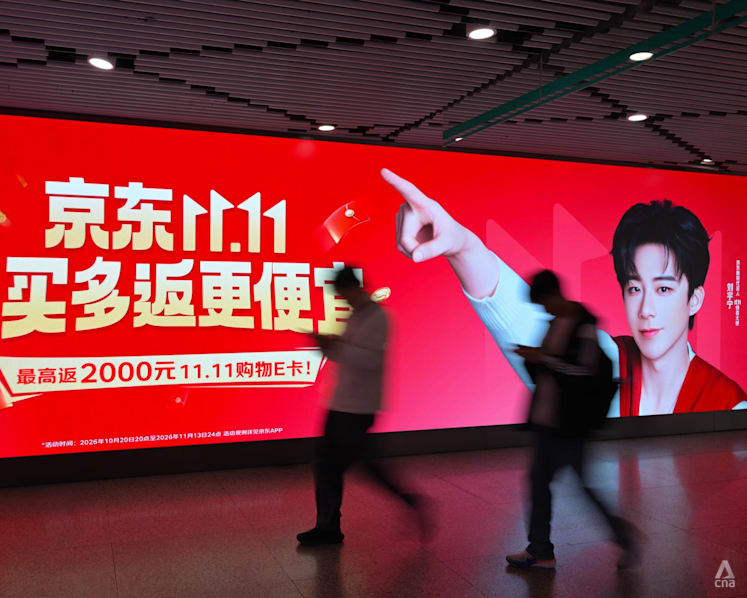 JD Singles' Day advertisement spotted at Shanghai's Shanxi South metro station on Nov 1, 2026. (Photo: CNA/Tan Wen Lin)
The shift extends to livestream selling, where aggressive pitches are also losing their appeal.
“Early livestreams were mostly hard-sell, hawking-style selling. Someone in the livestream room shouts, ‘3, 2, 1! Last batch, 9.9 yuan with free shipping, if you don’t buy today it’s gone tomorrow!’” Liu Manting, a brand marketing manager at Taobao Fashion, the platform’s apparel business unit, told CNA.
“Consumers are actually really tired of that.”
JD Singles' Day advertisement spotted at Shanghai's Shanxi South metro station on Nov 1, 2026. (Photo: CNA/Tan Wen Lin)
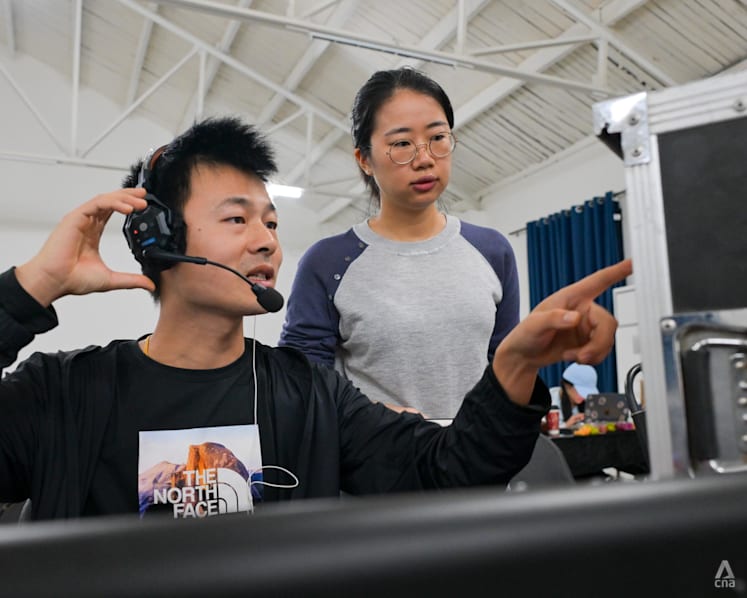 Liu Manting (right), a brand marketing manager with Taobao Fashion, says shoppers are tired of hard-sell livestreams. (Photo: CNA/Tan Wen Lin)
For Zhang Ya, a 29-year-old pottery teacher in Shanghai, the appeal of chasing discounts has faded.
“The coupons in recent years have become too complicated,” she told CNA.
“Then you buy and stockpile a whole pile of stuff that takes ages to use up ... You might as well buy things whenever you need them. The price isn’t really that different anyway.”
“There’s no real atmosphere now,” Zhang said, recalling the televised Tmall gala that once accompanied Singles’ Day. Tmall is Alibaba’s business-to-consumer marketplace and sister platform to Taobao.
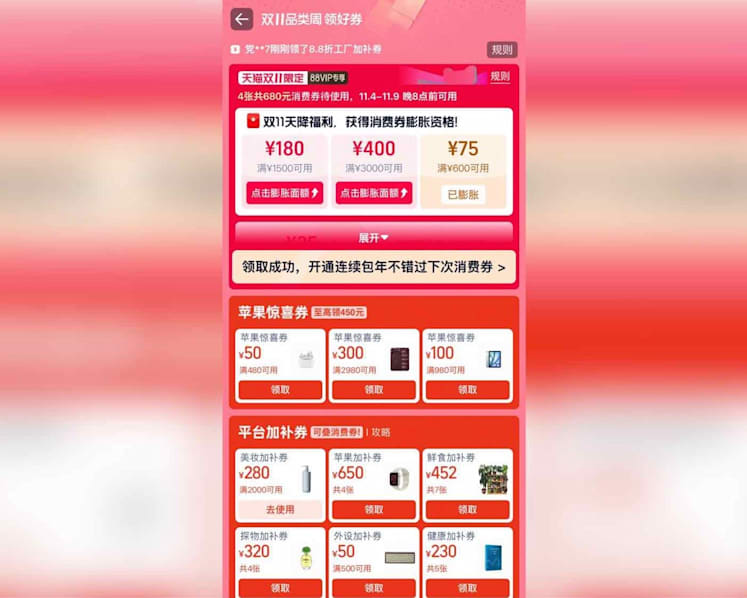 A screengrab of the coupons and vouchers on Chinese online shopping platform Taobao during its Singles’ Day campaign.
“People’s enthusiasm has faded a bit compared with before.”
Her preparation this year is limited to topping up a membership that makes returns easier.
But not everyone has lost interest.
Cao, a 22-year-old intern hoping to snag a discount on a computer, still finds the deals “pretty worthwhile”.
The shopping calendar has also stretched considerably, with campaigns now opening shortly after China's National Day holiday in early October and running for more than a month.
Alibaba and Douyin opened their campaigns on Oct 15, almost a month before Nov 11. JD.com launched its campaign on Oct 12, while short video platform Kuaishou and lifestyle app Xiaohongshu kicked theirs off on Oct 7 and Oct 10 respectively.
CTR’s Yu described the increasingly extended campaigns as an “arms race amongst all the different platforms”.
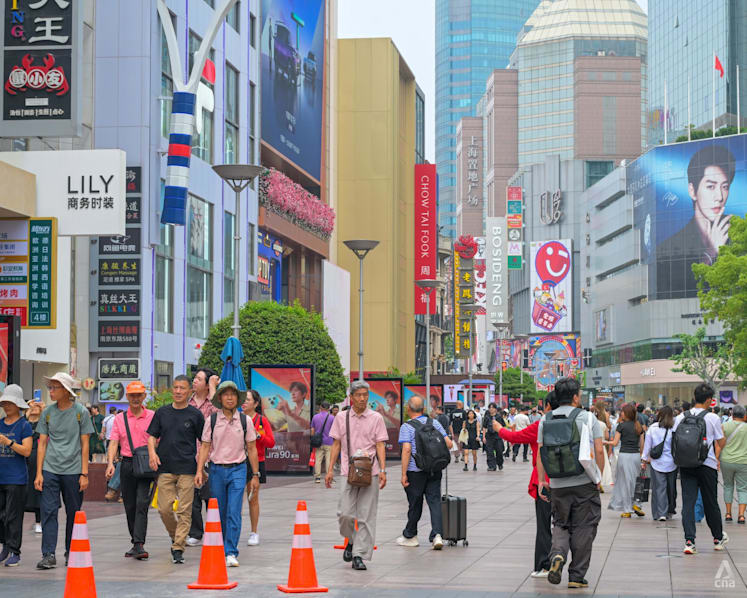 Shoppers in Shanghai. China’s Singles’ Day festival enters its 18th edition with consumers spending more cautiously. (Photo: CNA/Tan Wen Lin)
Fang Jun, 34, a Shanghai livestreamer who goes by Junjun on camera, has watched the single-day sales spike flatten out over the past six years.
“It used to be a big spike, with purchases concentrated on Double 11 and Double 12,” she told CNA, referring to another shopping event on Dec 12.
“Now it’s more like a small bump, a bit higher than usual but not by much.”
Yet even a smaller bump can pay off for merchants.
On a normal day, her company might spend 1 million yuan on advertising to make 2 million in sales, Fang said.
During the big promotions, free traffic from the platforms can cut that spend to about 300,000 yuan.
 Fang Jun, who goes by Junjun on camera, is a livestream host in Shanghai. (Photo: CNA/Tan Wen Lin)
SPENDING WITH RESERVATIONS
Fang has seen the shift towards more cautious spending from both sides of the camera.
Before becoming a livestreamer, she worked in tourism and owned more than 20 luxury handbags.
“In the past year or two I haven’t bought a single designer bag,” she said.
“Back then people were conscious of money, but it was about how to live better,” she said.
“Now even people I know who earn tens of millions of yuan can’t bring themselves to spend. A lot of people around me now say: ‘Spend on what you must, and don’t spend a cent on anything else.’”
Consumers coming on to the livestreams have moved the same way too, she said. A few years ago, her company’s 300-yuan gift sets sold briskly.
But during this year’s mid-year shopping festival, known as 618, they struggled to find buyers.
“Items at 90-something yuan or less, even 40 or 50 yuan, sold very well instead,” she said.
Chinese shoppers are “becoming more cautious and pragmatic”, said CTR’s Yu.
“They look … more for substance and the real value that (they) extract from purchases,” he said, attributing the shift partly to pressure on household finances.
 Shanghai-based livestreamer Fang Jun fronts a session on Nov 2, 2026. (Photo: CNA/Tan Wen Lin)
Shopping habits are also changing.
Rather than stocking up during major sales events, consumers are increasingly buying smaller quantities as needed, aided by instant retail services that can deliver orders within the hour, Yu added.
Some spending is also shifting away from physical goods towards experiences such as travel, concerts, football and outdoor activities.
Meanwhile, government subsidies continue to support purchases of big-ticket items.
In late September, China’s state planner, the National Development and Reform Commission, said it had released the fourth and final 62.5 billion yuan tranche of this year’s 250 billion yuan consumer trade-in subsidy programme, which covers products including home appliances and computers.
The programme has become part of the Singles' Day shopping landscape, Yu noted.
Home appliances were the largest product category at last year’s Singles’ Day campaign, accounting for 266.8 billion yuan in sales, according to Syntun.
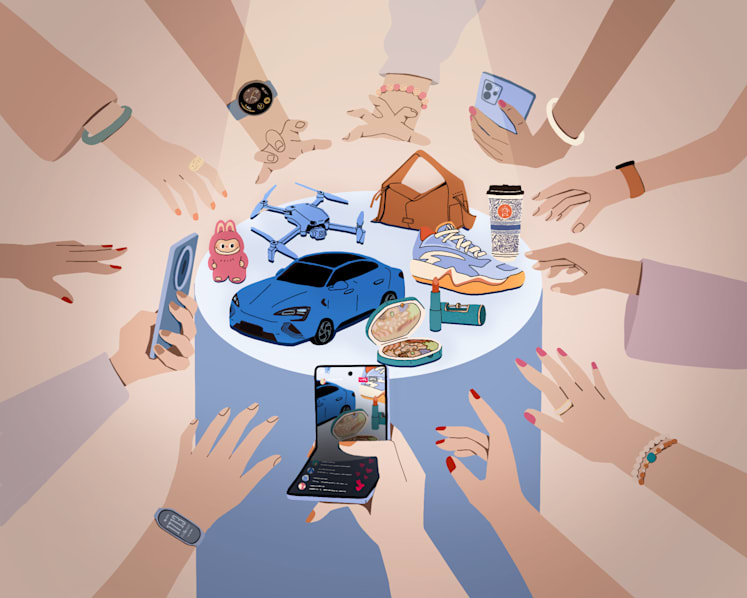

But the search for value is not simply about spending less - it is also changing what consumers are willing to pay for.
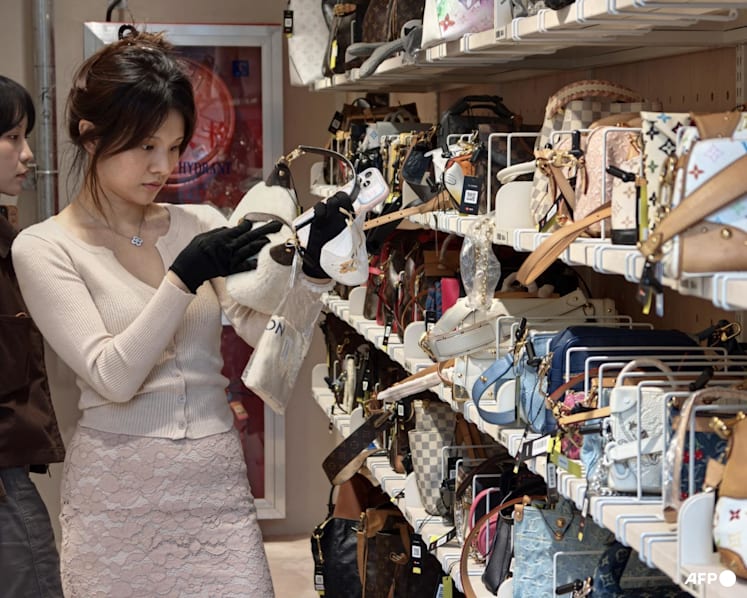
At one end sits “dupe” culture - the hunt for cheaper alternatives to branded products.
Taobao is catering to such shoppers by connecting them with factory-direct sellers and merchants from industrial clusters, said Liu from Taobao Fashion.
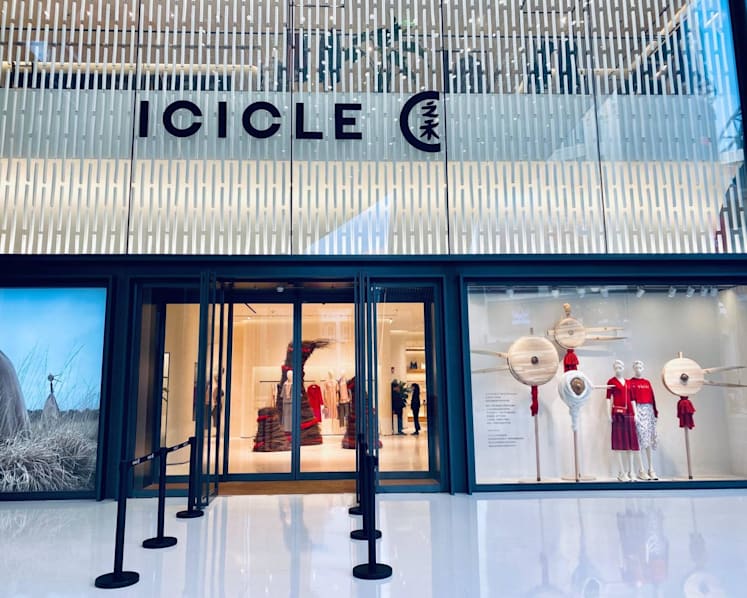
At the other end of the market are brands such as CHICJOC.
Its customers are willing to pay a premium for products they believe will last, said co-founder Wei.
The brand does not offer discounts and raises prices on some of its classic pieces each year, much like luxury brands.
“And customers accept it,” she said.
Wei said her customers viewed a coat as an investment they could wear for a decade, and paid close attention to prices.
“If we adjust any price even slightly, they’ll find out ... Our customers even know our prices and the tiny differences better than our staff do.”
BEYOND THE BARGAIN
For platforms and brands, winning over China's increasingly selective shoppers now requires more than offering the biggest discounts.
At a sprawling studio about an hour’s drive from central Shanghai, Taobao is experimenting with a different approach to livestream selling.
CHICJOC’s fashion showcase is part of the platform’s Super Live initiative, which stages professionally produced shows to highlight brands and their products.
According to Alibaba, the format swaps the standard phone setup for cinematic cameras and couture-level runway production, weaves backstage design stories into the stream, and runs on a “see-now-buy-now” model - viewers can order what is on the catwalk as it appears.