Businesses in the neighbourhood are hoping to revive the estate's vibrancy, but residents are enjoying the peace and quiet after years of putting up with crowds.
Residential blocks and shops at Tiong Bahru on Nov 13, 2026. (Photo: CNA/Ili Mansor)
Residential blocks and shops at Tiong Bahru on Nov 13, 2026. (Photo: CNA/Ili Mansor)



Think of Tiong Bahru and low-rise white flats trimmed with grey or brown nestled among cute lifestyle shops, bustling cafes and hipster restaurants come to mind.
For the operator of Drips Bakery, which has been in the area for 16 years, that's exactly how they remember the neighbourhood in its heyday.
But in recent years, the lack of vibrancy in the estate has led to dwindling footfall.
"Tiong Bahru has slowly lost that hipster attraction," said Drips' founder Jessica Tan.
With sales declining by 25 to 30 per cent compared to before the COVID-19 pandemic, the cafe, which used to be able to seat up to 60 people at its Tiong Poh Road outlet, has downsized to a takeout-only outlet in nearby Seng Poh Road since last year.
Once bursting at the seams on weekends, the business now primarily serves residents and office workers in the area.
CNA Games
 Guess Word
Crack the word, one row at a time
 Buzzword
Create words using the given letters
 Mini Sudoku
Tiny puzzle, mighty brain teaser
 Mini Crossword
Small grid, big challenge
 Word Search
Spot as many words as you can
Show More
Show Less
"The footfall in Tiong Bahru has dropped so much, it was impossible to sustain the cafe," said Ms Tan.
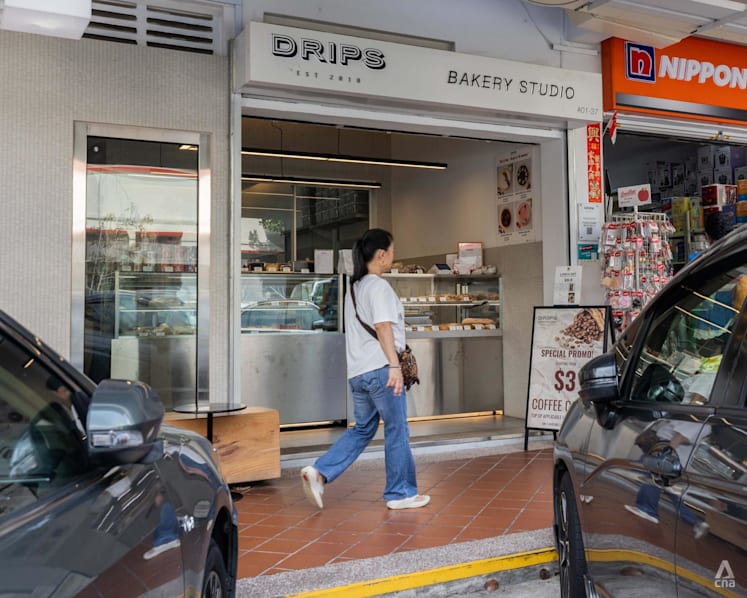 The exterior of Drips Bakery at Tiong Bahru on Nov 13, 2026. (Photo: CNA/Ili Mansor)
Further down the road at Hello Arigato cafe, revenue has fallen by 10 to 15 per cent this year compared to last, said its co-founder Colin Chen.
While rising fuel prices have impacted food and beverage (F&B) spending islandwide, his Tiong Bahru outlet is faring worse than his outlets in Joo Chiat and Upper Thomson, which have seen sales fall by 5 to 10 per cent.
These two cafes are among the eight businesses whose owners told CNA they have seen fewer customers in the area, which was once a go-to destination for shoppers and cafe-hoppers.
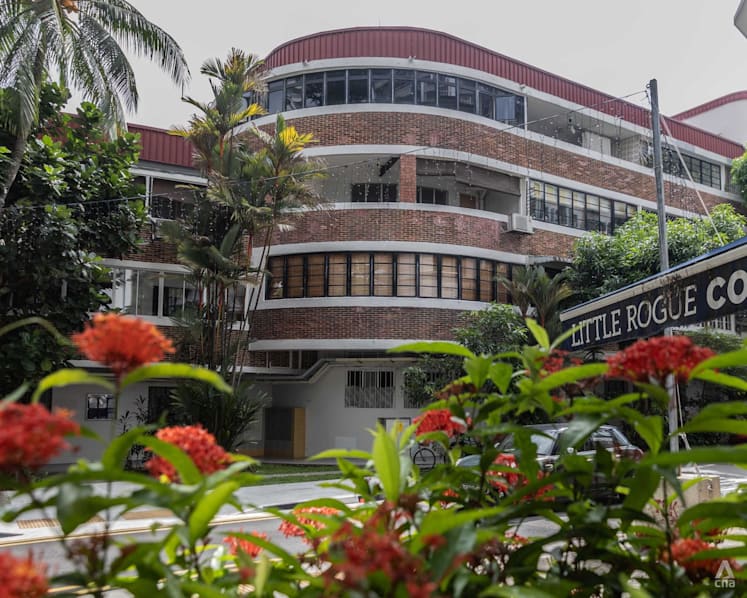 Residential blocks and shops at Tiong Bahru on Nov 13, 2026. (Photo: CNA/Ili Mansor)
FROM HIP TO HAS-BEEN?
The historic estate, bounded by Tiong Poh Road, Outram Road and Seng Poh Road, was Singapore’s first public housing estate with 20 blocks of low-rise pre-war blocks that feature residential units and shophouses. These have since been gazetted for conservation by the Urban Redevelopment Authority (URA).
Gentrification of the area began in the early 2010s, with older businesses such as hair salons and textile shops making way for cafes, bakeries and artisanal shops.
Spa Esprit Group was among the early movers in Tiong Bahru's transformation into a hipster enclave, opening four establishments between 2010 and 2013 – specialty coffee cafe Forty Hands, bistro Open Door Policy, Tiong Bahru Bakery and men's grooming salon We Need A Hero.
Independent bookstores BooksActually and Woods in the Books also opened shops at Tiong Bahru’s Yong Siak Street in 2011 and 2013 respectively.
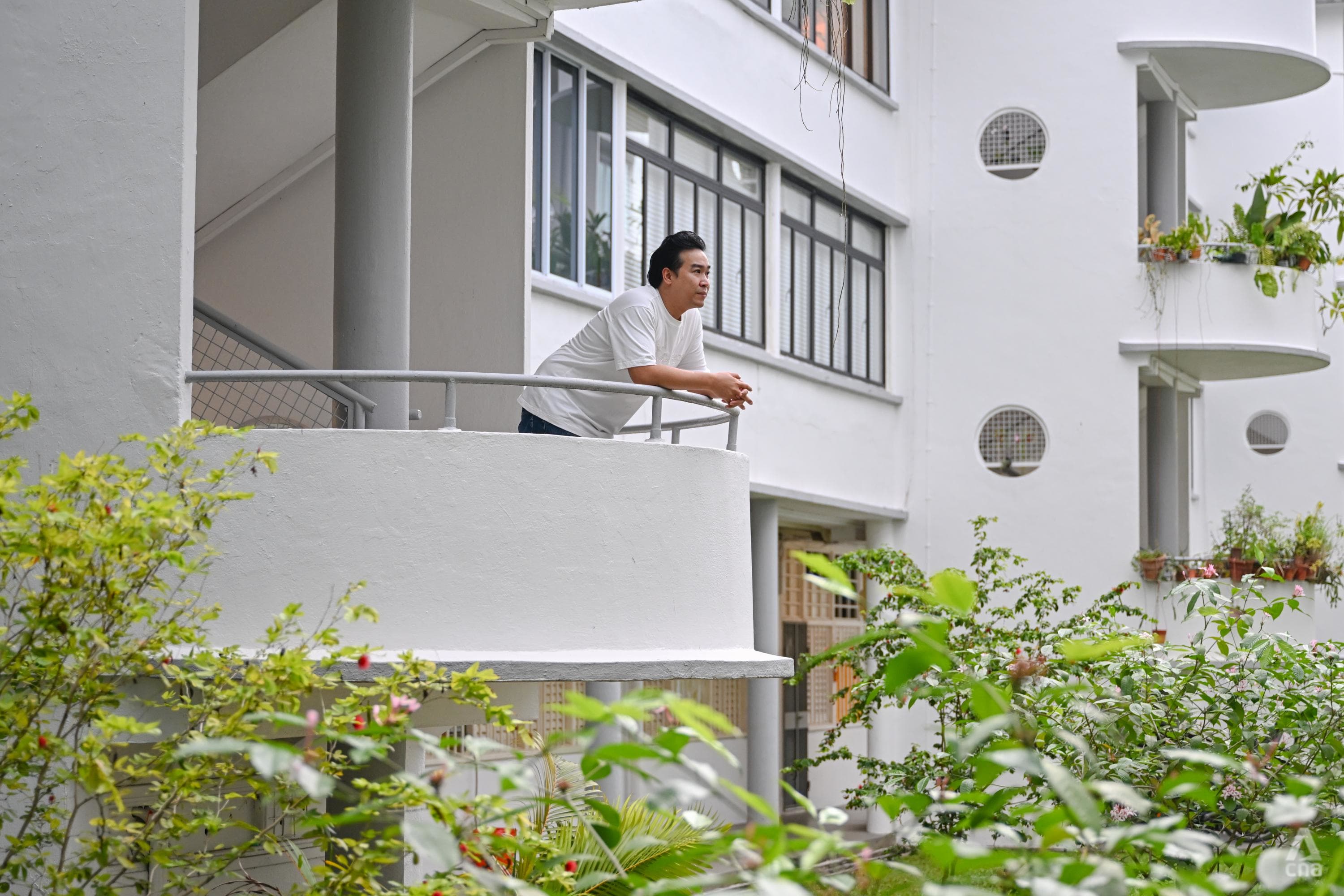
Lifetime Tiong Bahru resident Clarence Soh said that the estate was shaping up to be "the next Holland Village" during those years.
"It was vibrant to the extent that a lot of my friends were coming all the way from Woodlands, Jurong and Tampines to Tiong Bahru to drink," said the 46-year-old.
In more recent years, Mr Soh has noticed that tourists and locals were less attracted to the area, as more and more cafes and book stores closed down or moved out.
"Last time you could see here, on normal days, tourists were walking around, taking pictures of our estate, but right now, it's so rare to see this," he said as he gestured to the quiet streets in his neighbourhood.
Indeed, over the last few years, watering holes such as Al Capone's and PS.Cafe, which Mr Soh's friends used to frequent, quietly exited the area.
As did all of Spa Esprit's ventures there except Tiong Bahru Bakery. BooksActually also closed its outlet in the neighbourhood in September 2020, while Woods in the Books moved out in 2024.
While some of these spaces have been replaced by F&B outlets, others have been taken over by gyms, clinics and art galleries.
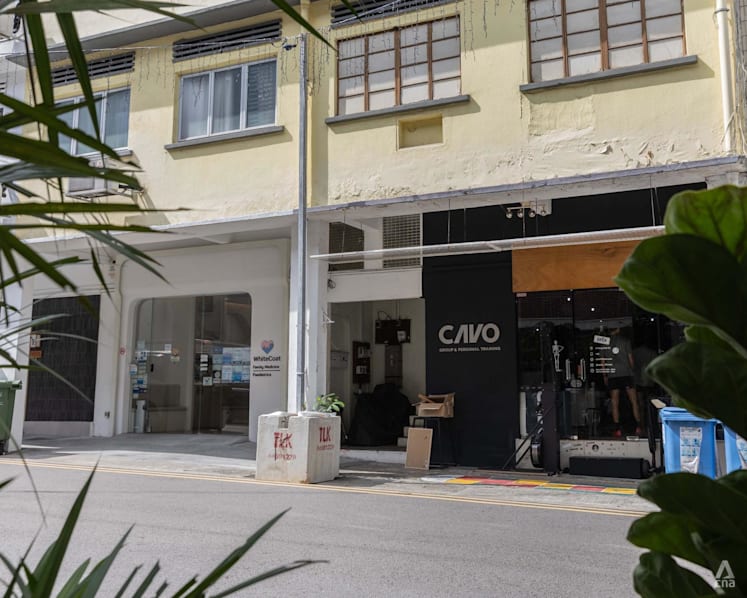 A WhiteCoat clinic and Cavo gym at Yong Siak street in Tiong Bahru on Nov 13, 2026. (Photo: CNA/Ili Mansor)
The decline in F&B options and specialty shops has also impacted hawkers at the nearby Tiong Bahru Market.
Ms Yu Le, who has run Joo Chiat Beef King for the past decade, said that while business during the day has not been affected, there are fewer customers patronising the hawker centre at night.
"Maybe other estates have more varied food offerings, so fewer people are coming here," said Ms Yu, who estimated a 10 per cent drop in business compared to before the COVID-19 pandemic.
The lack of patronage has led to a vicious circle: Shops are cutting their losses by closing earlier, leading to customers who do turn up for a meal being left disappointed with the lack of options.
"All the more customers would not want to come," said Ms Yu, who has shifted her closing time this year from 8.30pm to 8pm.
Tiong Bahru resident Clarence Soh in his neighbourhood on Nov 27, 2025. (Photo: CNA/Tan Wen Lin)
FRICTION WITH RESIDENTS
Businesses pointed to the friction with residents in the area as one of the main pain points of operating in the enclave, and a likely reason why previous tenants left.
Unlike newer Housing and Development Board (HDB) estates, where residential blocks are typically set apart from commercial areas, Tiong Bahru's pre-war flats were built with homes and shops in close proximity. In some cases flat units are just above shops.
This means residents often live just metres away from businesses, with little physical separation.
In other busy neighbourhoods like Joo Chiat, the streets lined with shops are on adjacent streets to residences and rarely next to or below them.
Hello Arigato's Mr Chen said that the proximity of his shops to flats in the Tiong Bahru area meant that he had to make changes to his operations.
For instance, when his store opened last year, he had outdoor seating where customers could chat over drinks.
"But there were residents who complained (about the noise), then we had to remove them," he said.
"We just have to be mindful that it is a unique neighbourhood in a sense that the F&B and the residential units are very intertwined."
This was the same struggle for restaurant and cocktail bar Dirty Supper, which likewise received complaints when it opened in March 2024.
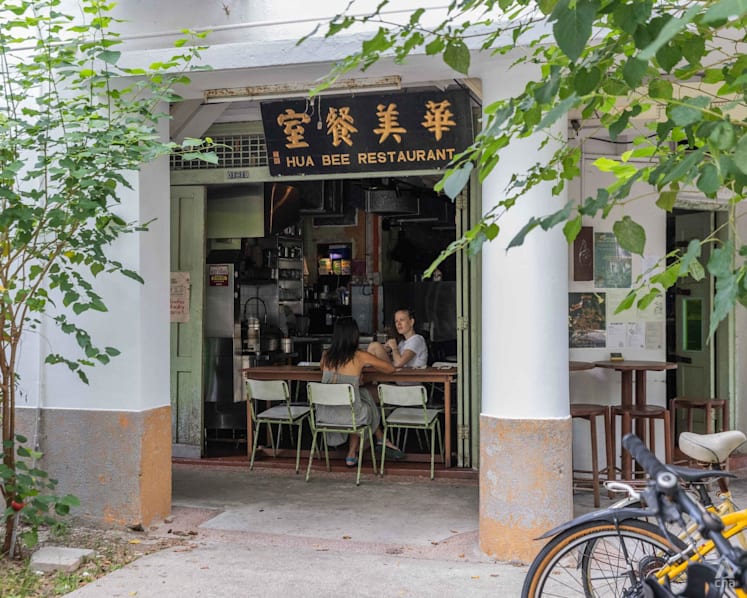 The exterior of Dirty Supper, which operates within the historic Hua Bee Restaurant premises, at Tiong Bahru on Nov 13, 2026. (Photo: CNA/Ili Mansor)
Its owner Peter Smit said that the main doors of the restaurant on Moh Guan Terrace were initially left open throughout its operating hours.
"We didn't take into account that the noise travelled out, but then a couple of people came down (from the residential units above) to say that it was a bit loud," he said.
Mr Smit said that from then on, he closed the restaurant doors at 10.30pm so the noise was contained and diners' conversations didn't flow out into the streets.
He also advises customers not to stand outside the restaurant to chat when they leave the premises late.
"It's about having respect for those who live here as well, and trying to work together with them," he said.
While Mr Chen has adapted his business and no longer receives complaints from residents, he lamented the missed opportunity to enliven the streets around his cafe.
He said the constant threat of complaints has left businesses "scared or not willing" to make changes to their shopfronts to attract customers.
"We would love to use the outdoor area ... because it's in our interest to make the street more vibrant, to get more people to walk around the area, and obviously without that element it's less attractive (for customers)," he said.
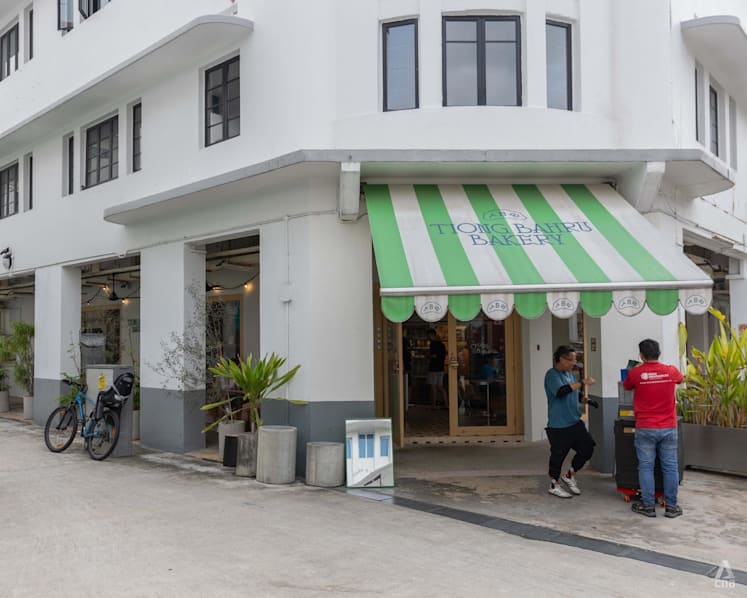 The exterior of Tiong Bahru Bakery at Tiong Bahru estate on Nov 13, 2026. Most restaurants in Tiong Bahru do not have al fresco dining to ensure minimal noise disturbance for residents. (Photo: CNA/Ili Mansor)
But not all businesses see Tiong Bahru's quieter streets as a sign of decline.
Mattress and bedding retailer Heveya, which opened its flagship showroom in the estate in 2016, recently refurbished its premises along Eng Hoon Street.
Its Singapore country manager Bryan Goh said the neighbourhood's changing character was part of its "natural evolution rather than a decline in its appeal".
He added that Tiong Bahru was no longer defined by a particular crowd or type of business, but by the diversity of establishments and communities that coexist there.
RESIDENTS WELCOME A QUIETER TIONG BAHRU
While businesses are lamenting losses and restrictions on how they can operate, a number of residents in the area are largely grateful that the interest in their neighbourhood has died down.
Retiree Michael Tan said that he has come to enjoy the quiet in the estate, especially in the evenings.
"Those who are doing business, of course they will find that it will affect their profits," said the 75-year-old, who has lived in the area his whole life.
"But for residents, we love it because of the peaceful nature of the space. As you can see, it's not as rowdy as some newer neighborhoods."
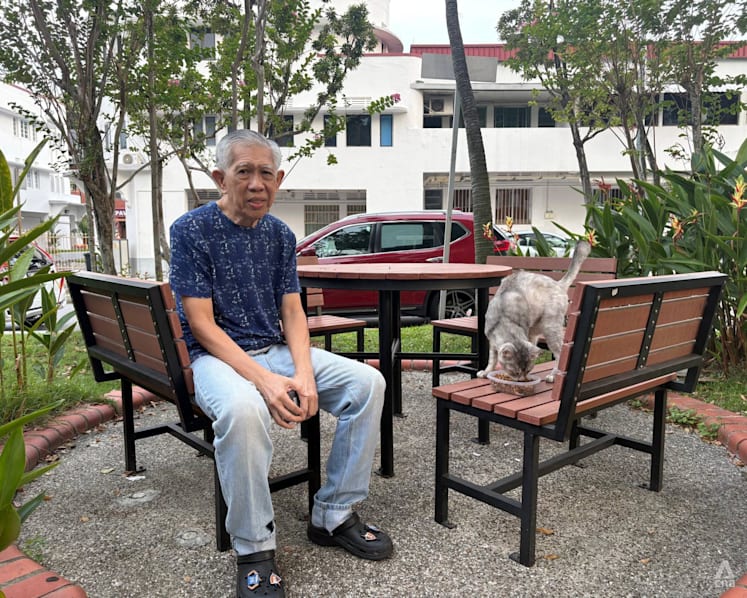 Lifetime Tiong Bahru resident Michael Tan feeding a cat near his home. (Photo: CNA/Justin Ong)
Mr Linus Loh, a resident of seven years, said another perennial bugbear for residents was the parking and traffic situation.
Parking used to be scarce on the weekends and, as many roads in the area are narrow and one-way, they were prone to congestion, he said.
"Once a vehicle broke down and the whole road was jammed. There was no way anyone could turn out," said the 58-year-old, who works in the hospitality industry.
He noted that the previously busy Eng Hoon Street became pedestrianised in 2023, adding that this means it is even more important that the area not become overcrowded with visitors.
Mr Loh said that businesses that end up surviving in Tiong Bahru are those which also cater to the residents, and not just visitors.
"You can't rely on the crowds from other parts of Singapore to come. How often do they come down?" he said.
In response to CNA's queries on what was being done to promote the vibrancy of the neighbourhood, the URA said that Tiong Bahru is "primarily a residential neighbourhood".
Its spokesperson added that its conservation guidelines protect Tiong Bahru's "distinctive architectural character and heritage value", while its land use planning approach safeguards the area's residential character.
URA also said that it has not received recent feedback on disamenities arising from approved commercial uses within the estate.
"There is also transparency on where commercial uses can be allowed to provide amenities to serve residents and contribute to the vibrancy of the area," it said.
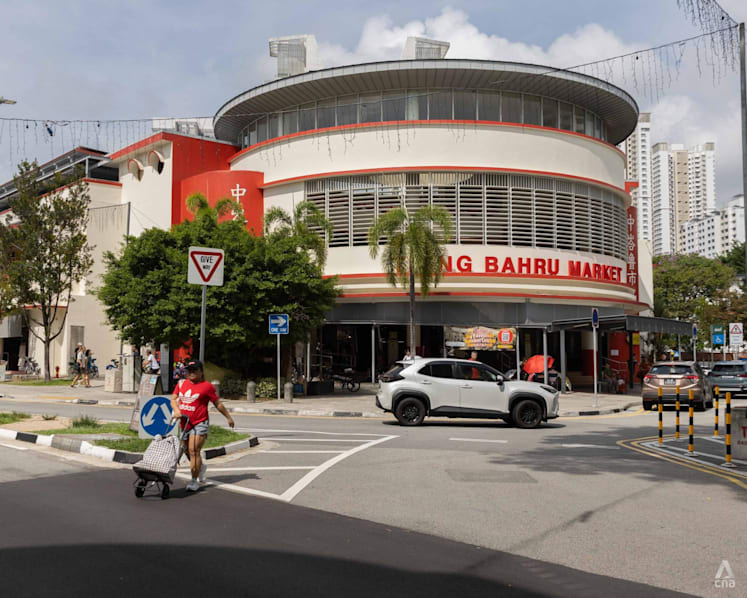 A view of Tiong Bahru Market on Nov 13, 2026. (Photo: CNA/Ili Mansor)
IS A TIONG BAHRU REVIVAL ON THE CARDS?
Mr Smit of Dirty Supper said that businesses in the area "all want it to be busier" for the sake of improving business, which has fallen by about 20 to 30 per cent in the past year.
"But in saying that, there's a way to make it busier but not getting into the trap of 'messy busy'," he said.
He pointed to the efforts at Joo Chiat, where various public and private agencies organised a car-free day early in October.
"I don't know how feasible it is for Tiong Bahru, but it is nice to see other areas doing programmes to make it different (for visitors)," he said.
Mr Chen said that his Hello Arigato branch at Joo Chiat benefitted from the car-free day initiative, with business improving during the initiative and in the weeks following.
He said he is speaking to "some parties" including other businesses in the area to "try and do something in Tiong Bahru" such as a public event or festival.