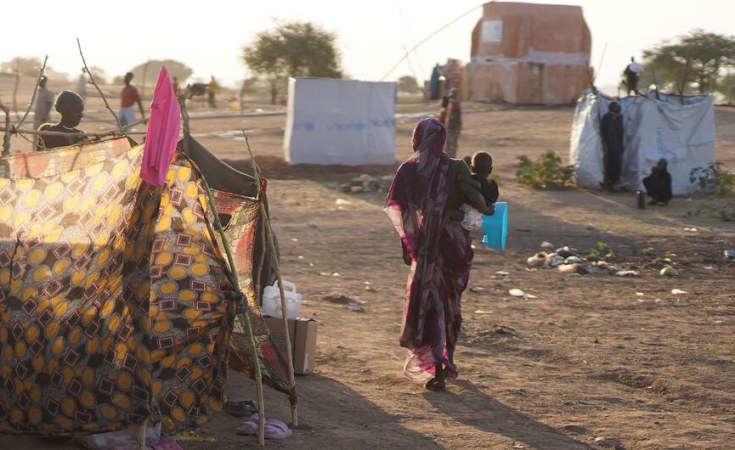
Geneva — The use of armed drones has become a defining feature of the conflict in Sudan and has expanded the reach and impacts beyond active frontlines, hitting civilians hard, says the head of the UN Human Rights Office (OHCHR) country team.
Li Fung told journalists at a Nov. 17 UN press conference that during 2026, battle lines have shifted and military tactics have evolved – particularly the increasing use of drones by the Sudanese Armed Forces and the Rapid Support Forces.
“But the unbearable toll of the war on the Sudanese people remains as consistent as ever, amid blatant disregard for the protection of civilians,” said Fung.
“The use of armed drones has become a defining feature of the conflict and expanded the reach and impacts beyond active frontlines.”
The continuing armed conflict began on April 15, 2023, between the Sudanese Armed Forces (SAF) and the group calling itself the Rapid Support Forces (RSF), with other warring parties involved, according to the United Nations.
Fung said that drone strikes have become the major cause of civilian deaths in 2026, and a driver of displacement and civilian harm – “exacerbating the devastating impacts of three and a half years of unrelenting conflict on the Sudanese people.”
- More than 2,200 civilians killed this year
She noted that from January to the end of October, the UN Human Rights Office documented the killing of over 2,230 civilians during the conflict in Sudan.
Close to three-quarters were killed in drone strikes.
Attacks on civilian objects and infrastructure have persisted, primarily using drone strikes.
“In the first half of 2026, we documented at least 39 drone strikes on markets, 20 on civilian vehicles, 17 on fuel tankers and depots, and 16 on health facilities,” explained Fung.
Such tactics have continued since July, with repeated attacks on markets, health facilities, displacement sites, gold mining areas, humanitarian convoys, civilian vehicles, and water sources.
She said that a worrying trend is the recent intensification of drone strikes targeting power stations and fuel supply.
In just over two weeks between Oct. 20 and Nov. 4, 29 drone strikes – attributed to the Rapid Support Forces – hit electricity facilities and fuel stations across 11 states, triggering widespread power blackouts and further fuel shortages.
The attacks affected millions of people far from the conflict frontlines.
“The cumulative effect of this intense wave of strikes is a progressive erosion of the infrastructure and essential services on which civilian survival depends,” said Fung.
“The civilian harm extends well beyond the casualties. A strike on a hospital, water station or power plant deprives entire communities of medical care, safe water and services long after the attack itself.
She noted that power outages and fuel shortages put lifesaving health services such as dialysis and surgical procedures at risk, and affect temperature-sensitive vaccines.
They disrupt water supply, leading to shortages, rising prices, and the use of unsafe alternatives, which increase the risk of waterborne diseases such as cholera.
They also impact food supply and production, particularly for bakeries, which have already been hard hit by rising prices of flour and fuel.
To complete the process, please follow the instructions in the email we just sent you.
There was a problem processing your submission. Please try again later.
“The robust war economy and steady supply of weapons and other external support have enabled the parties to sustain fighting as the conflict in Sudan continues to evolve and spread into its fourth year.
“Patterns of violations and abuses against civilians have continued in the face of pervasive impunity, and a persistent disregard for human rights and international humanitarian law,” explained Fung.
She said it is critical to address the continued influx of arms – in particular, drones – that is fuelling the expansion of the conflict, and to press for an end to arms transfers being used in blatant disregard of the obligation to protect civilians.
Sophisticated Chinese weaponry, re-exported by the United Arab Emirates (UAE), has been captured in Khartoum, as well as used in Darfur in a blatant breach of the existing UN arms embargo, according to Amnesty International.
Drones and Drought in Sudan - a Combined Assault On Children Like Nothing Seen Before
Two-Week Power Blackout After Drone Attack Sees Prices in Sudan's White Nile State Soar
AllAfrica publishes around 600 reports a day from more than 100 news organizations and over 500 other institutions and individuals, representing a diversity of positions on every topic. We publish news and views ranging from vigorous opponents of governments to government publications and spokespersons. Publishers named above each report are responsible for their own content, which AllAfrica does not have the legal right to edit or correct.
Articles and commentaries that identify allAfrica.com as the publisher are produced or commissioned by AllAfrica. To address comments or complaints, please Contact us.
AllAfrica is a voice of, by and about Africa - aggregating, producing and distributing 600 news and information items daily from over 100 African news organizations and our own reporters to an African and global public. We operate from Cape Town, Dakar, Abuja, Johannesburg, Nairobi and Washington DC.
To complete the process, please follow the instructions in the email we just sent you.
There was a problem processing your submission. Please try again later.