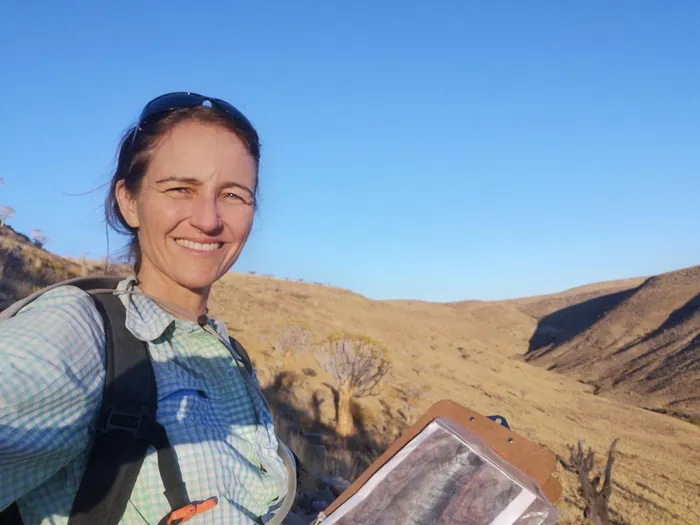
A five-year research programme led by Stellenbosch University professor Wendy Foden will investigate how vulnerable desert plants can survive changing environmental conditions, including rising heat and water stress.
The programme will focus on Southern Africa’s arid regions, particularly the Richtersveld in the Northern Cape, where researchers will study how species such as quiver trees and the halfmens respond to environmental pressures.
Foden, a Specialist Scientist in Climate Change at South African National Parks (SANParks), has received the inaugural Oppenheimer Research Chair in Conservation in a Changing Climate Award to lead the initiative.
She is also a professor at Stellenbosch University's School for Climate Studies and chairs the International Union for Conservation of Nature's (IUCN) Species Survival Commission Climate Change Specialist Group.
Working with SANParks scientists and protected area managers, Foden's team will investigate how desert succulents respond to heat and water stress, while evaluating whether assisted translocation could help vulnerable species survive.
The approach involves moving species to areas where conditions may be more favourable, but it also carries potential ecological, genetic and biosecurity risks. The team will assess these risks alongside the effectiveness and limitations of the intervention.
Research to examine climate threats to desert plants
Foden said stronger scientific evidence was needed to guide conservation decisions.
“We urgently need stronger evidence to guide conservation in a changing climate, alongside the space to develop and test new approaches,” she said.
The research will focus on species including quiver trees and the halfmens, as well as the challenges facing Southern Africa's vulnerable ecosystems.
The programme will also involve collaboration with the University of Cambridge's Conservation Evidence group to assess existing research on conservation interventions in Africa and internationally.
The findings will help practitioners identify promising approaches and areas requiring further investigation.
Five-year programme to support conservation research
The award was established by the Benjamin Raymond Oppenheimer Trust through Oppenheimer Generations Research and Conservation to support leading African researchers addressing pressing challenges facing the continent.
Dr Duncan MacFadyen, head of Oppenheimer Generations Research and Conservation, said Foden's programme would bring scientific research directly to practical conservation challenges.
The chair will also support international collaboration, postgraduate supervision and the training of emerging researchers.
Foden's links through the IUCN will provide opportunities to share findings internationally and connect local research with global conservation policy.
Distinguished Professor Guy Midgley, head of Stellenbosch University's School for Climate Studies, said the initiative would strengthen connections between research, policy and practice.
Dr Howard Hendricks, managing executive of SANParks' Conservation Services Division, said the organisation's national parks provided a platform for translating scientific research into practical conservation solutions.
The research will ultimately assess whether conservation interventions improve the resilience and survival prospects of vulnerable species.