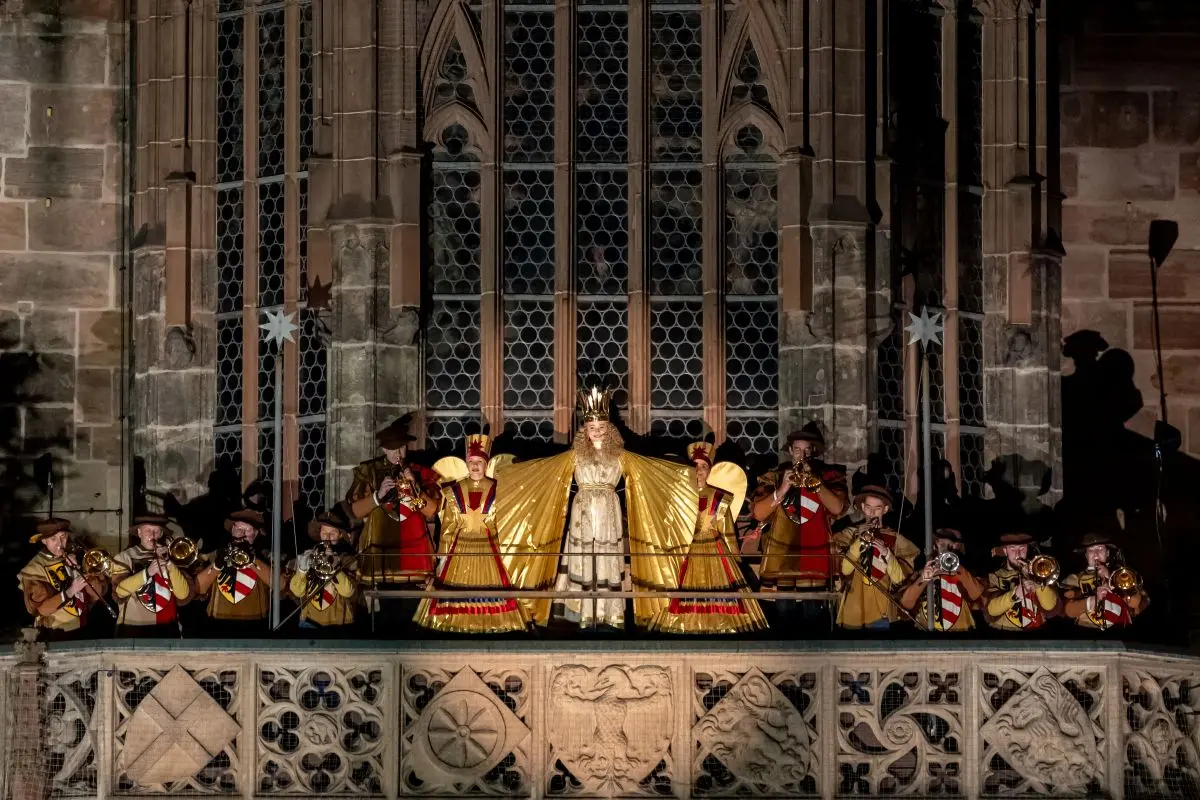
 'Christkind' Nora Falk, pictured on the gallery of the Frauenkirche in Nuremberg in 2025 at the official opening ceremony of the 'Christkindlesmarkt'. Photo: picture alliance/dpa | Daniel Karmann
If you only have time for one Christmas market, these ten picks from across Germany should deliver the full experience – from Glühwein and gingerbread to historic squares and handmade gifts.
Germany has far too many Christmas markets for anyone to visit them all. Berlin alone has dozens, while other cities spread their festivities across several squares and neighbourhoods.
That leaves visitors with a difficult question – if you have time to visit just one market or one city, which should it be?
For this guide, we’ve chosen one major market in each of ten accessible cities. These aren’t necessarily Germany’s biggest, or quirkiest, festive events. Instead, they're the places most likely to provide the full, traditional experience – wooden stalls, regional food, seasonal crafts, lights and music in an atmospheric historic setting.
One great thing about Germany's Christmas markets is they tend to be free to enter – its just the treats and gifts you'll need to shell out for. This applies to all of the markets listed here except Berlin's WeihnachtsZauber in Gendarmenmarkt.
Don't miss our journalists' daily news roundup from Germany
Nuremberg Christkindlesmarkt: November 27th–December 24th
If you want the textbook German Christmas market, Nuremberg is an obvious place to start.
Around 180 stalls with distinctive red-and-white roofs fill the Hauptmarkt with traditional, often handmade decorations, and plenty of the city's traditional gingerbread (Lebkuchen) and grilled sausages (Rostbratwurst).
On the opening evening, the city’s Christkind delivers a ceremonial prologue from the balcony of the Frauenkirche.
Despite its international fame, the organisers still prioritise traditional goods over generic fairground attractions. That makes this one of the clearest introductions to the customs visitors associate with Christmas in Germany.
The market closes at 2pm on Christmas Eve.
READ ALSO: In pictures - Six hundred sheep are led through Nuremberg's city centre
Erfurt Christmas Market: November 24th–December 22nd
Few large urban markets enjoy a backdrop as dramatic as Erfurt’s.
The main market fills Domplatz below St Mary’s Cathedral and St Severus Church, with more than 200 wooden huts offering Thuringian food and traditional crafts. A tall Christmas tree, a 12-metre pyramid and a nativity scene with almost life-sized figures provide the major landmarks.
For something distinctly regional, try a Thüringer Rostbratwurst or Erfurter Schittchen, the city’s version of Christmas stollen.

Aachen Christmas Market: November 20th–December 23rd
Aachen’s market unfolds around two of the city’s greatest landmarks: its cathedral and town hall.
More than 120 traders, craftspeople and food sellers occupy the Markt, Katschhof and Münsterplatz, creating one connected event. The setting is particularly impressive after dark, when the historic centre is illuminated.
The essential local snack here is Aachener Printen, a firm, heavily spiced relative of gingerbread. Aachen’s position near Belgium and the Netherlands also makes it an easy addition to a cross-border trip.
READ ALSO: 10 food and drink treats you have to try at a German Christmas market
Heinzels Wintermärchen, Cologne: November 23rd–January 10th
Cologne offers several major markets, but Heinzels Wintermärchen in the Old Town delivers the broadest combination of crafts, food and festive entertainment.
Inspired by Cologne’s legend of helpful house elves, more than 100 stalls form themed lanes across Alter Markt and Heumarkt. Craftspeople demonstrate skills including woodcarving, metalwork and confectionery, while the large ice rink provides the market’s main attraction.
The Alter Markt closes on December 23rd, while the Heumarkt section continues until January 10th. Both are closed on December 24th and 25th.
Skating and curling are also on offer here.
Dresden Striezelmarkt: November 25th–December 24th
Dresden’s Striezelmarkt combines an exceptionally long history with a number of unique traditions.
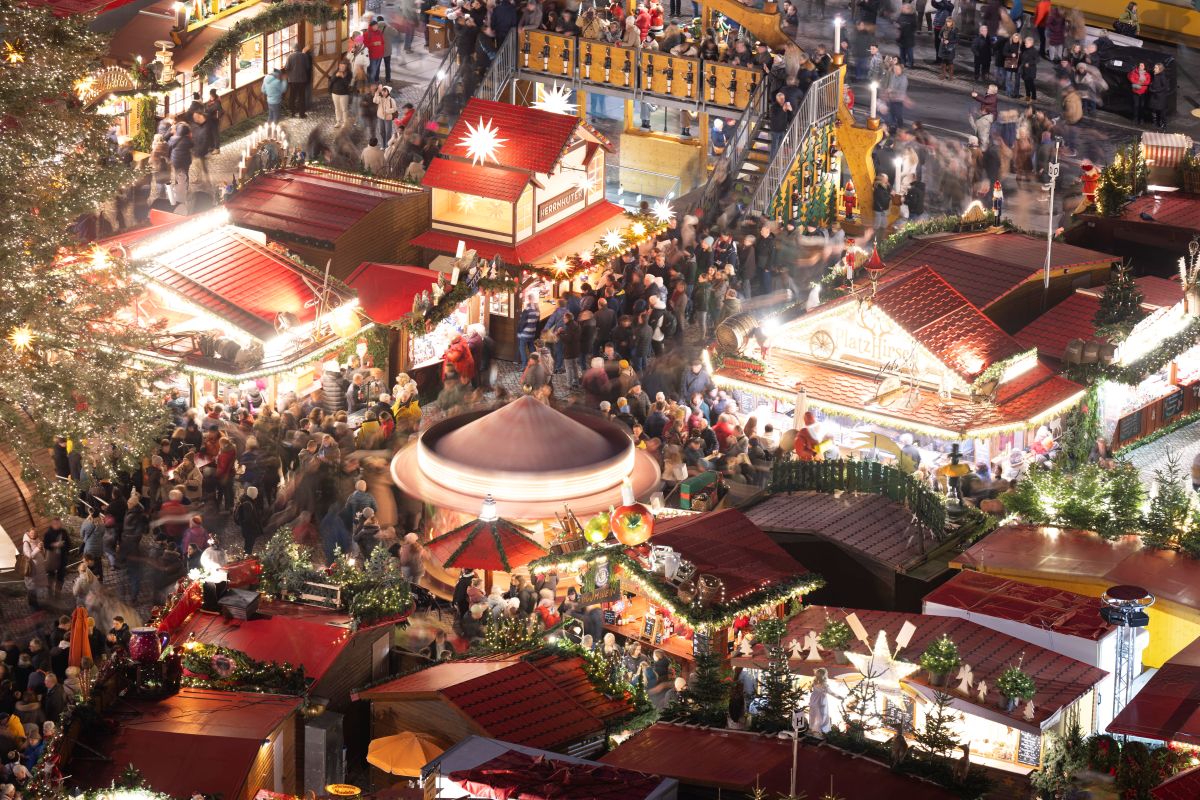
Held on the Altmarkt, it features more than 200 traders alongside Saxon crafts, Dresden Christstollen and woodwork from the Ore Mountains. Its landmarks include a vast Christmas pyramid, a walk-through candle arch and the local Pflaumentoffel – a small figure made from dried prunes.
The 2026 programme includes the Stollen Festival on December 5th, when the city celebrates its best-known Christmas speciality.
The market closes at 2pm on December 24th.
READ ALSO: The secrets behind stollen, Germany's beloved holiday treat
Frankfurt Christmas Market: November 23rd–December 22nd
Frankfurt may be better known for skyscrapers and banking, but its Christmas market has been part of the city’s story for centuries.
The market runs through the centre from Roßmarkt and Hauptwache to Paulsplatz, Römerberg and the Main riverfront. Its traditional heart is Römerberg, where a huge Christmas tree stands against the old town’s reconstructed gabled buildings.
Look beyond the usual Glühwein for local specialities such as hot apple wine, Bethmännchen marzipan pastries and Quetschemännchen figures made from dried fruit and nuts.
Münchner Christkindlmarkt: November 20th–December 24th
Munich has scores of festive events, but the Christkindlmarkt around Marienplatz is the city’s traditional centrepiece.
More than 130 stalls spread around the square and Rindermarkt, overlooked by the illuminated Neues Rathaus and a towering Christmas tree. Nearby, the Kripperlmarkt specialises in nativity scenes and their accessories, while Bavarian musicians and choirs perform from the town hall balcony.
The Krampus Run on December 13th supplies a wilder Alpine tradition, with hundreds of costumed figures crossing the city centre.
The market is closed on November 22nd and shuts at 2pm on Christmas Eve.

WeihnachtsZauber Gendarmenmarkt, Berlin: November 23rd–December 31st
With so many Christmas markets in Berlin, choosing just one can be a challenge. The WeihnachtsZauber gets the nod here for its combination of historic surroundings, crafts, food and entertainment.
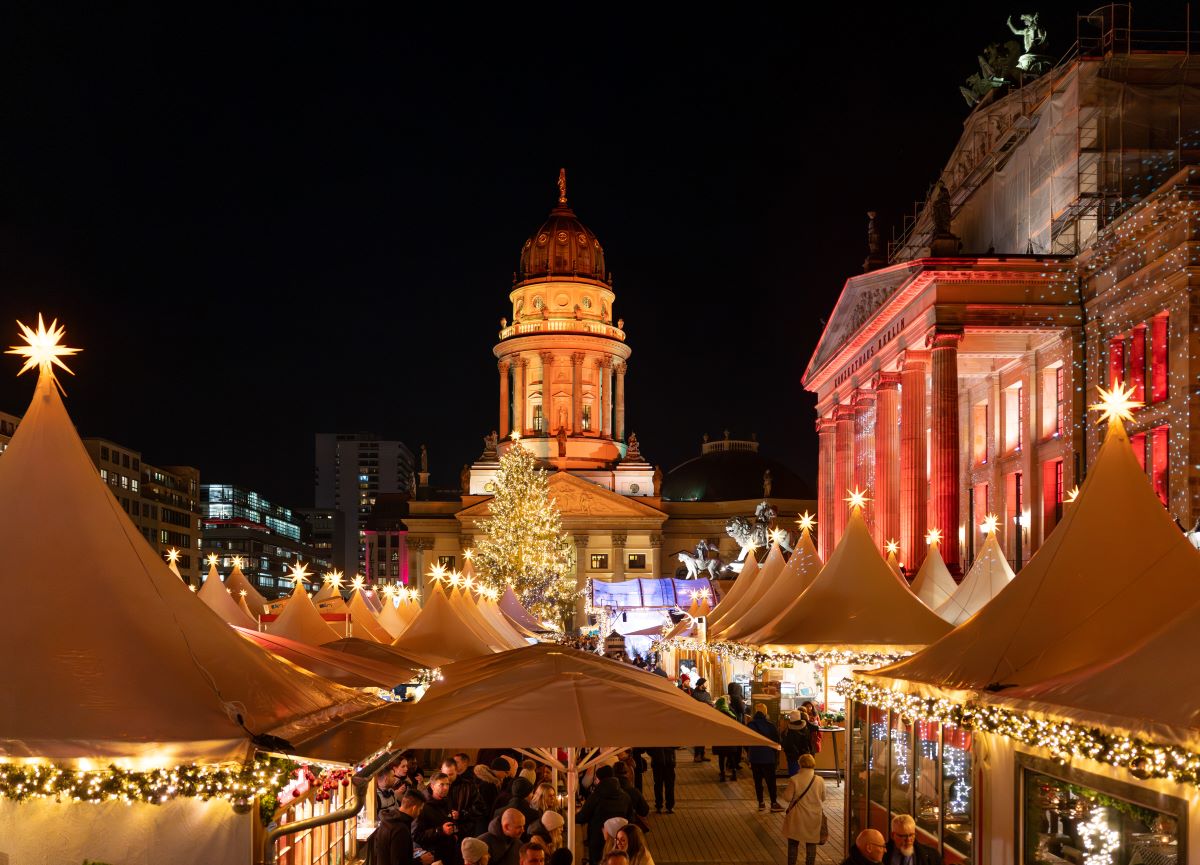
Back at Gendarmenmarkt in 2026, it sits between the German and French cathedrals and the Konzerthaus. Visitors can watch craftspeople at work in a heated tent, catch choirs, acrobats and dancers on stage, or escape the cold in the covered restaurant area.
Entry costs €2, although it’s generally free from 11am to 2pm on weekdays. Children under 12 enter free.
Leipzig Christmas Market: November 24th–December 23rd
Leipzig’s Christmas market is less a single square than a festive route through the historic centre.
Around 300 stalls are distributed across several areas. The main Marktplatz provides the large tree and performance stage, while the Naschmarkt hosts a medieval crafts market. Other sections offer a Christmas pyramid, family attractions and international food.
The location also gives the market a musical character. Leipzig is closely associated with Johann Sebastian Bach and the St Thomas Choir, and seasonal performances are held around the city centre.
On December 23rd, only the Marktplatz section remains open, closing at 8pm.
Braunschweig Christmas Market: November 25th–December 29th
Braunschweig provides the list’s strongest north-central option and one of its most atmospheric historic settings.
Around 140 decorated stalls surround St Blasii Cathedral and Dankwarderode Castle, with handmade gifts, a free cultural program and regional food. Look out for Braunkohl, the local kale dish, and Mumme-Glühwein, made using the city’s traditional malt extract.
The covered wooden rafts in the old castle moat offer an unusual place to stop for a drink, while the town hall tower provides a view over the lights.
The market remains open after Christmas but closes on December 24th and 25th.
Become a member or log in to continue reading
More
Comments
Join the conversation in our comments section below. Share your own views and experience and if you have a question or suggestion for our journalists then email us at news@thelocal.de.