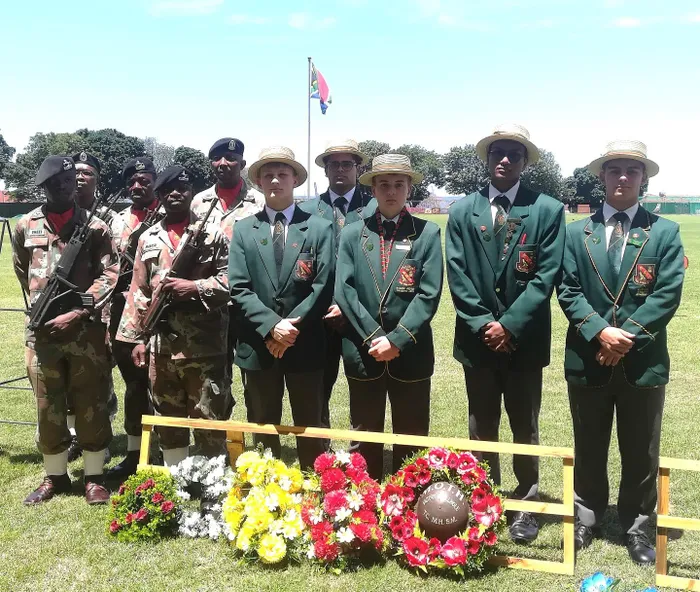
Soldiers from Queen Nandi Mounted Rifles join the five Glenwood boys who represented the five school houses.
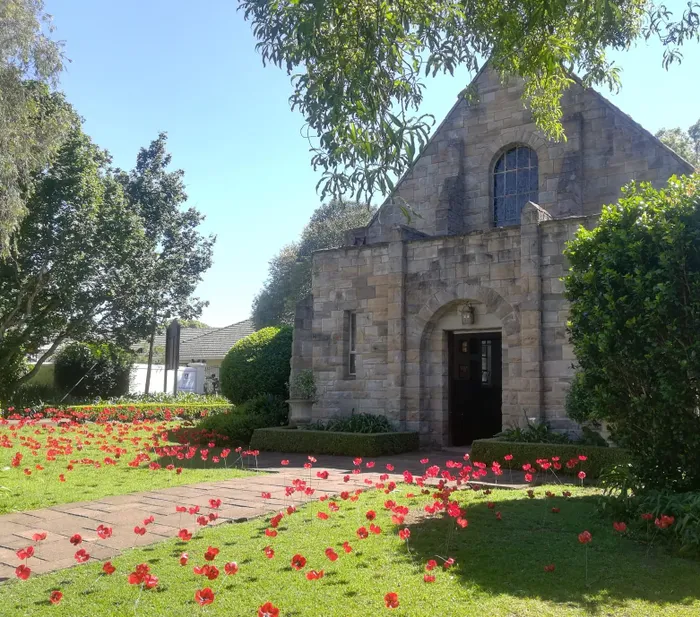
A field of poppies outside Highbury's chapel, on Wednesday, November 11, 2026.
Each year on the 11th of November or on a day nearest to that date, many countries hold remembrance services for their war dead. The First World War ended on the 11th hour of the 11th day of the 11th month 1918.
Both relieved and exhausted, people celebrated but they also mourned their war dead. So many millions had died that communities sought ways to remember their loved ones whose lives had been cut short on a scale never before seen in history.
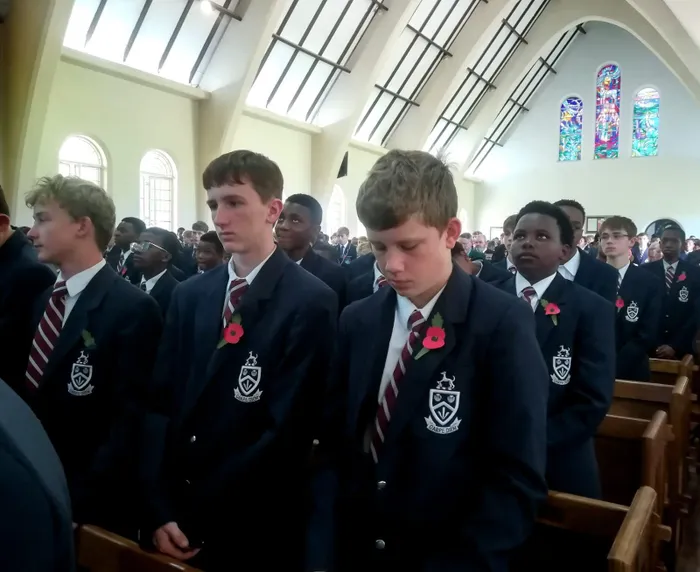
Kearsney boys, all wearing poppies, during the school's Remembrance service.
Cenotaphs were erected in towns; plaques were unveiled in churches, schools, halls, clubs and even in shops. In Durban, six schools continue to remember those boys who had once been their pupils: Durban High School (DHS), Glenwood, Kearsney, St Henry's, Clifton and Highbury.
Highbury is the only primary school which holds a service. This takes place in the school chapel, erected in 1939 and still retaining the charm one would encounter in a village church, a reflection of what was then a small school in Hillcrest, itself still a quiet country village. Six old boys died in the First World War, but 52 in the Second World War, a shocking toll for a small school.
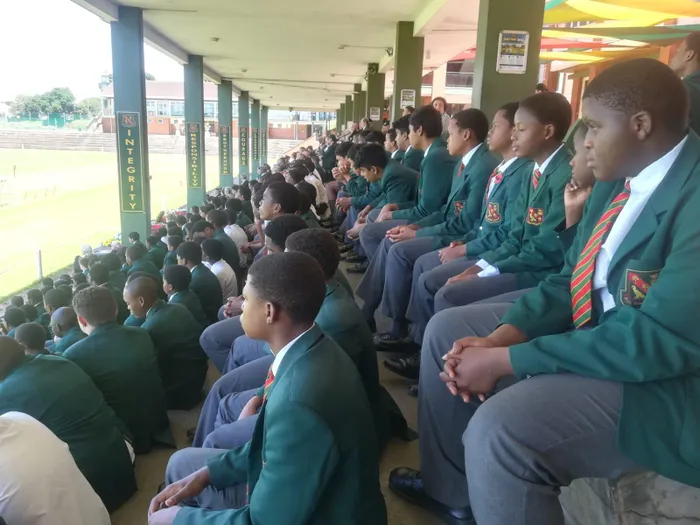
Glenwood High School boys fill the stand at the school's Remembrance Day service, November 10, 2026.
Five boys solemnly called the Roll of Honour. In a Prayer for Peace, the Headmaster Roland Lacock, prayed that our shattered world be mended. Like Highbury and St Henry's, Kearsney College held its commemoration on November the 11th, its service beginning in the chapel as the bell chimed eleven times.
The incoming Headboy Tom du Plessis, and an old boy Nick Keary, proceeded down the aisle bearing the school colour and Roll of Honour accompanied by the sound of a lament played by a solitary bagpiper. The service was conducted by Kearsney's own chaplain, Rev Kym Bishop with Rev Tonono of the West Street Central Methodist Church giving the sermon.
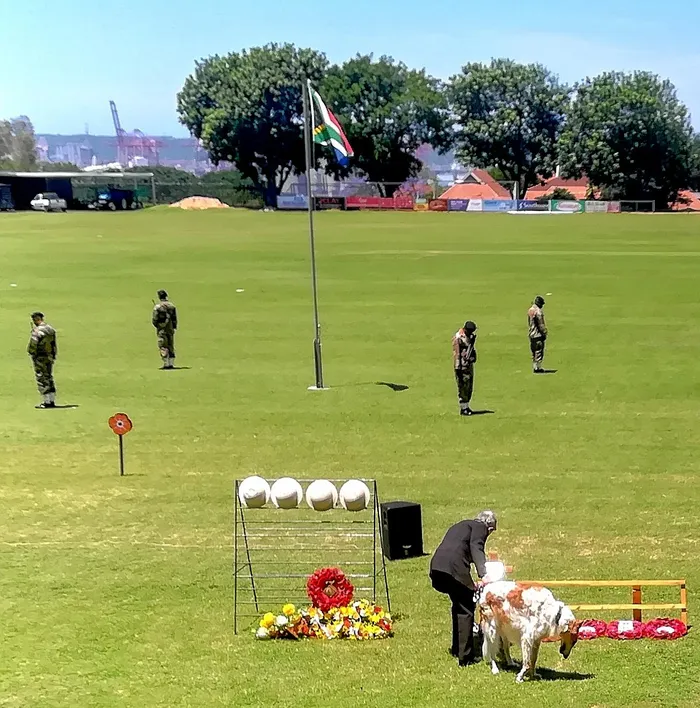
Alan Yates with his borzoi dog lays a wreath on behalf of the animals of war at Glenwood's parade.
In his reflection, the Deputy Headboy Clement Makelele, noted that when we remember we honour the legacy of those whose footsteps made the path we now walk. Amplifying this theme, the Headmaster Patrick Lees told the boys that the college remembers those who died in war not because it is a date on the school calendar, but because "we choose to remember," a sentiment that an increasingly forgetful nation should take to heart.
He reminded the boys that after the Second World War, the old boys were determined that those 23 fellow old boys who gave their lives in that conflict would not be forgotten. They raised funds to erect the Memorial Cricket Pavilion, a permanent and lasting tribute to their courage: "a promise made, a promise kept".
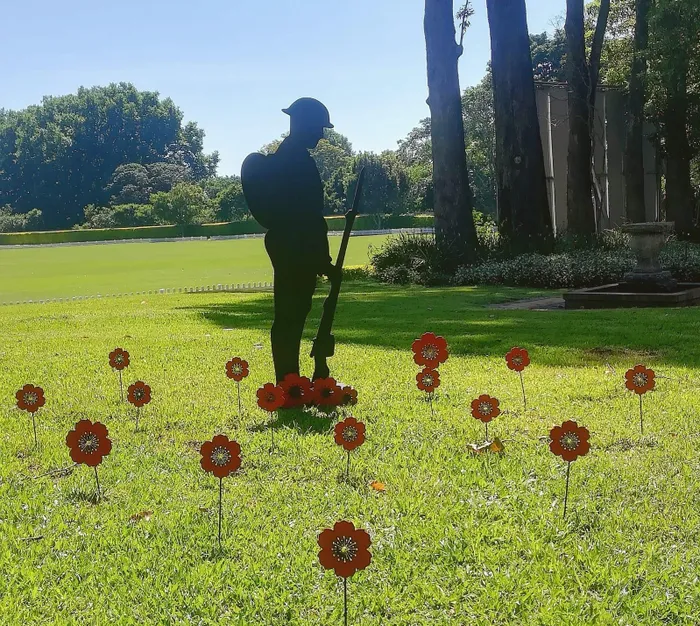
A "Tommy" stands among the poppies on the lawn outside the Kearsney chapel.
Glenwood High School encapsulates similar sentiments.
Although the school had only opened its doors in 1910 – just four years before the outbreak of World War I – it lost 25 old boys and a teacher, Harold Blanksby. It named a school house after him. Three other houses were named after Early, Kennedy and McCabe who were all teenagers when they lost their lives in the war that was meant to end all wars.
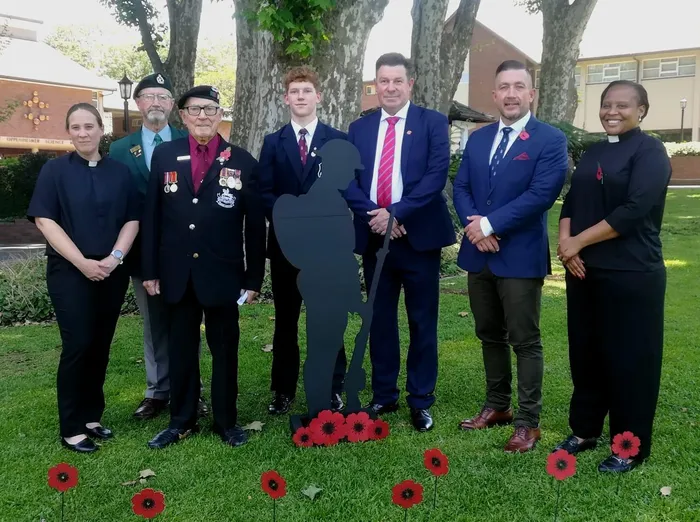
Left to right : Rev Bishop, Lt Col (Ret) Dore, MWO (Ret) Wilson, Headboy du Plessis, Headmaster Lees, Old Boy Keary and Rev Onalenna Tonono after the Kearsney service.
World War II exacted an even greater toll. The school's boarding establishment, Gibson, was named after Lt Gibson who died of his wounds at Cassino in 1944. Glenwood is now the only school that still retains its link to a military regiment. Ninety years ago, the school was affiliated to Natal Mounted Rifles, today known as Queen Nandi Mounted Rifles, which mounts a pared down parade on Glenwood's main sports field each November. During the parade, five Grade 11 boys presented a short tribute to each of those five soldiers after whom the school houses are named. Hunter Chislett spoke on behalf of Pte McCabe.
In an eloquent tribute, Chislett said: "We remember him not because he was famous, or because he held high rank, or because medals were pinned to his chest. We remember him because he was one of us, a Glenwood old boy who did his duty when the hour came. He left the classrooms and the playing fields of this school and the simple faith of his church and gave his life on foreign soil so that others might live in freedom. We will remember him. We will remember them all."