It’s been a very good year for Stéphane Bancel. On a crisp October day, the CEO of Moderna, of COVID-vaccine fame, is sitting in his glass-walled office in the company’s headquarters in Cambridge, Mass., weeks before encouraging results from the company’s first mRNA cancer vaccine would become public. He’s recounting the biotech’s rocky road turning an unproven, scientifically dismissed approach—using messenger RNA, or mRNA, the genetic code that instructs cells to make proteins—into a platform for producing new categories of medicines.
Fifteen years ago, Bancel had his doubts. At the time, there were no approved mRNA-based products on the market, and most scientists would have agreed that mRNA was too unstable to form the basis of a new class of medical treatments. In fact, the entire biotech industry had bet—successfully—on manipulating another, more reliable genetic material: DNA.
“It was crazy to think of using mRNA as a drug,” Bancel reflects. But that was before a fateful meeting forced him to look at the genetic material in a different way, and realize that with the right manipulation, mRNA provided a way to make drugs that were never possible with existing strategies. Now, he believes that nearly any protein drug made today with existing, recombinant DNA technology can also be made using mRNA.
The company’s goal isn’t to follow the usual road map and make one type of drug for one disease at a time, but to build a new platform from which a variety of different treatments can be developed in a plug-and-play scenario—similar to how the computer-technology industry is built on the foundational hardware and operating systems around which a whole universe of software has blossomed. “mRNA is the information molecule, so if you find the way to safely and effectively get it into the right cells, you can unlock a lot of medicines to help people’s suffering,” says Bancel.
Moderna’s mRNA COVID vaccine saved an estimated 2 million lives globally—while earning the company $46 billion—from 2021 to 2024. This fall, people are getting its newly approved mRNA flu shot, the first of its kind. And in October, Moderna announced with Merck that their mRNA approach also worked to stimulate the immune system to fight cancer—creating a therapeutic vaccine, rather than a preventative one. Intismeran, combined with one of Merck’s drugs, successfully kept melanoma from recurring in a group of patients with mid- to late-stage disease. By the end of the year, Bancel says, he expects to unveil similarly encouraging results from Moderna’s first mRNA therapy for a rare disease.
In just over a decade, mRNA has gone from molecular misfit to biomedical golden child, in no small part because of Bancel’s efforts at Moderna to prove the naysayers wrong. “At the beginning, it was either zero drugs, or we find a way to climb this mRNA mountain and make a lot of drugs,” says Bancel.
Consider vaccines, where mRNA is quickly becoming the preferred technology for its speed. Scientists at Moderna can create a vaccine against any pathogen within six to eight weeks—far faster than it takes to then conduct the human studies required by regulatory agencies to establish a therapy’s safety and efficacy. Cancer researchers hope to harness that speed with customized mRNA vaccines like intismeran.
That’s what Bancel saw in mRNA more than a decade ago: an untapped vein of therapeutic ore. With mRNA, once it’s properly instructed to make the right proteins to fight a virus, fix a genetic disease, or tackle a tumor, the human body becomes its own treatment factory.
Over a series of interviews with TIME spanning several years, Bancel unveiled the story of how a startup betting on an untested technology came to sit at the same table as decades-old pharmaceutical giants, and now holds the key to a transformative platform that could redesign treatments in three critical areas: infectious diseases, rare diseases, and cancer.
 Stéphane Bancel, CEO of Moderna, in the Moderna headquarters office in Cambridge, Mass. on Oct. 19, 2026. —Tony Luong for TIME
Born in Marseilles, Bancel grew up with a strong interest in math and science, fueled in part by his father, an engineer who was always fixing things around the house. “We used to sail in the summer, and one summer my brother and father and I sailed from Marseilles to Mallorca—a two-day trip—and the engine broke in the middle of the water in the middle of the night,” he says. “I remember we were holding the flashlight above him, and he was fixing the engine by himself.”
Bancel was pursuing a degree in chemical engineering at Ecole Centrale Paris when, on a whim, he took a genetics class at the university next door and “fell in love with genetics,” he says. He went on to earn a master’s in chemical engineering at the University of Minnesota and an M.B.A. from Harvard Business School before working at Eli Lilly in Indianapolis for six years, mostly in manufacturing.
In 2006, he became CEO of the French diagnostics company bioMérieux. He was working in the company’s Boston office in 2011 when he got a call from his friend Noubar Afeyan, founder of Flagship Pioneering, a venture-capital firm and health-startup incubator. Bancel served on the boards of several of Afeyan’s startups and had already turned down multiple offers to lead some of the new companies. But Afeyan thought he finally had one that might entice his friend.
Afeyan had been approached by a trio of scientists with the idea for a company to develop new treatments from mRNA. He showed Bancel data from a handful of mice that had been injected with human mRNA to make a human protein. “I’m like, ‘This is impossible, because everything we learned in biology is that if you inject mRNA, you create an immune response,’” says Bancel. But what if it worked? Afeyan persisted. What would it mean? “I said, if it works, you’re going to be able to make hundreds, maybe thousands of medicines that you cannot using [current] biotech technology,” says Bancel.
Up to that point, the biotech industry was focused on manipulating DNA and making products to work on molecules that cells secreted—all in cell cultures using bacteria or viruses that were genetically engineered to produce the molecule in question. mRNA, on the other hand, works inside of cells, temporarily adding new genetic instructions for the cells to make new proteins, which could replace missing ones in certain diseases. In the case of infectious diseases or cancer, it could theoretically make proteins to stimulate the immune system.
But mRNA was too unstable to turn into a treatment formulation and too aggravating to the immune system, so the possibility of mRNA generating a new class of drugs hadn’t advanced past “what if.” When Bancel asked his good friends from college and business school whether he should take Afeyan’s offer to helm the new company, everyone told him “Don’t do it,” he says. Two other biotechs—CureVac and BioNTech (which would become Moderna’s competitor during COVID), both from Germany—had a head start on exploiting mRNA. But Afeyan was convinced that Moderna could lead this new field. Bancel had a choice to make, Afeyan said: Flagship would proceed with the company, with Bancel either as its head, a board member, or a regret-filled bystander.
The chance to build something in biotech from the ground up and figure it out along the way proved too tempting for the engineer in Bancel. In 2011, the company went from being called LS18—short for Life Sciences 18 in Flagship’s ledger of startups—to Moderna, a mash-up of “modified RNA,” with Bancel as its first CEO.
Bancel had experience in the pharmaceutical industry, but he had no playbook for starting a new company based on an unproven technology. He dived straight into every aspect of the company—even getting on the floor to build secondhand desks himself at Moderna’s first headquarters in Cambridge—and pushed himself and his team hard. “The key was, how do you get to that one drug before you run out of money and investors throw in the towel on you, saying we’re done?” he says.
Moderna spent its first few years in stealth mode, with no website, to the point that media and market watchers called the company suspiciously secretive. Analogies were drawn to another startup: the blood-diagnostic company Theranos, which was equally private about its product and ultimately turned out to be fraudulent. At the time, Bancel shrugged off the comparison, saying he didn’t want the world to watch Moderna’s teenage years, as the company developed the technology he was convinced would change medicine.
“My wife Brenda in those first two years thought I was clinically bipolar,” says Bancel. “I would come home some days so energized by the work; I would lie in bed not sleeping because my head was spinning, thinking all night because I was so excited. Literally three weeks later, I would come home borderline depressed, thinking, ‘Sh-t, this is never going to work.’ Brenda would ask, ‘Which is it? Is it going to work or not work?’ I said, ‘I don’t know. Nobody in the world knows, because it’s something that’s never been done before.’”
What inspired Bancel to keep going was the magic trick of viruses, which could essentially do what Moderna was trying to do: introduce new genetic information into a cell and thus co-opt it to make a specific protein. “If you look at nature and learn from nature that it’s possible, then your willingness and your appetite to invest capital is much stronger,” he says. “That’s why I tell my engineers, ‘Yes you can—you just don’t know how yet.’”
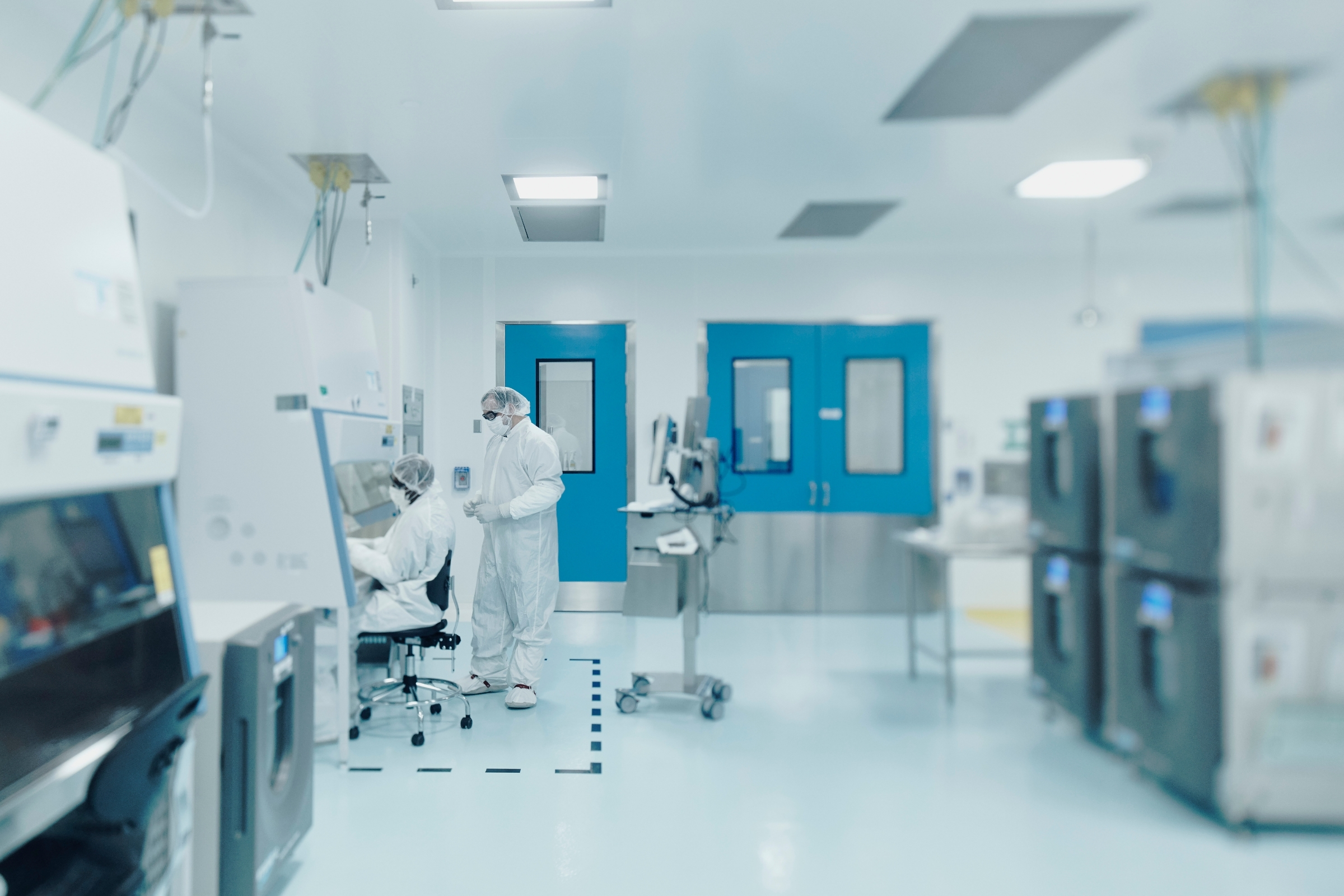
 Inside the new manufacturing site for intismeran, a personalized mRNA-based cancer vaccine, at Moderna in Marlborough, Mass. on Oct. 19, 2026. —Tony Luong for TIME
There were two big hurdles with turning mRNA into drugs. One was finding a way to control the immune response it generated, and the other was finding a way to deliver the mRNA to the right cells. Both tasks fell to Antonin de Fougerolles, Moderna’s first chief scientific officer, and his team. De Fougerolles didn’t have much to go on. “It’s like blank sheets of paper,” he says. “Eight or nine out of the 10 experiments aren’t going to work. Startups always have a lot of pressure, but I would put Moderna on the high end of that scale in terms of pressure.”
“It’s a very hard place to work,” Bancel acknowledges of the intense environment to produce results. “We debate and debate,” he says. “Every voice makes the discussion better. But it’s not for everyone.”
Early on, with input from his team, Bancel decided to focus Moderna’s limited resources on rare diseases involving missing proteins, because seeing if the mRNA could replace them would be a relatively quicker process.