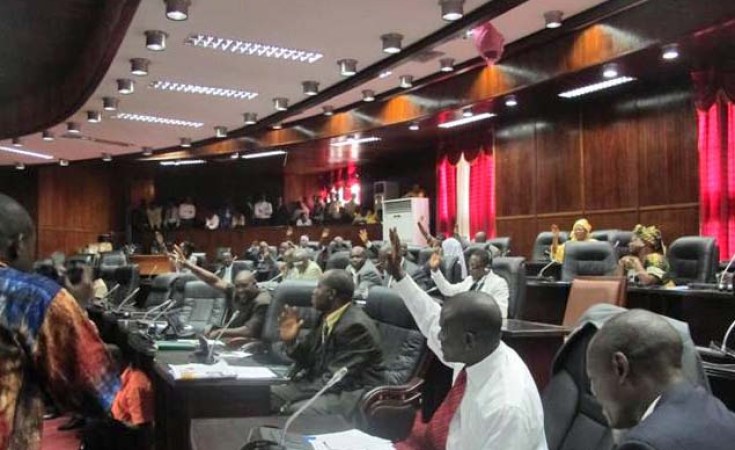
The Liberian Senate has invited civil society organizations, victims' groups, human rights advocates, legal practitioners and other stakeholders to participate in a public hearing on proposed legislation seeking to establish a Special War Crimes Court for Liberia (SWCTL) and a Special Economic and Corruption Crimes Court under the proposed National Anti-Corruption Court Act.
The hearing, scheduled for November 25, 2026, at the Senate Chamber Annex in Monrovia, is intended to provide a platform for public consultation, allowing stakeholders to present recommendations and express their views on the proposed laws before they are forwarded to the full Senate for consideration.
The legislative initiative seeks to establish accountability mechanisms for addressing atrocities committed during Liberia's civil conflicts, alongside specialized judicial arrangements for prosecuting economic and corruption-related offenses.
The invitation was extended by the Senate Standing Committee on Judiciary, Human Rights, Claims and Petitions as part of efforts to gather public input and conduct further consultations on the harmonized bills.
The proposed hearing is expected to bring together representatives of civil society organizations, victims' associations, human rights defenders, legal professionals, government institutions and other national and international stakeholders whose contributions could help shape the proposed judicial frameworks.
Welcoming the Senate's decision, Adama K. Dempster, National Secretary General of the Civil Society Human Rights Advocacy Platform of Liberia and a longstanding advocate for the establishment of a War and Economic Crimes Court, described the invitation as an important development in Liberia's pursuit of justice, accountability and the rule of law.
In a statement issued on November 9, Dempster expressed appreciation to the Senate for opening the legislative process to broader public participation, noting that meaningful engagement with citizens and relevant institutions is necessary to ensure that the proposed courts reflect national expectations and accepted international standards.
"We want to thank the Senate for engaging a broad range of stakeholders and conducting due diligence in the legislative process on this matter. This public hearing represents an important milestone in Liberia's quest for justice and accountability," Dempster stated.
He emphasized that consultations involving victims, survivors, legal experts and other citizens would be essential to ensuring that the proposed judicial institutions are appropriately designed, independent and capable of fulfilling their intended mandates.
According to him, the legislative process must adequately address the rights and interests of victims while guaranteeing due process and fair trial protections for accused persons.
He further stressed that the proposed courts should be consistent with international standards, strengthen public confidence in the justice system and establish credible mechanisms for addressing Liberia's history of conflict-related atrocities and corruption.
Dempster said the proposed Special War Crimes Court represents a longstanding demand of Liberia's human rights community, transitional justice advocates and civil society organizations, particularly those calling for the implementation of recommendations contained in the report of the Truth and Reconciliation Commission (TRC).
The TRC, established following Liberia's civil conflicts, made recommendations intended to address the country's history of human rights violations, promote national reconciliation and establish accountability for serious crimes committed during the war years.
Dempster noted that the November 25 hearing would also provide an opportunity for national and international experts to contribute technical perspectives on the proposed court's mandate, jurisdiction, institutional independence, organizational structure and operational effectiveness.
He said such contributions would be important in ensuring that the final legislation provides a sound legal and institutional foundation for the proposed accountability mechanisms.
The civil society advocate also commended the Senate for acknowledging the initial submission of a draft War Crimes Court bill by civil society organizations and the Independent National Commission on Human Rights (INCHR) in 2025.
He described the recognition of that submission as an important part of the consultative process, emphasizing that civil society and human rights organizations have consistently advocated for the establishment of accountability institutions to address the consequences of Liberia's civil conflicts.
"We therefore want to appreciate the Liberian Senate for creating this space for public engagement through dialogue and recognizing civil society and the Independent National Commission on Human Rights initial submission of the war court crimes draft bill in 2025.
"Civil society and the human rights community remain committed to participating constructively in these processes and supporting efforts aimed at delivering justice for victims while promoting reconciliation, accountability, and lasting peace," he added.
Dempster further linked the Senate's current legislative initiative to the Joint Resolution adopted in April 2024 by both Houses of the 55th National Legislature, which supported the process toward establishing war and economic crimes courts in Liberia.
The resolution provided a legislative basis for advancing the national conversation and institutional process surrounding accountability for war-era atrocities and economic crimes.
To complete the process, please follow the instructions in the email we just sent you.
There was a problem processing your submission. Please try again later.
Against this background, he urged victims' associations, youth and women's organizations, religious institutions, traditional leaders, development partners and members of the wider Liberian public to take advantage of the November 25 hearing to contribute to the national dialogue.
He stressed that the establishment of the proposed courts should not be viewed solely as an effort to address crimes committed during the country's past conflicts but also as part of broader efforts to strengthen democratic governance, combat impunity and promote respect for human rights.
"We believe the establishment of these accountability mechanisms is not only about addressing the crimes of the past; it is about strengthening democratic governance, combating impunity, promoting national healing, and ensuring that future generations inherit a society founded on justice and respect for human rights," Dempster stated.
He maintained that the public hearing represents a significant opportunity for Liberians to participate directly in shaping the country's accountability framework and contribute to the development of institutions capable of addressing serious violations and economic offenses.
The Senate's planned consultation comes amid longstanding national discussions over the implementation of the TRC recommendations and the establishment of specialized judicial institutions to address war-related atrocities and economic and corruption crimes.
Read the original article on Liberian Observer.
AllAfrica publishes around 600 reports a day from more than 90 news organizations and over 500 other institutions and individuals, representing a diversity of positions on every topic. We publish news and views ranging from vigorous opponents of governments to government publications and spokespersons. Publishers named above each report are responsible for their own content, which AllAfrica does not have the legal right to edit or correct.
Articles and commentaries that identify allAfrica.com as the publisher are produced or commissioned by AllAfrica. To address comments or complaints, please Contact us.
AllAfrica is a voice of, by and about Africa - aggregating, producing and distributing 600 news and information items daily from over 90 African news organizations and our own reporters to an African and global public. We operate from Cape Town, Dakar, Abuja, Johannesburg, Nairobi and Washington DC.
To complete the process, please follow the instructions in the email we just sent you.
There was a problem processing your submission. Please try again later.