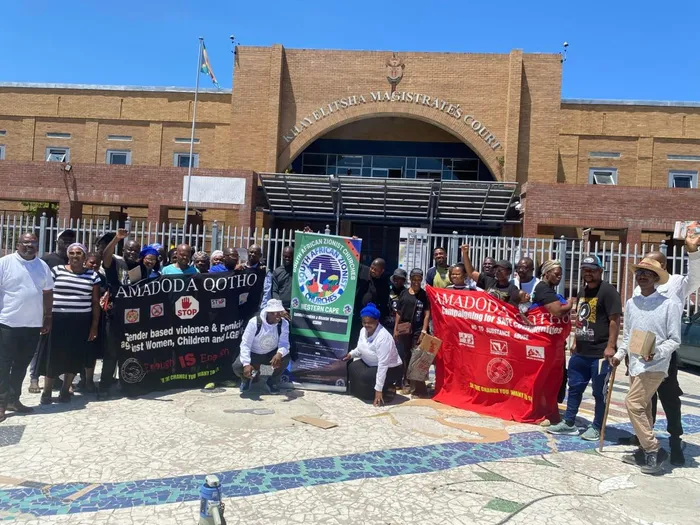
Can teaching boys about emotions, accountability and abuse help prevent gender-based violence? Amadoda Aqotho is starting with boys as young as 10 in Khayelitsha.
As South Africa marks 16 Days of Activism against Gender-Based Violence and Femicide (GBVF), a Khayelitsha-based organisation is focusing on a group it says should not be overlooked: young boys who will become the men of tomorrow.
Amadoda Aqotho, meaning “real men”, works with boys from the age of 10, teaching them about accountability, emotional awareness, abuse and the role they can play in building safer communities.
The organisation's spokesperson, Siyabulela Magwaca, says preventing gender-based violence requires more than supporting survivors. It also means helping boys develop healthier attitudes and understand their responsibilities from an early age.
The 16 Days of Activism campaign runs from November 25 to December 10 under the theme: “Letsema: Men, Women, Boys and Girls working together to end Gender-Based Violence and Femicide.”
Letsema means “collective effort”, emphasising that responsibility for ending violence extends beyond survivors and women's organisations.
Magwaca said the boy child should not be forgotten during the campaign.
“We start at the age of 10 years gathering young boys to be better community leaders, fathers in our societies.
“We teach them about how to speak up should they experience abuse and how to be protectors in societies.
“The boy child is often taught to be hardcore, but as Amadoda Aqotho we teach them about being aware of their emotions and how to react and respond to certain situations.
“Boys and men also experience abuse and they must speak up about it, they must not feel ashamed or be left behind because they are males.”
School programmes aim to reach boys before problems escalate
Through school programmes, Amadoda Aqotho engages boys on challenges they face at home, in the classroom and in their communities.
The organisation aims to give them information they can understand and create opportunities to discuss issues that might otherwise go unaddressed.
Magwaca said the organisation was conducting more than 11 sessions with boys and wanted the programmes to become part of ongoing school education rather than being limited to the annual 16 Days of Activism campaign.
“We’re also engaging these boys with school programmes, give them more information and what they understand about these issues.
“We have more than eleven sessions that we are doing with them. We want these sessions to not only take place during the 16 Days, but it should be taught even in schools.
“We cannot only react to situations when things get out of hand.
“We’ll be having programmes in different primary schools in Khayelitsha, then move to other areas.”
Teachers cannot tackle social challenges alone
Magwaca said teachers also needed support to address the social challenges affecting children.
With educators under pressure to complete the curriculum, he said they had limited time to understand and respond to the individual circumstances affecting learners.
“Our teachers’ hands are tied, they’re dealing with the curriculum. The time to understand social illnesses of each child, we would be blaming them for nothing.”