Charities say manpower constraints, logistical challenges and residents' readiness can affect how quickly homes are cleared. Preventing clutter from building up again is another challenge.
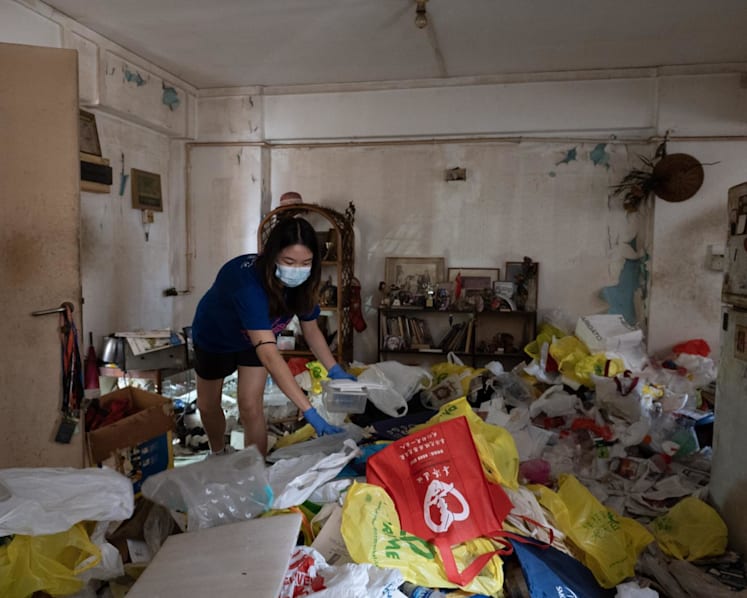
Clearing homes can be complicated by residents' reluctance to part with belongings, charities say. (Image: CNA)
Clearing homes can be complicated by residents' reluctance to part with belongings, charities say. (Image: CNA)





SINGAPORE: Convincing residents with hoarding tendencies to declutter their homes can take months or even years.
But even after they agree to accept help, some may face another lengthy wait before the clean-up can begin.
At Helping Joy, a charity that helps elderly and low-income residents clean and restore their flats, those seeking assistance may have to wait at least six months for volunteers to arrive.
The charity receives about 60 referrals each month, but manpower shortages mean it struggles to keep up with demand.
CNA Games
 Guess Word
Crack the word, one row at a time
 Buzzword
Create words using the given letters
 Mini Sudoku
Tiny puzzle, mighty brain teaser
 Mini Crossword
Small grid, big challenge
 Word Search
Spot as many words as you can
Show More
Show Less
Other organisations report shorter timelines, although these vary depending on different stages of assistance, from initial visits to decluttering work.
The challenges come as more than 500 hoarding cases remain active in Singapore, with charities citing manpower constraints, logistical difficulties and residents' readiness as factors affecting how quickly homes can be cleared.
As of June, Singapore's New Environment Action Team (NEAT) has helped reduce the severity of about 370 hoarding cases.
NEAT, a joint initiative of the Ministry of National Development (MND) and Ministry of Social and Family Development (MSF) launched in 2025, brings together government agencies, charities and community groups to tackle hoarding.
In a statement to CNA, the ministries said the increase in hoarding cases could be due to greater public awareness of the issue, as well as efforts to identify cases.
WHY THE WAIT FOR HELP VARIES
Helping Joy’s founder Steven Goh said the charity has to coordinate volunteers and contractors to remove clutter, address safety hazards and make homes safe for residents. Partners the charity engages include those providing pest control, plumbing and repair services.
It also works with social workers and hospitals, particularly when residents need their homes cleared before they can be discharged.
Not everyone referred to Helping Joy qualifies for assistance. The charity requires applicants to meet income and other eligibility criteria, and provide supporting documents.
“Once they are qualified, we will put them into the queue. So it takes about six months at least,” Mr Goh told CNA.
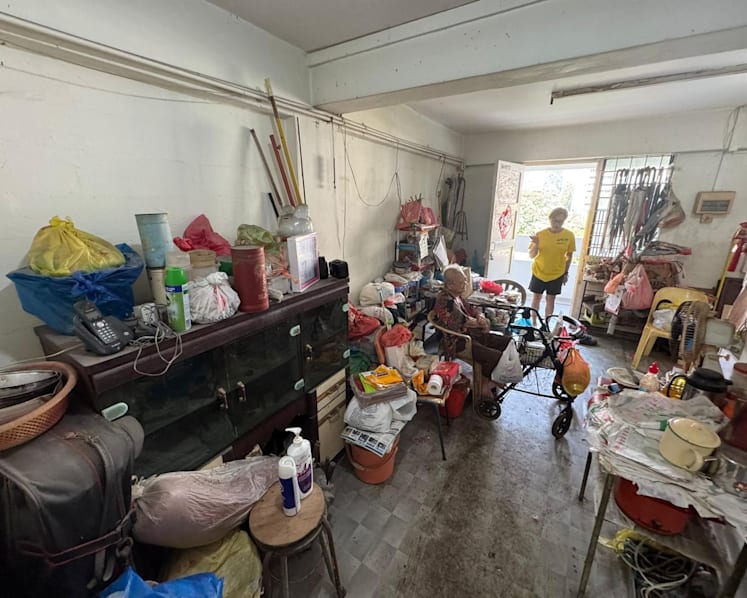
 Helping Joy works with social workers and hospitals to prepare homes for residents after discharge. (Image: CNA)
Finding enough volunteers is a major challenge, he said, as they cannot be expected to take on physically demanding decluttering work too frequently.
Mr Goh added: “To take care of the beneficiaries, we have to take care of our volunteers first, because they must stay healthy so they can continue to support more of the work.”
Urgent cases, including homes with severe pest infestations or fire hazards, may be prioritised.
Habitat for Humanity Singapore, which runs a programme to improve living conditions for vulnerable households, aims to begin its first home rehabilitation session within eight weeks of receiving a referral from a social worker.
Its national director Daniel See said the organisation first assesses the condition of a home before arranging the necessary resources. Some cases require pest control work before volunteers can enter.
Buddhist charity Tzu-Chi Foundation (Singapore), meanwhile, said its current waiting time is at least two to three months before an initial session can begin.
This may first involve building rapport with residents or helping them sort a small number of belongings, rather than a large-scale clean-up.
Its charity development manager Goh Leay Ying said volunteer availability and the needs of existing cases can also affect how quickly new referrals are taken on.