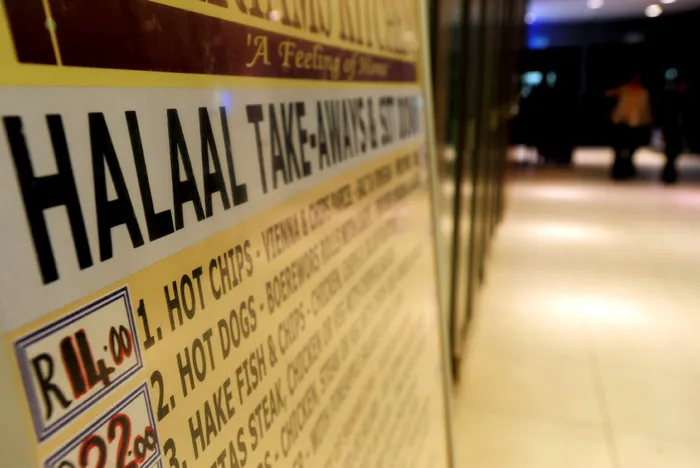
Well, that is exactly what "Halaal" means for a person belonging to the Muslim faith.
Well, that is exactly what "Halaal" means for a person belonging to the Muslim faith.
The emphasis is on the person, because people seem to be confusing religion with race, ethnicity and nationality, when in fact Islam belongs to all who choose to accept it (no coercion).
Now, in the context of food, halaal refers to what is permissible for Muslims to consume according to Islamic principles. We tend to reduce halaal to the absence of pork and alcohol, but that is an oversimplification.
Halaal encompasses ingredients, sourcing, preparation, processing, handling and, where applicable, the slaughter of animals (and here too, there are so many factors: age, health, type of animal, etc.). It is about the permissibility (lawfulness) of the entire process, not merely identifying two prohibited ingredients.
Muslims are taught that Islam is a way of life – evident in dress, speech and actions and in all spheres of life. We consider Allah (Arabic for God) and our beliefs and obligations in everything we do, from big decisions like marriage to ordinary everyday things like how we enter or exit a space or drink a glass of water. This extends to food and drink choices too. But this is for us as Muslims.
There is no imposition, not on the manufacturer and not on the consumer.
Manufacturers choose to broaden their markets (a good business decision) and therefore apply for formal halaal certification. The fees charged are no secret and are intended to cover operational costs of the certification body. Furthermore, many of these organisations operate as registered non-profit organisations, which have statutory reporting obligations.
Their financial statements and reports are accessible to the public in terms of the Nonprofit Organisations Act. And, of course, the money they receive moves through the formal banking system, where financial institutions have their own legal reporting obligations to the relevant authorities, including the Financial Intelligence Centre (FIC). How much more transparency do you require? I mean it truly; if you have credible evidence of these terrorism funding claims, please take it to the relevant authorities.
As a consumer, just as Muslims seek the halaal symbol, you too can choose to purchase something that meets whatever your dietary requirements may be. Much like someone who chooses veganism for ethical reasons or avoids certain foods because of a medical condition.
Many of us have non-Muslim family, friends, colleagues, or business associates (the beauty of a diverse society). I have a non-Muslim friend who bakes, and I comfortably purchase delicious eats from her because I know her, understand her values and trust that she has taken the time to learn what halaal actually means.
But that is precisely the point: trust takes time to establish. Muslims cannot reasonably be expected to develop personal relationships with every manufacturer, baker, restaurant or supplier whose products we might purchase. Simply, certification provides an alternative form of assurance, particularly where that personal relationship does not exist.
Muslims have been observing halaal dietary requirements long before certification symbols existed. In South Africa, organised halaal supervision and certification have been around since the 1940s, with formal structures developing around that period.
It is 2026, and we live in a world where consumers rely on labels to make informed decisions. We have vegetarian, vegan, gluten-free, diabetic-friendly, kosher, organic and Fairtrade labels, among others. These symbols communicate something about a product without requiring every consumer to investigate its manufacturing process.
Halaal certification serves the same purpose. Its presence does not mean that everyone purchasing the product must subscribe to Islam, agree with Islamic teachings or change their dietary habits. It simply means that a Muslim consumer has an additional means of identifying a product that meets their requirements. The halaal symbol or certificate provides a recognisable indication that a product has undergone the relevant process, allowing consumers to make purchasing decisions with greater confidence.
As my firstborn grew and demanded those items perfectly positioned on the shelves around the till points or began interacting with people of other faiths (independently of us), he had to be taught how to identify food that he could eat.
Rather than expecting a young child to understand complicated ingredient lists, he was taught to ask: "Is it halaal?" and to recognise the halaal symbol. We showed him what it looked like on a loaf of bread and on a packet of chips. It was a simple, practical lesson that gave a child a tool he could use independently. What exactly is unreasonable about that?
I do not think any adult shopper wants to be standing in the grocery store aisles wasting time reading labels, googling companies, and trying to decode ingredients and stressing about cross-contamination with that which is impermissible. Halaal certification removes that unnecessary uncertainty and makes religious observance more manageable in everyday life.
It raises the question: in a secular country that is a constitutional democracy, where freedom of religion is protected, why has the need for Muslims to know whether the food and drink they purchase is permissible for consumption (halaal) suddenly become so controversial?
Why has it brought about debates about religious imposition, the inconvenience to others, the cost of living, animal welfare, terrorism funding and even the supposed Islamisation of society? Why now?
Of course, certification bodies should not be beyond scrutiny. Questions about animal welfare, slaughter practices, inspection standards, financial accountability and the consistency of certification are legitimate. Muslims themselves should be able to question these institutions. Legitimate scrutiny must be distinguished from suspicion based on prejudice.
Question the standards. Question the processes. Question the finances. By all means, hold certification bodies accountable, but with actual evidence within our context.
Halaal, an Arabic word meaning permissible, is not guidance to non-Muslims; consumption alone won't convert you, and it does not take anything away from you. But it does give Muslim consumers information, confidence and access.
The absence of reliable halaal identification, on the other hand, creates an unnecessary burden for Muslim consumers, who are then expected to investigate what others can simply identify through a symbol or certificate. Surely, in a country that prides itself on its diversity as a rainbow nation, that should not be a difficult concept to understand.
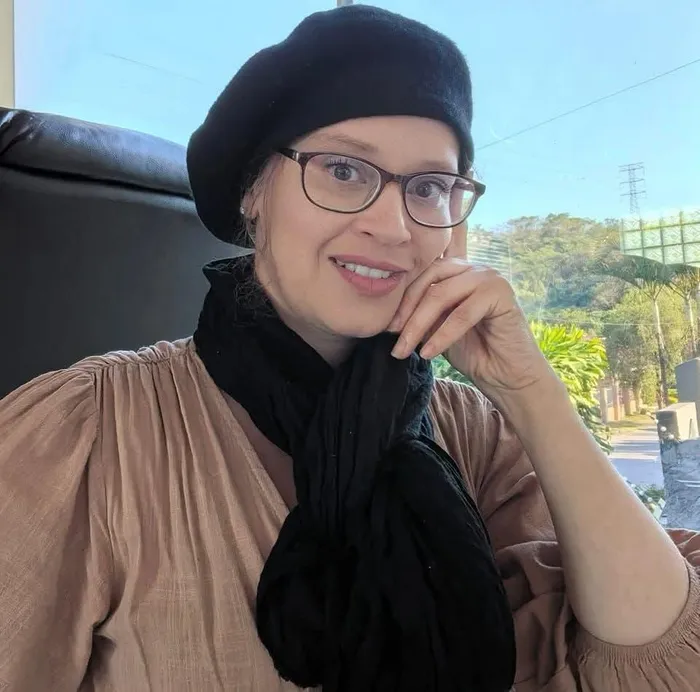
Mehrunnissa Mullah is an education specialist, artivist, businesswoman, and LLB student. Her creative works reflect, share, and connect because learning never ends.
** The views expressed do not necessarily reflect the views of IOL or post.co.za