With Hyrox Youngstars bringing even more kids into competitive sports, experts weigh in on when to start, injury risks, overtraining and healthy competition.
What are the things to consider, for instance, can certain injuries affect a child's physical development? (Photo: iStock/Tairome)
What are the things to consider, for instance, can certain injuries affect a child's physical development? (Photo: iStock/Tairome)



You want an all-rounded childhood for your kid that goes beyond books and screens – one that lets him or her run, jump and play. Or perhaps your Mini Me has been watching you from the sidelines, and is now begging you to let him or her follow you to the gym or fitness corner in the park.
Even sports events, such as the BYD Singapore International Marathon’s Kids Dash (up to 12 years old) and AIA Hyrox Singapore’s Youngstars (eight to 15 years old) that’s debuting in November, are getting the young ones on board.
If those scenarios have set you thinking, how young is too young for your little one to participate in sports (outside of PE in school, of course) and what are the things to consider (for instance, can certain injuries affect his or her physical development?), here’s what the experts advise.
IS THERE AN APPROPRIATE AGE TO START YOUR CHILD ON SPORTS?
There is no universal minimum age. “Young children can safely participate in age-appropriate, organised physical activities when they are able to follow instructions, engage safely with peers, and demonstrate interest in the activity,” said Dr Benny Loo, the head and a senior consultant with Sport and Exercise Medicine Service, KK Women’s and Children’s Hospital (KKH).
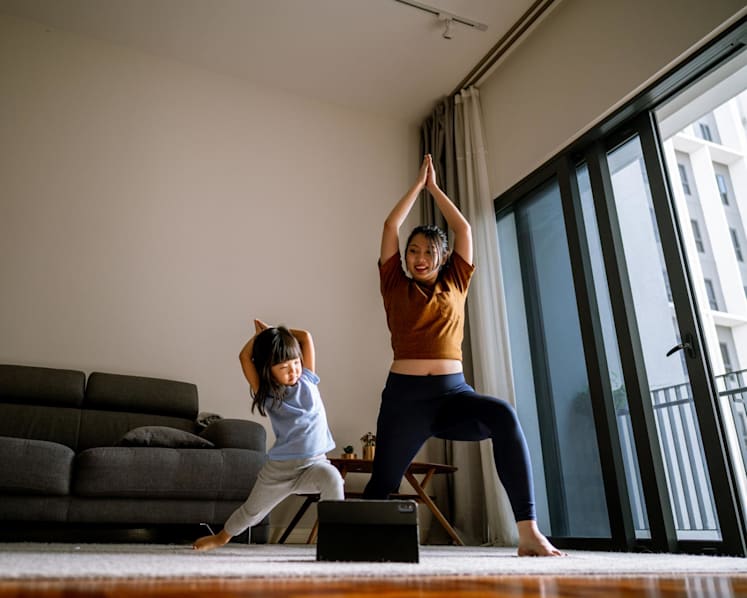 At three to five years old, the emphasis is on enjoyment – as well as developing fundamental movement skills such as running, jumping, balancing and throwing. (Photo: iStock/simon2579)
In fact, children can begin “active play and movement-based activities from approximately three to five years of age”, said Dr Abiramy Anathan, a family physician and consultant head at Clementi Polyclinic, National University Polyclinics. “Developmental readiness is more important than chronological age.”
At three to five years old, the emphasis is on enjoyment – as well as developing fundamental movement skills such as running, jumping, balancing and throwing, said Dr Abiramy.
Moreover, an early start is not essential for your child to want to continue playing the sport beyond the trial period. “Long-term success is more closely related to enjoyment, sustained participation, quality coaching, and progressive skill development,” said Dr Abiramy.
On the other hand, starting children young can teach them “that being active is healthy” and that the fun they’re having will promote a healthier wellbeing, said Dr Michelle Cleere, a US-based mental training coach with credentials in clinical psychology and sports psychology.
Other than the physical benefits (improves cardiovascular fitness, strengthens muscles and bones, enhances coordination and balance, and supports healthy weight), said Dr Abiramy, there are also social benefits to be reaped. For instance, she cited, sports can help to “develop teamwork and communication skills, encourages leadership and cooperation, and promotes friendship and social connectedness”.
Dr Loo highlighted another advantage of an early start: teaching your child emotional regulation or the ability to cope with both success and disappointment that comes with playing sports. “The developmental value of competition is greatest when the focus remains on learning, effort and personal improvement rather than winning alone.” (More about competition in a bit.)
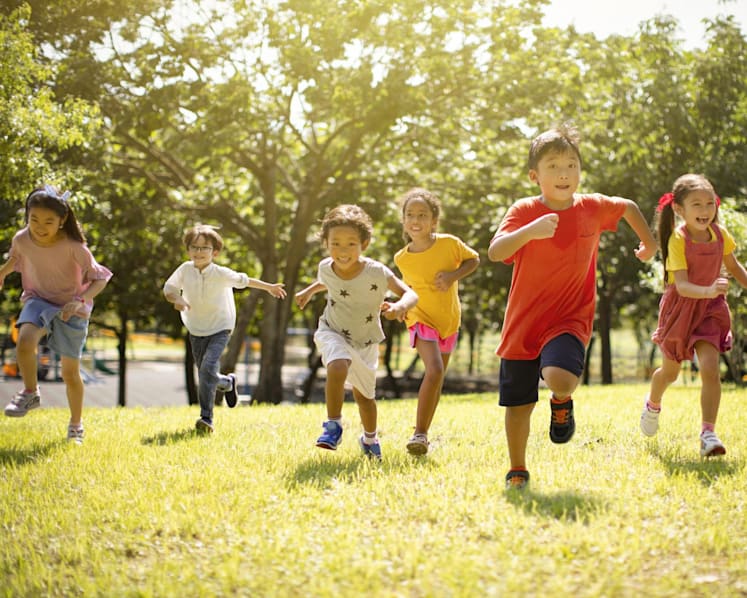 Teaching your child emotional regulation or the ability to cope with both success and disappointment comes with playing sports. (Photo: iStock/Tomwang112)
IS IT BETTER TO SPECIALISE IN ONE SPORT OR LET YOUR CHILD TRY EVERYTHING?
Specialisation refers to playing just one single sport for more than eight months out of a year. Multisport is like dipping into the many topping options at Yo-Chi – where kids participate in a variety of sports and activities throughout the year, noted Dr R Jay Lee, who focuses on paediatric orthopaedic surgery and sports medicine at The Johns Hopkins Hospital.
In Singapore’s context, specialisation may seem practical if you’re already struggling to fit enrichment classes and family commitments into the weekends. Or perhaps your enthusiasm in pickleball has rubbed off on Junior – and he or she wants in on the action. In any case, children tend to specialise at a slightly earlier age if they play an individual sport such as indoor rock-climbing versus a team sport such as football, highlighted Dr Lee.
But can your child specialise in a sport too soon? “For most children, participation in a variety of sports is encouraged,” said Associate Professor Mohammad Ashik Zainuddin, the head and senior consultant with KKH’s Department of Orthopaedic Surgery.
“Multisport participation exposes children to different movement patterns, reduces repetitive loading of the same body regions, and may lower the risk of overuse injury associated with intensive single-sport training,” said Dr Ashik.
Dr Loo added that “early specialisation may be appropriate in a small number of sports with early peak performance ages (such as gymnastics), but this is the exception rather than the rule”.
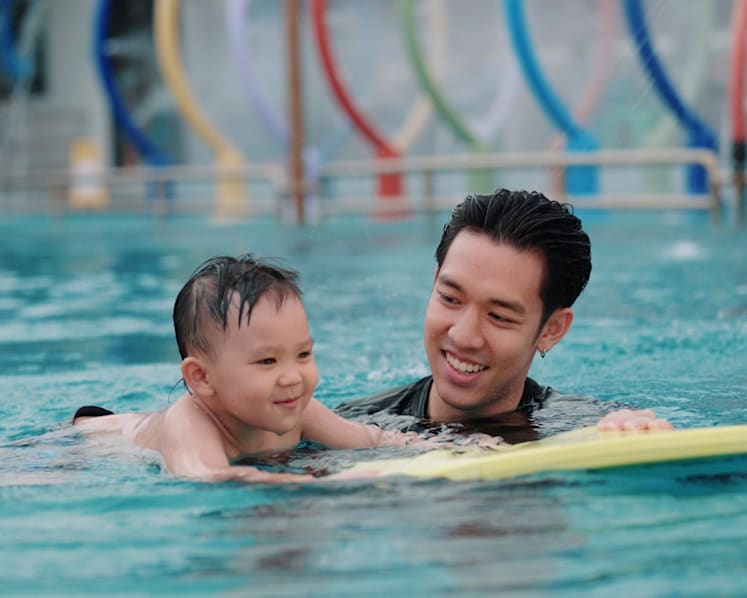 For most children, participation in a variety of sports is encouraged. (Photo: iStock/tkpond)
In fact, the American Academy of Pediatrics recommended delaying specialising in a single sport until late adolescence, around 15 or 16 years old, as younger children “may not possess sufficient skills and attention span”.
And it’s not just the short attention span. According to a report published in the National Library of Medicine, vision in early childhood is not mature until age six or seven. This makes it difficult for your little one to track and judge the speed of moving objects; the tracking improves from ages six to nine but it’s still limited.
If you need another vote of confidence for multisport participation at an early age, look no further than Eileen Gu, the freestyle skier and owner of six Olympic medals. At Singapore Management University’s KFF Inspiring Women Leadership Series in October, the Standford University graduate spoke of her mother exposing her to many interests when she was younger, including archery, basketball, soccer, cross-country running, and of course, skiing.
“She really gave me the full spread, so that when I was older and when I knew myself better and when I was responsible to make those decisions, I could make an informed one having tried all the options,” said Gu.
AGE-APPROPRIATE SPORT OR ACTIVITY FOR YOUR CHILD
The Families for Life website has the following guidelines:
Try: Ball games (just kicking, throwing and running around), dancing, riding a bicycle or swimming
Try: Badminton, basketball, football, tennis, track and field or volleyball
Try: Basketball, canoeing or kayaking, floorball, football, hockey, indoor rock-climbing or martial arts
WHAT ABOUT A MULTI-SPORT EVENT LIKE HYROX YOUNGSTARS? IS IT TOO MUCH FOR YOUNGER KIDS?
If you’re already a Hyrox participant, the youth-oriented Hyrox Youngstars will finally give your little aspiring Amotti reason to train alongside you. A win-win, family-bonding time for everyone, yes?
But, can the exercises be too intense? For context, the kids’ run laps are shorter (200m to 275m per lap vs the adults’ 1km laps) and some of the eight stations are tweaked to suit the younger participants by taking into account the four age brackets: eight to nine, 10 to 11, 12 to 13, and 14 to 15.
For instance, frogger jumps replace burpee broad jumps for ages eight to nine; and body-weight squats instead of wall balls for ages eight to nine, and ages 10 to 11. The sleds, kettlebells, farmers carry and SkiErg’s resistance have also been scaled down to suit children’s physical capabilities.
“From my coaching perspective, the age-group loads are acceptable as event requirements,” said Samuel Lim, the director of training at The Gym Pod and Nova Training that specialises in Hyrox preparation. “However, there will always be children who find a particular load light and others who find it challenging.”
A post shared by HYROX Youngstars (@hyroxyoungstars)
Lim commented that the right level of intensity to bring to the race is something children need time to learn and understand. “They often go all out or stop completely. Learning to pace yourself takes practice. We need to be patient and kind as children learn how effort feels and how to manage it.”
While movement and safety are important, Lim said that the space to practise is just as crucial. “I encourage parents to give their children that space, too. It can be tempting to correct every movement immediately, but there is value in taking the time to watch them discover their own skills and strengths through play.”
IS YOUNGSTARS SUITABLE FOR CHILDREN WHO HAVE NOT PARTICIPATED IN SPORTS OR ARE VERY YOUNG?
“Much depends on the communication between the parent and child: does the child want to participate, do they understand what is involved, and have they had an opportunity to try the movements?”, said Lim.
Also, “being energetic does not mean a child knows how to use the equipment or pace themselves through the stations”, he said. “I would introduce those elements gradually and see how they respond. Parents should listen to their child throughout the preparation. Some encouragement can help them to try something unfamiliar, but we should give them time if they are not ready.”
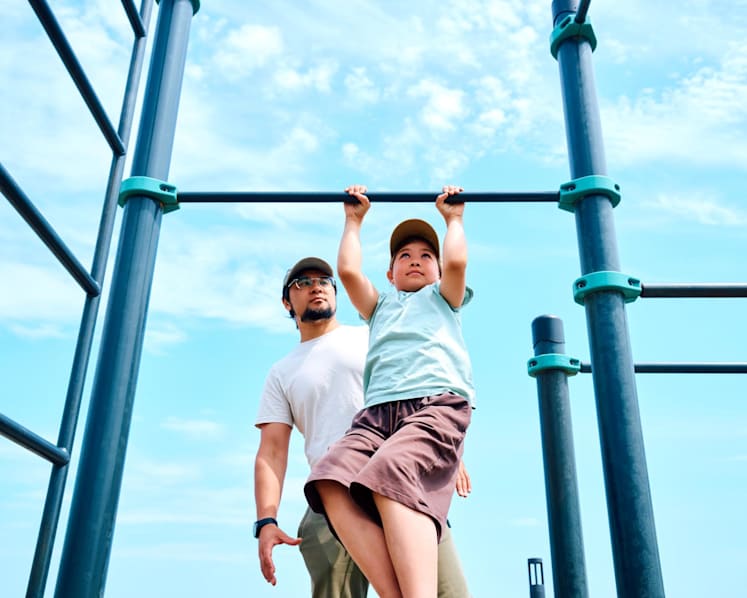 Ideally, children should first acquire the basic skills, confidence and familiarity with the sport before entering competitive environments. (Photo: iStock/Denis Borisov)
Lim, who introduced training for the youth event in October, said that his youngest trainees are six years old, even though the race registration age starts at eight. “Joining a training session is different from entering the event. I welcome younger children who can understand our coaching cues, with activities adjusted to their abilities.”
He shared that since Youngstars in Singapore was announced, more than 50 children have signed up for training.
“Some have watched their parents train or race; others have seen social media content and want to try it themselves,” said Lim. “Friendship is another big motivation. They are excited about doing something together with their friends.”
HOW LONG SHOULD KIDS FAMILIARISE THEMSELVES WITH A SPORT BEFORE THEY COMPETE?
Ideally, “children should first acquire the basic skills, confidence and familiarity with the sport before entering competitive environments,” said Dr Ashik, although there is no recommended timeline for kids to do that as it differs from child to child.
“Emotional readiness is equally important,” highlighted Dr Abiramy. “If children compete too soon, anxiety and stress may increase, while the enjoyment of the sport may decrease.”
TRAINING, NUTRITION AND RECOVERY TIPS FOR KIDS
Here are some points from Dr Abiramy Anathan, a family physician and consultant head at Clementi Polyclinic, National University Polyclinics, to take note of:
Frequency: Aim for at least 60 minutes of moderate-to-vigorous physical activity daily.
Intensity: Age-appropriate and supervised. Sudden increases in training load should be avoided.
Rest and recovery: At least one to two rest days per week from organised sport. Adequate sleep is also essential; aim for nine to 12 hours nightly from six- to 12-year-olds; eight to 10 hours nightly for 13- to 18-year-olds.
Nutrition: A balanced diet is usually sufficient. Prioritise whole grains, fruits and vegetables, lean protein sources, and calcium-rich foods. Ensure adequate hydration. Most children do not require sports supplements.