
A Cape Town World AIDS Day benefit concert will raise support for community-based HIV services amid warnings that funding cuts are disrupting prevention, testing and stigma-free care.
US funding cuts are putting HIV prevention, testing and community-based healthcare services at risk across Africa, with marginalised populations particularly vulnerable despite continued access to antiretroviral treatment, new research by University of South Africa (Unisa) academics has found.
The findings highlight the potential consequences of losing specialised, stigma-free healthcare services as Cape Town organisation Impulse Cape Town prepares to host a World AIDS Day benefit concert on December 5 to raise support for community healthcare.
The study, published in PLOS Global Public Health on November 23, examined funding withdrawals and changes to programmes supported by the United States Agency for International Development (USAID) and the US President’s Emergency Plan for AIDS Relief (PEPFAR).
Researchers Ikekhwa Albert Ikhile and Ipeleng Pusetso Brodie reviewed 30 peer-reviewed sources, comprising 24 empirical or programme-data studies, four modelling studies and two reviews.
Evidence following the 2025 funding cuts documented disruptions to healthcare services and staffing in South Africa. Earlier studies found that the impact of withdrawing direct PEPFAR support varied according to healthcare settings, service providers and the transfer of staff.
Studies in Kenya and Uganda documented losses in outreach, education, testing and peer support following earlier funding withdrawals.
Although PEPFAR had not ceased to exist, its service delivery structures had been substantially disrupted.
The researchers found that antiretroviral medicines were often afforded greater protection than HIV testing, condom distribution and psychosocial support.
People facing criminalisation, violence, poverty or discrimination by healthcare providers were particularly vulnerable because they often relied on confidential, peer-led and community-based services.
“For many, a peer worker or community organisation is not an optional supplement to a clinic; it is the route through which the clinic becomes reachable. The disappearance of that route can leave formal eligibility intact while eliminating meaningful access,” the researchers said.
Reduced testing could leave infections undiagnosed, while losing adherence support could result in patients disengaging from treatment.
Programme closures could also conceal unmet healthcare needs, with declining patient numbers potentially misinterpreted as reduced demand, putting services at risk of further funding cuts.
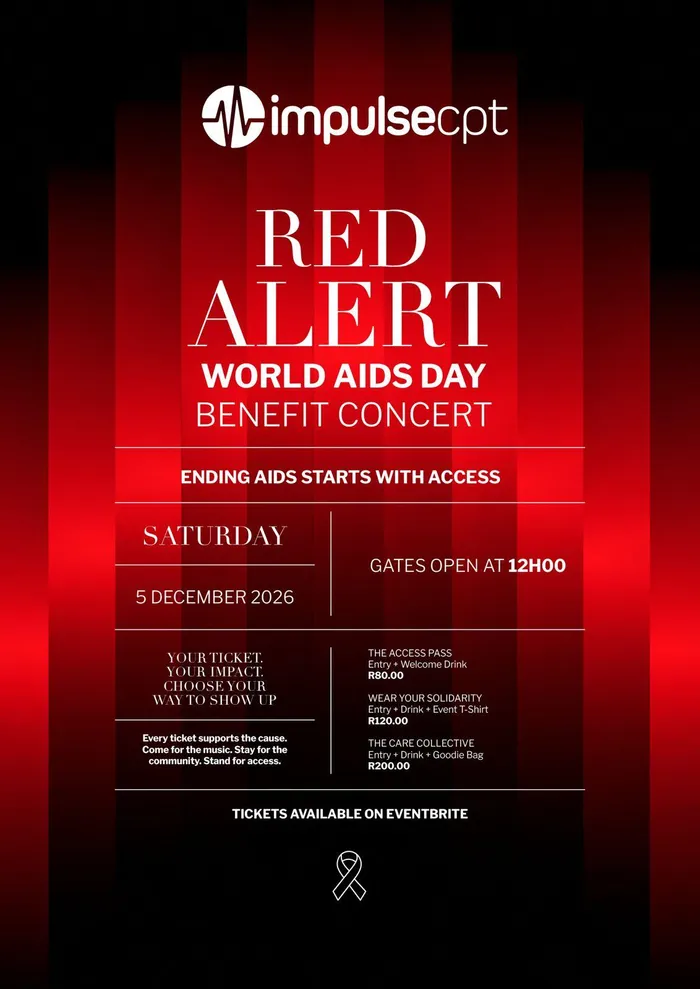
The Ending AIDS Starts with Access benefit concert in Cape Town will support community-based HIV care amid concerns that funding cuts are disrupting prevention, testing and stigma-free services.
Researchers warn of gaps in HIV prevention and support
Evidence from Rwanda, Zambia and Nigeria showed that services could be maintained when funding transitions were carefully planned and local providers adequately supported.
The researchers called on African governments to identify donor-dependent services and ring-fence funding for those whose loss would disproportionately affect vulnerable populations.
Donors should provide advance notice of withdrawals and interim financing, with affected communities participating in transition planning.
“A transition that secures national ownership by abandoning those at the margins is not sovereignty; it is a transfer of risk,” the researchers said.
Impulse Cape Town president Yanga Gceya said South Africa had launched lenacapavir, a twice-yearly HIV prevention injection, in June, intended to prioritise adolescent girls and young women, sex workers, men who have sex with men and transgender people, among others.
He warned that stigma, discrimination and humiliation at healthcare facilities could undermine these efforts.
“We have breakthrough prevention tools that can change the course of HIV in South Africa, but they are not reaching everyone who needs them,” Gceya said.
World AIDS Day concert to offer free HIV testing
The concert, themed Ending AIDS Starts with Access, will take place at Iziko’s Rust en Vreugd heritage site in Cape Town.
Singer and songwriter Zolani Mahola will headline the programme, joined by drag performers the Trans-formers and Selena Dash, and singer Cheswyn Ray.
A health and resource hub will offer free HIV testing and counselling, information and referrals for pre-exposure prophylaxis (PrEP), post-exposure prophylaxis (PEP) and antiretroviral treatment, alongside sexual health education and mental health support.
Proceeds will support community healthcare services, including LGBTQIA+-affirming sexual health care. The beneficiary will be announced after the event.
“Defeating AIDS is not something that can be achieved in isolation. It requires communities to come together, challenge stigma, create access to healthcare, and ensure that nobody is left behind. Through this benefit concert, we want to celebrate who we are, recognise the power of our communities, and turn our collective voices into action,” Gceya said.