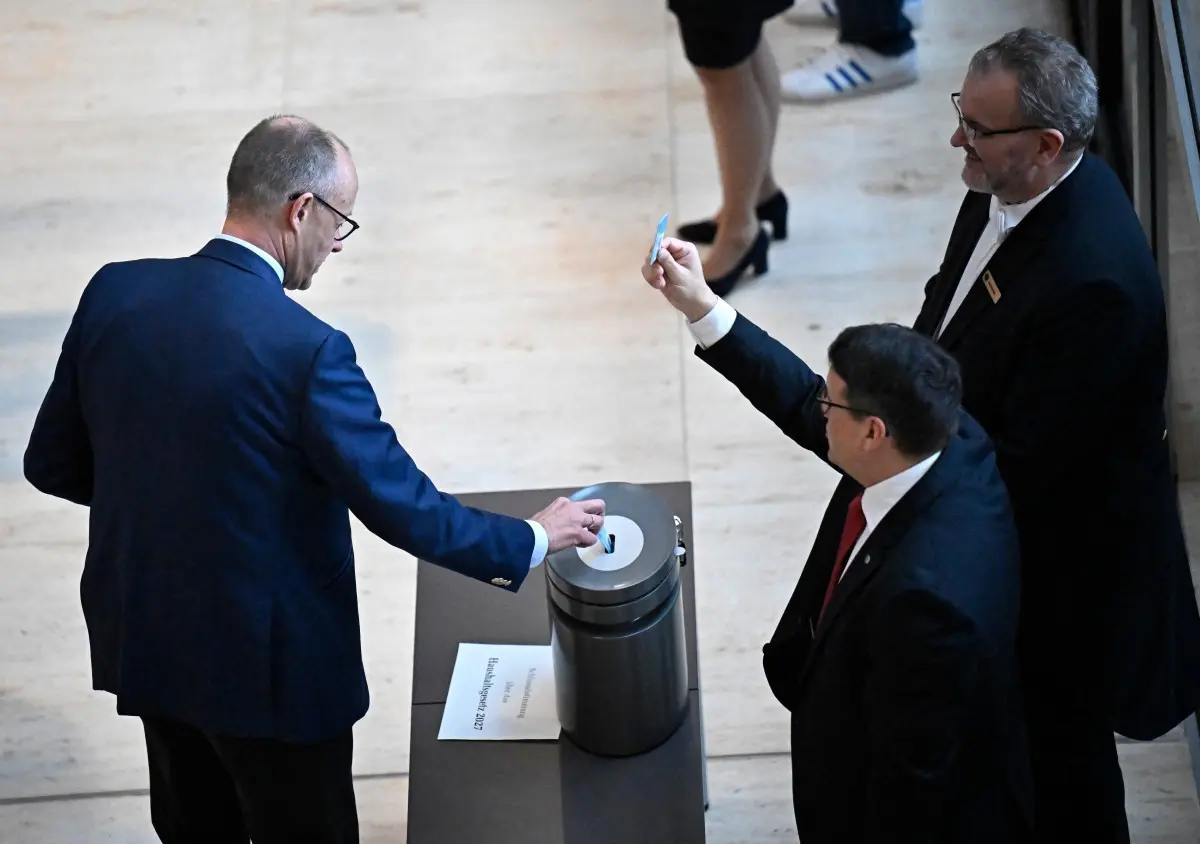
 German Chancellor Friedrich Merz puts his voting card into a ballot box during the final deliberations on the 2027 federal budget at the Bundestag in Berlin on November 27, 2026. (Photo by Tobias SCHWARZ / AFP)
After months of negotiations and sometimes heated debates, the Bundestag has passed Germany's federal budget for 2027.
After months of struggle, the black-red coalition has completed Germany's federal budget for the coming year, and on Friday the Bundestag voted to approve it.
Overall, the federal government is set to have more money available for the coming year that it ever has in a single year before, with 123 billion of that financed through debt. The budget foresees expenditure totalling 556 billion euros in 2027.
A huge chunk of that expenditure is aimed squarely at defence, with spending expected to rise to 140 billion euros – reaching a level not seen since the end of the Cold War.
Additionally, more than a third of the budget is to flow into Germany's labour and social budget, which funds the government's allocations for pension insurance, for example.
Many of the cuts originally planned by the government, including to the housing allowance, child immediate allowance (Kindersofortzuschlag), and other social benefits were withdrawn by parliamentarians during the negotiations.
Don't miss our journalists' daily news roundup from Germany
Ultimately the budget was passed with 317 votes in favour versus 260 against, with no abstentions.
To plug a budget hole worth around 34 billion euros, the 2027 budget creates a new consumption tax on sugar-sweetened drinks and also increases the tax rate applied to alcohol spirits. Tax rates for mixed alcoholic drinks are also to be adjusted.
Additionally the budget text confirms the fact that electricity taxes are to be reduced to the European minimum.
READ ALSO: German government reaches agreement on record €560.9 billion budget
Still to be decided are a series of expected reforms aimed at Germany's income tax code. The Union (CDU/CSU) and Social Democrat (SPD) parties are reportedly still not in agreement about all details of the tax reform plan.
Regarding the 2027 budget overall, Chancellor Friedrich Merz admitted that the process to finalise it "certainly does not deserve a beauty prize".
Meanwhile, Finance Minister Lars Klingbeil has already hinted that after the amount of spending planned in 2027, the budget for 2028 will come with greater challenges.
Opposition parties in the Bundestag have already criticised the budget.
Left Party leader Ines Schwerdtner said the government constantly talks about emergencies and war, but largely ignores the "millions" of people in Germany for whom money gets tight every month.
Far-right Alternative for Germany co-leader Tino Chrupalla suggested too much money was being spent on defence for Ukraine, and said that Merz would "go down in the history books as the chancellor of Germany's insolvency".
Become a member or log in to continue reading
More
Comments
Join the conversation in our comments section below. Share your own views and experience and if you have a question or suggestion for our journalists then email us at news@thelocal.de.