After more than 40 years producing film and television, as I watch the evening news with warnings of an imminent threat of war, rising death tolls in Russia and Ukraine, and ongoing missile strikes in the Middle East, I find myself asking why so little of our drama addresses these existential threats that dominate our airwaves.
This is at a time when warnings of the next blitzkrieg bombard us daily while our leaders seem to ‘whistle past the graveyard’ (an English saying for being complacent in the face of death.)
We have some wonderful entertainment, exceptional writers and actors, and more ways to watch their work than any previous generation. There is some fine drama about social injustice and the pressures of daily life.
But across our broadcasters and the global platforms, there is remarkably little sustained exploration of the crises that will shape our children’s future.
Audiences are not indifferent.
A 2026 Eurobarometer survey found that 72 percent of EU citizens are highly worried about active conflicts and wars near Europe’s borders, and more than two-thirds believe their own country is under threat.
Read more
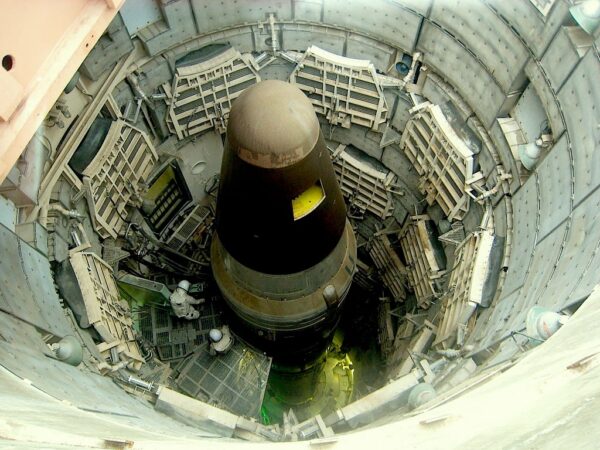
Nuclear weapons – the elephant in the room in Ukraine peace talks
These are the circumstances in which our viewers live. Journalism establishes the facts, investigates wrongdoing, and holds power to account, sometimes at the cost of journalists’ lives.
Drama completes that work. It can take us inside a family, a workplace, or a negotiating room, and expose the distance between what people say they believe and what they do when those beliefs become costly.
And it can imagine where they might lead, bringing consequences into view before they become tomorrow’s news.
Proud history of TV dramas
British television once did this superbly. Cathy Come Home brought homelessness into the living room through one young family’s disintegration. Boys from the Blackstuff explored unemployment through the dignity, humour, and despair of men whose working lives had collapsed.
In 1984, Threads imagined nuclear war through its consequences for Sheffield, asking what the language of deterrence would mean for ordinary streets, hospitals, and families. Its terror came from recognising the world being destroyed.
That same year, Edgar Reitz’s landmark German series Heimat proved just how powerfully this kind of storytelling can resonate across borders. Following the quiet village of Schabbach as it was gradually seduced into fascism and war through the promise of economic progress, the series became a huge critical and popular success – showing millions of viewers how ordinary neighbours slowly normalise and comply with an approaching catastrophe.
That tradition was never easy: the BBC withheld The War Game, its own film about a nuclear attack, from television for 20 years. Nor has ambition disappeared. ITV’s Mr Bates vs the Post Office drew an average audience of 14 million, turning years of journalism into a national reckoning.
Netflix’s Adolescence won eight Emmys; Chernobyl, HBO and Sky’s drama of institutional lies and nuclear disaster, won 10. The producers behind Adolescence have now acquired the rights to a new adaptation of Threads.
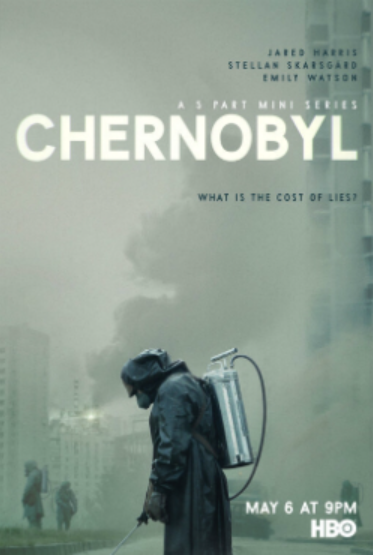 Chernobyl – the HBO TV mini series of 2019
That is welcome, but one project cannot answer the wider question.
Our public service broadcasters air hundreds of hours of new British drama every year. Surely there is room within it for a sustained commitment to the threats that hang over us all.
The obstacles are real. Broadcasters face falling revenues and fierce competition from global platforms. A story that matters profoundly to domestic viewers can struggle to raise money across many markets. Even Mr Bates, sold to 12 overseas broadcasters, had reportedly lost ITV around £1m [€1.2m] by April 2024.
Independent producers often have to surrender most of their rights to a major platform to get a series made, losing the returns that would fund the next ambitious project.
There is no silver bullet solution, but there are pockets of progress throughout Europe.
Five Nordic public broadcasters pooled their drama co-production through Nordic12, explicitly to sustain their cultures amid global competition. Joined by Germany’s ZDF, the Netherlands’ NPO and Belgium’s VRT, they now form New8, renewed in January for another three years.
The UK should build similar partnerships with European and Canadian broadcasters, sharing development, financing, and access to programmes.

Read more
Europe is losing the algorithmic war for streaming – and that’s a policy failure
Governments, which have named the creative industries a priority for growth, should help independent companies keep a stake in their own work.
And the debate over the BBC’s next charter is an immediate chance to make distinctive drama about our shared uncertainties an explicit part of its purpose.
But better financing only makes such drama possible; commissioners must still choose to back it.
The devastation in Gaza, the conflict involving Iran and Russia’s full-scale invasion of Ukraine, now in its fifth year, give our anxieties a terrible human reality.
The possibility of nuclear war is openly discussed. Behind every report are families living with bereavement, displacement and fear. Studios and broadcasters can treat these threats as too bleak, too political, or too hard to sell.
Or they can recognise that loyalty, power, fear, and responsibility to our children are the oldest dramatic subjects, and that they have never mattered more.
Drama with purpose can entertain us, confront what we share and help us understand what this would mean for our families and friendships, and help us recognise what is at stake while there is still time to act.
But to tell these stories, we must preserve an independent European industry with the ambition and courage to make them, and the determination to reflect our values.