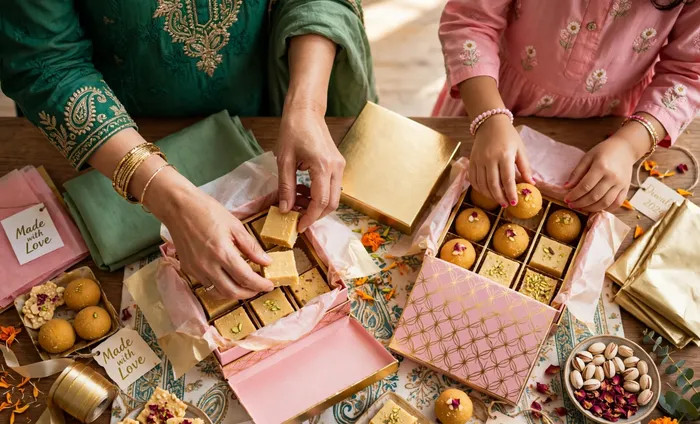
The writer remembers her own childhood in Isipingo, giving neighbours homemade sweets in beautifully packaged boxes.
THERE is a magical, unmistakable vibration that takes over the world as Diwali arrives. The crisp evening air suddenly carries the rich, warm scent of roasting cardamom, frying jalebis, and fresh decadence through the home.
I remember my own childhood in Isipingo, where I used to enjoy walking down the streets – offering neighbours homemade sweets in beautifully packaged boxes. No sweets were ever bought; all were made – with focused preparation through the week, kept in air-tight containers. We all knew well that those sweets were not to be touched or tasted until the morning of Diwali, when our sacred prayer was observed with a special offering to Their Lordships Sita and Rama.
As I reflect on those childhood memories, I now find that the energy was so much lighter back then. Nowadays (this being my personal observation), we find ourselves caught in a modern cycle of school, work and overall pressures that take away from the joy of celebration. The world seems heavier, with geopolitical crises – financial burdens that stem from that, rising unemployment and poverty, and gender-based violence that takes over our homes.
This year, while we celebrate the beautiful traditions outside, I want to invite you to pause and look within. Let’s ask a deeper question: What does it actually mean to truly welcome the light?
In ancient philosophy, Diwali isn’t just a historical event; it is a living, breathing metaphor for the human journey. The ultimate triumph of light over darkness doesn't happen out on the streets; it happens in the quiet, messy corners of our own hearts.
Neuro-Linguistic Programming (NLP) reminds us that the reality we experience is entirely shaped by the internal language we use. If our internal monologue is a constant stream of self-criticism, perfectionism, and unrealistic expectations, we are essentially keeping ourselves in the dark.
True Diwali begins with the realisation that you cannot pour from an empty cup, and you cannot light another diya if your own wick is completely burnt out. Self-love in this view isn't a luxury; it’s a sacred necessity. It means rewriting your internal code from scarcity to self-compassion. When we actively heal, accept and love ourselves, our inner flame stabilises and we naturally begin to warm the space around us.
Once that inner light is steady, the true spirit of giving naturally overflows into social responsibility. True prosperity is never about what we can accumulate; it is about what we can hold space for. When we look at any heaviness – we understand that reaching out to others with kindness and compassion – this helps personal healing and transformation.
Focused time to spend at an old-age or children’s home can not only make a profound difference to those you are visiting, but to you personally. Gifting food parcels to the local community in need (or even one or two families that you know of) will create a warmth in your heart that will uplift your personal celebration.
We cannot authentically celebrate the light, nor can we honour the divine feminine that lies at the very core of Hindu worship during Diwali, if we choose to look away from the deep shadows in our society. We have to talk about the silence that surrounds Gender-Based Violence (GBV).
Abuse thrives in isolation and secrecy. Language is power and the jokes we tolerate, the microaggressions we ignore and the systemic silences we maintain in our living rooms are the very scripts that normalise violence. Control is also a form of abuse – when a partner prevents one from visiting family to celebrate or withholds finances to buy a new outfit. We cannot tolerate disrespect and it is our duty to help protect one another (do not turn a blind eye to this).
This Diwali, let our highest form of worship be our active protection of one another. Let us use our voices to shatter the silence. Look around your family gatherings and your friend circles. Be the person who reaches out with love and kindness.
This year, let’s choose a different kind of brightness. Let’s put down the pressures of the external to focus on the internal. Instead, look into the mirror with kindness. Reach out to a neighbour with genuine compassion. Speak up for those who have been silenced.
This is also the most auspicious month of Kartik and on the very day of Diwali, Mother Yashoda bound Lord Damodar. This reminds us of the bounds of love – focusing on the divine being. Offer the diya with love and devotion, embracing the Lord as the central focus of your home and heart.
When we light our diyas this year, let them not just illuminate our porches but let them be a fierce, unshakeable promise to be the light of love, kindness and hope.
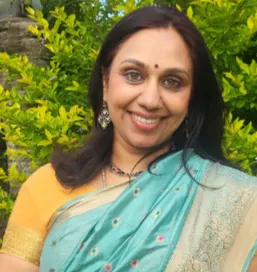
Krsangi Radhe is a former educator, certified NLP Practitioner, Timeline Therapist and mindset coach and founder of Sankalpa Coaching. Her work focuses on mindset, confidence, communication and empowering individuals to create meaningful change. She also serves as the Communications Director of ISKCON South Africa. Radhe is a talk show host on national radio. Visit her website www.sankalpa-coaching.co.za