Content share and bookmark
As jobs and business needs evolve, the Skills-First Framework for Action sets out how workers and employers can make better use of demonstrated skills.
When HSC Pipeline Engineering (HSC), a company specialising in pipeline infrastructure and related services, adopted new technologies as part of its digital transformation, a skills-first approach helped 33-year-old project coordinator Nelson Lai move into a new role – despite not having a traditional engineering background.
By learning to use utility mapping data and trial-hole information to plan pipe routes, Mr Lai helped improve project delivery timelines and budgeting. Recognising his new technical skills, HSC eventually created a hybrid project coordinator-engineer role for him.
HSC is one of several Singapore companies adopting skills-first practices. As artificial intelligence, automation and new business models reshape jobs and the skills they require, this approach places greater emphasis on what workers can do, alongside qualifications and experience.
On Oct 19, the Centre for Skills-First Practices (CSFP), part of the Institute for Adult Learning (IAL), launched the Skills-First Framework for Action (FfA). Acting Minister for Manpower and Senior Minister of State, Ministry of Digital Development and Information Jasmin Lau attended the event at the Sands Expo and Convention Centre.
BEHIND THE FRAMEWORK

FROM SKILLS DEVELOPMENT TO SKILLS IN ACTION
Singapore has made significant progress in lifelong learning and skills development. The FfA focuses on the next step: ensuring that skills are more consistently identified, developed, applied and recognised in career and workforce decisions.
Ms Dilys Boey, chief executive of SWDA, said the FfA builds on Singapore’s workforce and skills development ecosystem and culture of lifelong learning by shifting the focus from access to training to putting skills-first practices into action.
“The FfA provides a shared direction and practical ways to help the workforce navigate transitions with greater confidence,” she added. “SWDA is committed to working with our partners to turn these pilot ideas into scalable practices, strengthen career resilience and support business growth across Singapore.”
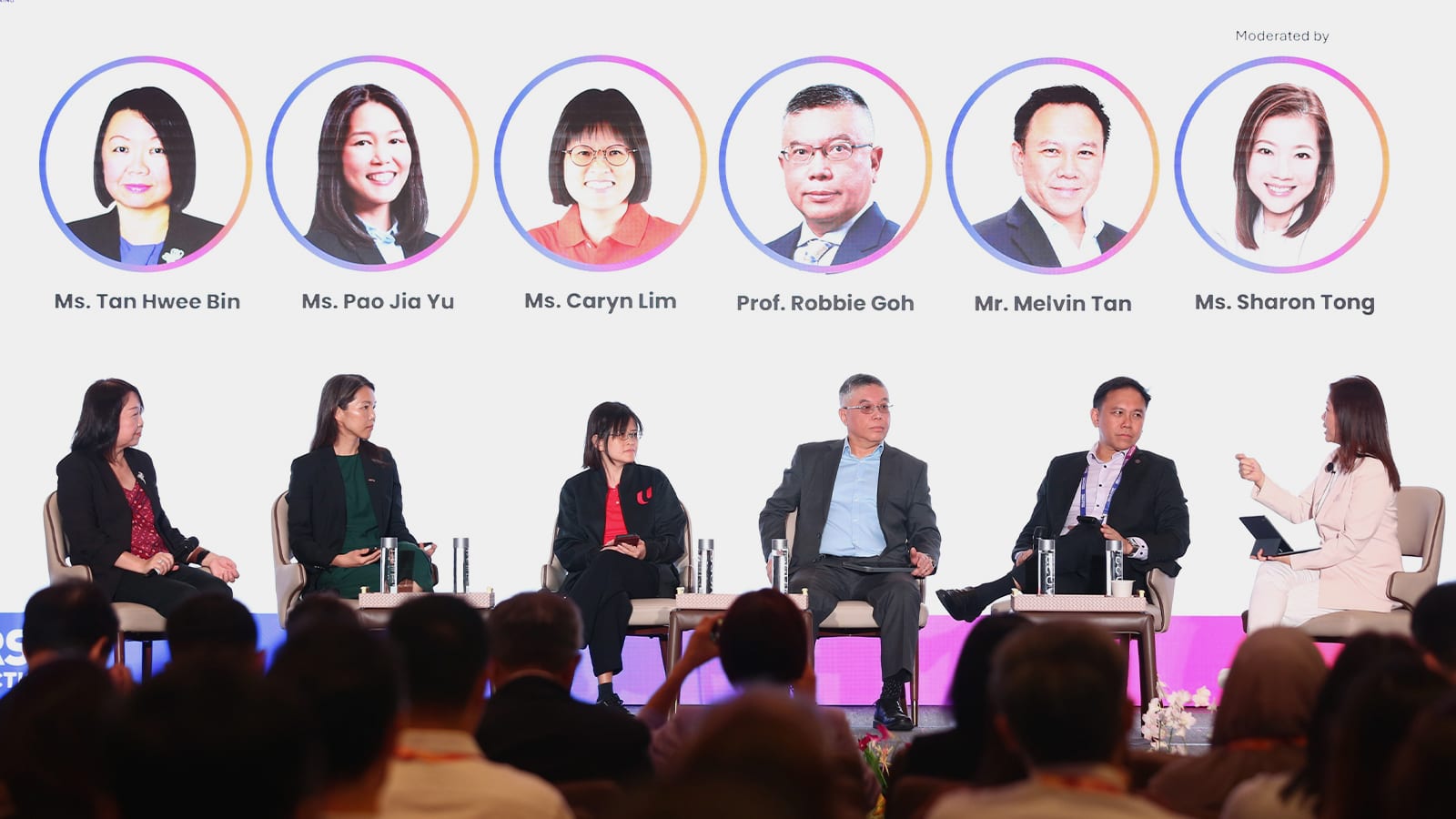 Representatives from NTUC, SNEF, SWDA, SBF and SUSS discuss ways to advance skills-first practices across Singapore’s workforce.
The FfA proposes 12 pilot ideas with three key shifts to drive the adoption of skills-first practices: making skills-first approaches a regular part of career and workforce decisions; embedding these practices into the systems, processes and infrastructure that shape such decisions; and creating more opportunities for employers, practitioners and ecosystem partners to develop and share the knowledge and capabilities needed to sustain skills-first adoption.
PILOT IDEAS FOR TESTING
Five highlights from the FfA’s 12 proposed ideas to advance skills-first practices:
1. Introduce recurring career and skills reviews
Encourages regular check-ins on skills and career goals throughout a person’s working life, prompting concrete learning or career actions and tracking follow-through rather than waiting for disruption.
2. Develop a skills-first enterprise transformation pathway
Helps companies, especially small-and medium-size enterprises, assess workforce needs and map capabilities to support job redesign and hiring, internal mobility and better use of skills
3. Build skills-first capability at point of workforce decisions
Equips managers and business owners to apply skills-first practices when making decisions on hiring, development, deployment and progression
4. Strengthen shared skills infrastructure for foresight and inclusion
Provides updated skills and labour market insights to help employers plan for workforce needs and support timely, targeted workforce transformation
5. Develop a skills-first observatory
Tracks the adoption of skills-first practices and examines their impact on individuals and enterprises outcomes
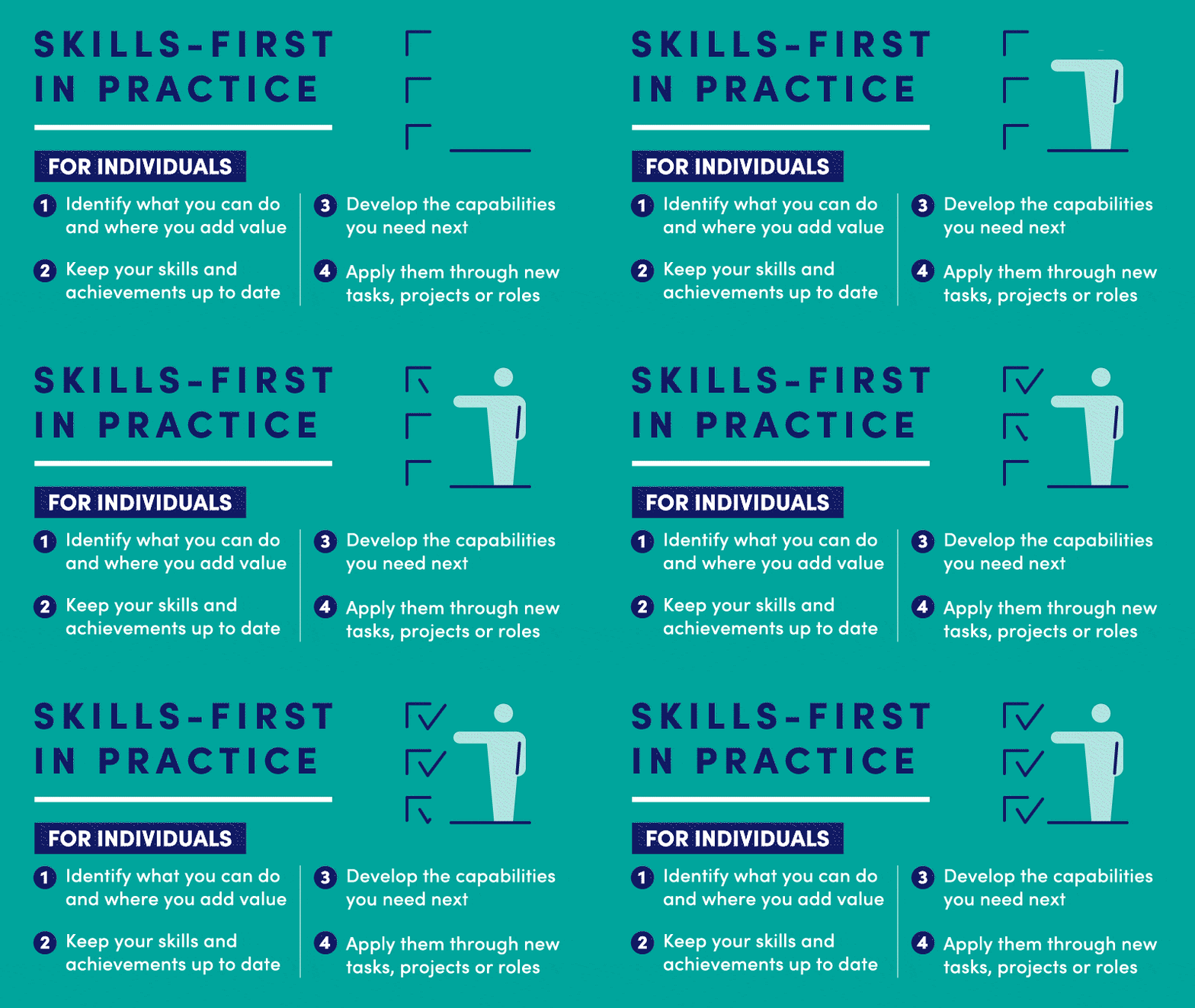
For individuals, the FfA sets out ways to pursue opportunities beyond those determined by formal qualifications. These include reviewing transferable skills and career plans, identifying new pathways and taking steps before disruption occurs. By understanding, developing and demonstrating their skills, individuals can make more informed choices about learning and their careers.
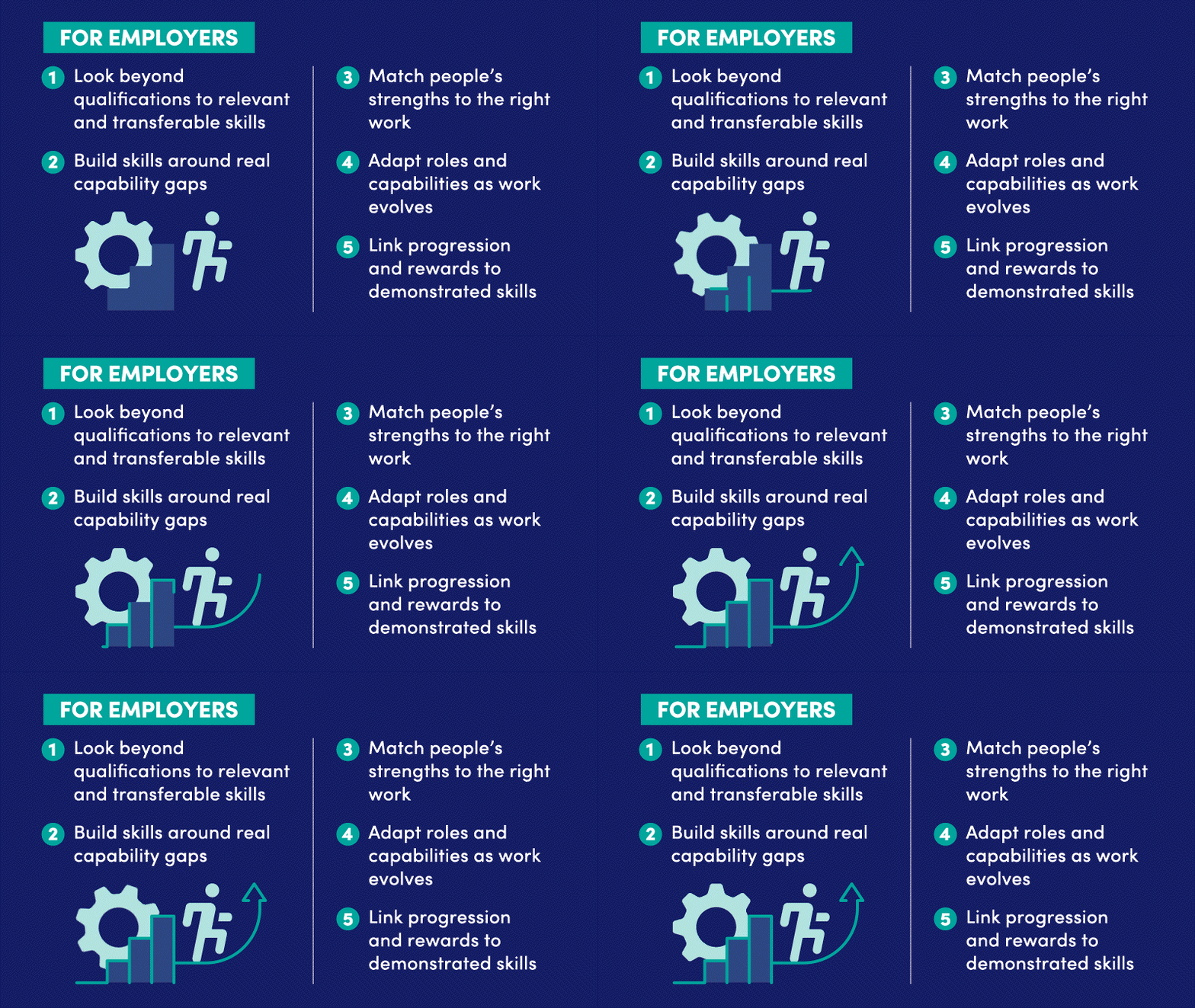
For employers, a skills-first approach extends beyond hiring to how people are developed, deployed and recognised, and how work is redesigned together with employees as business needs change.
By defining a new role as a set of competencies rather than a job title or specific qualifications, HSC was able to consider talent who might otherwise have been overlooked, including existing employees like Mr Lai.
Existing employees also bring institutional knowledge and transferable skills, said Mr Shane Shi, managing director at HSC. Looking within the company therefore gave HSC more options to meet its business needs quickly.

HSC created a role for Mr Lai in 2021 after he developed expertise in utility mapping. He was subsequently promoted to senior engineer in 2022 and assistant project manager in 2023.
Mr Lai now oversees a team of four to five engineers and distribution projects involving more than 20km of pipeline a year. The company also funded his Project Management Professional certification, which he completed in 2024.
His progression shows how demonstrated skills can open up opportunities before formal certification is obtained.

Since HSC began its workforce transformation, 11 employees have moved into redesigned or newly created roles based on demonstrated competencies. The company has also recorded operational gains. Since mid-2024, it has reduced the number of trial holes excavated by 30 per cent and freed up around 400 hours each year previously spent on monthly reporting, redirecting that time to billable work.
The FfA is intended as a starting point rather than as a fixed set of solutions. Its 12 pilot ideas will be tested with employers, unions, government agencies, education providers and industry partners, with the findings used to refine the ideas towards wider adoption.
CSFP will also develop the Skills-First Observatory to track the adoption of skills-first practices and examine how they relate to outcomes for individuals and enterprises.
 The Skills-First Framework for Action proposes ways for employers to recognise workers’ abilities beyond formal qualifications, says IAL executive director Terence Ho.
According to IAL executive director Associate Professor (Practice) Terence Ho, the real measure of skills-first practices will be how they shape everyday workplace decisions and individuals’ career growth.
He said: “As more organisations and individuals put skills-first into practice and share what works, we can build a society where skills open up opportunities for people and support business growth.”