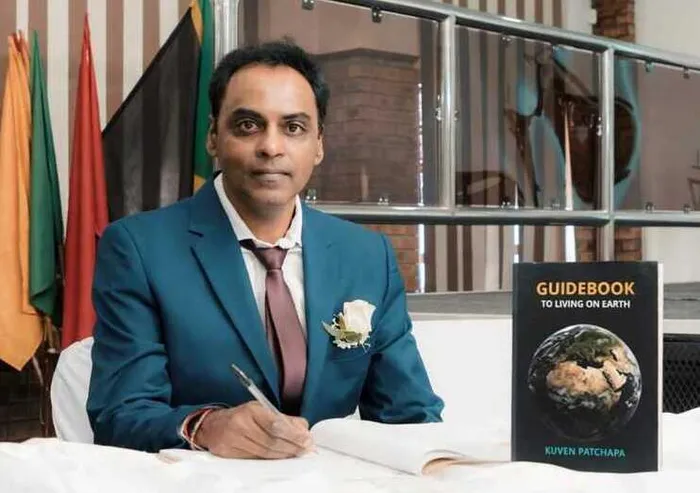
Through lessons on mindset, self-awareness and purposeful action, Kuven Patcharapa encourages individuals to recognise their potential, overcome limiting beliefs and take a more deliberate approach to shaping their lives.
Success is often measured by what people own, how much they earn or the positions that they hold. But South African author Kuven Patchapa believes that a fulfilling life begins with a different question: how well do we understand ourselves?
In his book, “Guidebook to Living on Earth”, he challenges readers to reconsider their relationship with wealth, personal growth and happiness, arguing that lasting change starts with the way people think and the goals they choose to pursue.
The self-improvement and practical philosophy book serves as a guide to personal development, encouraging readers to look beyond external expectations and recognise their own potential.
Its central message is that fulfilment and wealth creation should not be treated as distant possibilities but as goals that require self-awareness, focus and deliberate action.
For Patchapa, one of the biggest barriers to personal growth is the way that people view themselves and their ability to change.
“We cannot force someone to hear a message they are not ready to receive, but we must never underestimate the power of planting a seed,” he said.
He believes that mentors and self-development resources can help people begin their journey, but transformation requires an individual to value their own potential and feel worthy of change.
His advice is to find a mentor in the field that one hopes to pursue and establish clear goals. Writing those goals down, he says, provides a starting point for turning ambition into action.
Looking inward before looking outward
A recurring theme in the book is the importance of understanding oneself. Patchapa draws on the ancient philosophical principle of “Know thyself”, which encourages people to look beyond possessions, social roles and the expectations of others to understand their values and identity.
He argues that people often search externally for answers to questions about happiness and success without first examining their internal beliefs.
The book also explores the relationship between mindset and difficult circumstances. Patchapa acknowledges that financial pressure and unemployment are real challenges, but believes that individuals can develop a mental foundation that helps them navigate uncertainty.
He draws on the law of correspondence, a principle within his philosophical approach which suggests that the external world reflects a person's internal state.
“The important thing is awareness of these principles,” he said, explaining that people can experience difficult circumstances without allowing them to dominate their thinking.
Gratitude is one of the practices he recommends. This does not have to involve financial giving or material possessions. He suggests keeping a journal, reaching out to loved ones and finding lessons in difficult experiences.
Even when someone feels that they have little to offer, Patchapa says they can give their time, attention and encouragement.
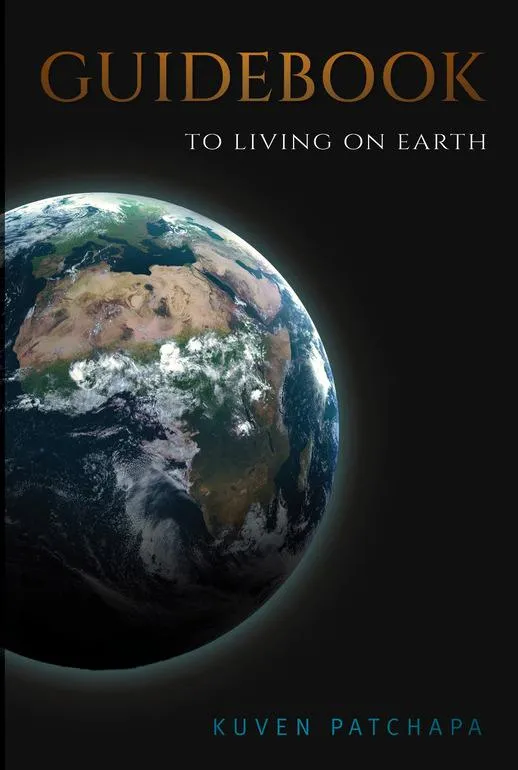
“Guidebook to Living on Earth” is a self-development and practical philosophy book that challenges readers to rethink success, wealth and personal fulfilment.
Redefining what success means
For Patchapa, success should not be confined to wealth, recognition or professional achievements. He draws inspiration from author Earl Nightingale's definition of success as “the progressive realisation of a worthy ideal or goal”.
He believes that the definition captures success as an ongoing process rather than a final destination.
“You do not have to wait until you arrive or finish a project to be successful. You are successful every day you make progress towards your target,” he explains.
This perspective encourages readers to identify what matters to them rather than measure their lives against society's expectations.
Money and recognition may follow, but they should not become the only measures of a meaningful life.
Small habits, lasting change
The author encourages readers to begin personal development through practical habits. One of his central recommendations is learning to live in the present moment, drawing on Eckhart Tolle's book “The Power of Now”.
Patchapa believes that paying attention to one's feelings throughout the day can help develop greater awareness. He also encourages readers to follow their interests and passions, referencing Joseph Campbell's advice to “follow your bliss”.
However, he stresses that awareness must be accompanied by action.
“Action is the only law that bridges the metaphysical world to the physical world,” he said.
For those who struggle to maintain momentum, Patchapa recommends approaching personal growth in stages. Just as people learn basic mathematics before tackling more complex concepts, he believes that self-development requires patience and consistent practice.
He also highlights the influence of repetition on the subconscious mind, encouraging readers to consider the messages they repeatedly expose themselves to and whether these support their goals.