A new European security alliance consisting of Scandinavian and Baltic countries as well as Poland, Turkey, Romania, and Bulgaria could soon be created, said former Ukrainian defence minister Oleksii Reznikov in an interview. He shared behind-the-scenes insights from negotiations with Moscow near the start of Russia’s full-scale invasion and how he negotiated more military support from Europe.
Some say Ukraine might hand over Donbas to Russia in exchange for Nato membership. Ukrainian president Volodymyr Zelensky said the day before yesterday that Americans had proposed this to him. But is this realistic?
This is a move which, based on negotiation theory, I would describe as the Harvard negotiation approach. Incidentally, one of US president Donald Trump’s envoys Steve Witkoff studied at Harvard.
At its seminars, students learn the term ‘poisoned pill’. It means that during complex negotiations, one side throws it, and when the other side picks it up, discussion about it begins. In reality, however, it is already poisoned.
All of a sudden, we start thinking about two things: whether Russia’s demand that Finland leave Nato is actually justified. And whether Ukraine is prepared to concede territory. This so-called concession, coming from the Russian side, conceals a provocation.
What do you mean exactly?
Either you hand over territory, or you will not be in Nato.
Imagine Zelensky says: “No, we will not join Nato.”
Ukrainians would say: “But we must join, because our constitution enshrines a strategic course towards full Nato membership.”
Zelensky would reply: “We are prepared to give up territory.”
Russia is changing lanes, which is dangerous. These are the Kremlin’s usual negotiation tactics: first, take a hardline position, then retreat.
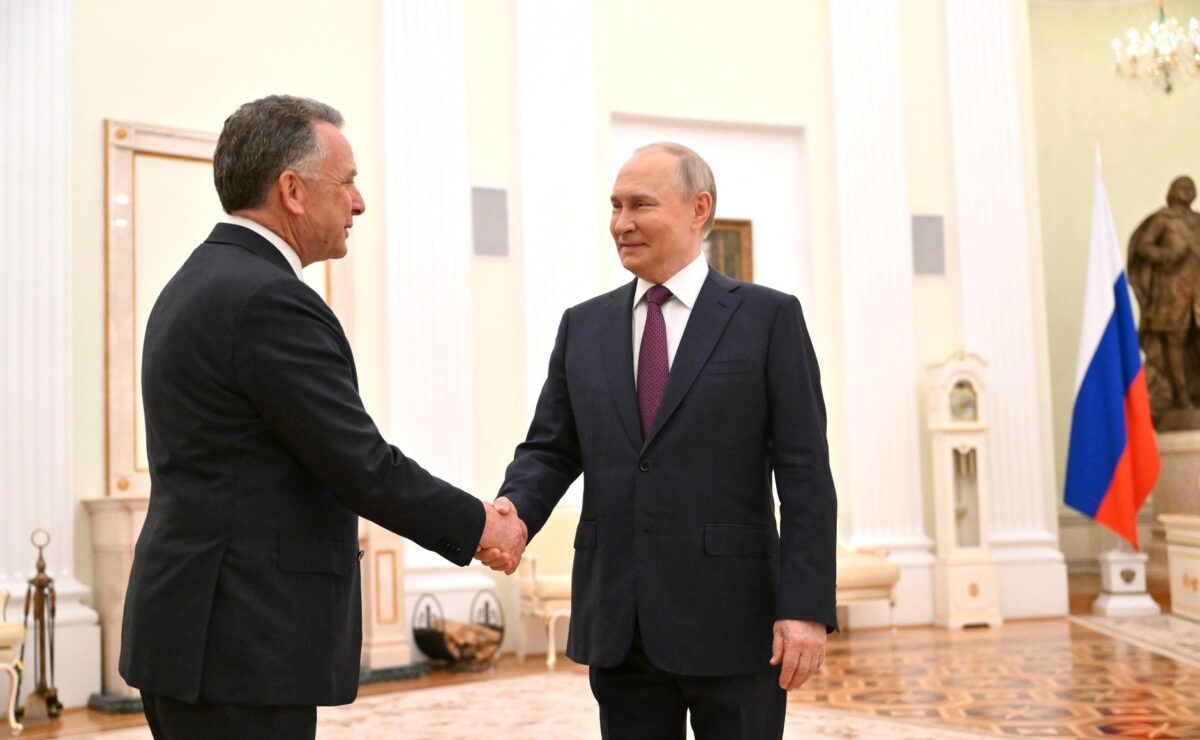 US negotiator Steve Witkoff and Russian president Vladimir Putin (Source: kremlin.ru)
Are Americans now on Russia’s side?
I would not put it that way. But I would recall the events of February 2025, when, a month after Trump’s inauguration, Zelensky visited the White House.
I watched that scandalous meeting closely for the entire 50 minutes, because I teach negotiation at university.
Trump said during the meeting that he is not one of the parties; he is a mediator who wants to settle this conflict. And I do not think his position has changed.
Earlier talks when Americans negotiated separately with the Russians and the Ukrainians is called a “caucus”, when the parties to a conflict sit in separate rooms.
And you run back and forth between them as the mediator …
Yes. It may appear that the Americans are more on Russia’s side, because they seem to give greater consideration to its arguments. But that is their strategy.
They think it is easier to persuade us Ukrainians, that we are in a weaker position.
But for the US side, the mere signing of a peace agreement would be a victory.
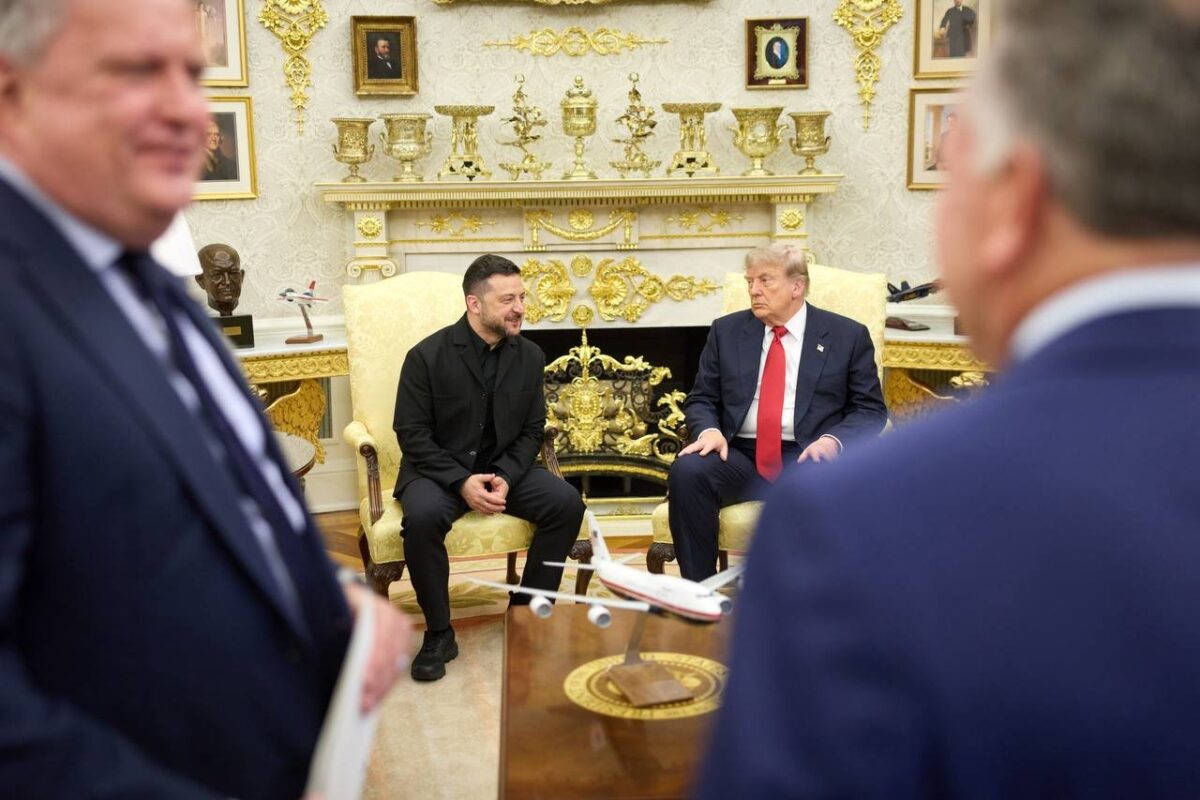 Zelensky was once scolded by his US counterpart in the Oval Office (Source: Zelenskiy official, Telegram)
Europe will presumably be involved in negotiations. It may be that an EU delegation is present rather than one individual, as was discussed at the EU summit in Dublin. Does that pose a problem?
Europe must be represented at the negotiating table, because its security interests are at stake.
And now the question: we are all used to saying Europe, Europe. But what actually is it?
Some understand it as the EU, with 27 member states. And the United Kingdom? And Norway? There are other countries that belong to Europe, such as Switzerland. They also have interests.
If we say it is, for example, the EU plus two, we can assume that one of the commissioners will be at the talks. The EU has an official foreign minister, Kaja Kallas.
It also has a defence commissioner Andrius Kubilius. And there is EU commission president Ursula von der Leyen.
All of them have an official mandate to represent the EU’s interests.
The negotiators chosen will more than likely be diplomats who know the Russian mentality well.
Read more
Europe’s mandate on Russia-Ukraine peace talks takes shape, as Putin escalates war
Would that include Kallas?
Why not? She is from a Baltic country, people who know how to speak with Russians. Ultimately, there will not be 10 people at the table, but two.
In December 2019, I was a member of president Zelensky’s delegation. The only meeting with Putin took place at the Élysée Palace then, with French president Emmanuel Macron acting as mediator.
Such high-level meetings take place when almost everything is already prepared — when trusted people have worked everything out and approved the proposals. Only when everything is ready do top leaders meet and bless the document, like a priest in a church.
A European negotiator is now being sought, and you previously said the appointee should know the Russian mentality. But is it also important that the negotiator is accepted by the Russians?
Putin takes notice of only two people in the world: his friend [Chinese president] Xi Jinping in Beijing and Trump.
The three of them think they can divide up the world, so they do not care at all who sits at the negotiating table as the [European] negotiator. Not at all.
Read more
Xi keen to look ‘neutral’ on Ukraine at Shenzhen summit, as China risks spoiling EU relations by helping Putin to wage war
Then comes another tier — the other heads of state with whom he negotiates.
But Putin does not sit at the negotiating table. [Kremlin aide] Vladimir Medinsky, [sovereign wealth fund CEO] Kirill Dmitriev, or someone else he has designated, who behave entirely professionally and properly.
Do Russia-Ukraine negotiations unfold as people expect them to?
The reality is different to what you see on TV. For example, in February 2022, four days after the full-scale invasion, talks were held in Belarus. The first meeting with the Russian delegation!
We met on the Pripyat River, at the hunting residence of Belarusian president Alexander Lukashenko.
The Russian delegation was led by Medinsky [now head of the Russian negotiating delegation and adviser to Putin]. The talks were followed by another round of talks in Belarus, with a fourth round in Istanbul.
The Russian delegation behaved entirely in accordance with diplomatic ethics and protocol. And there was no rudeness.
They treated us with absolute respect. And not only that: they addressed me by my first name and as Oleksii Yuriyovych.
Yet for some reason unknown to me, they addressed the head of our delegation [Davyd Heorhiyovych Arakhamia, chairman of the parliamentary group of the president’s Servant of the People party] as “Davyd”. Yet, they used my full name.
How do you expect things to go at new negotiations which will include Europeans?
I am convinced that the same happens when Russians meet our Ukrainian representatives. Russian negotiator Dmitriev is a businessman and certainly no thug.
Professional negotiators from Europe and Ukraine will not communicate with the Russians in an entirely easy and calm manner. But they will also certainly not behave rudely.
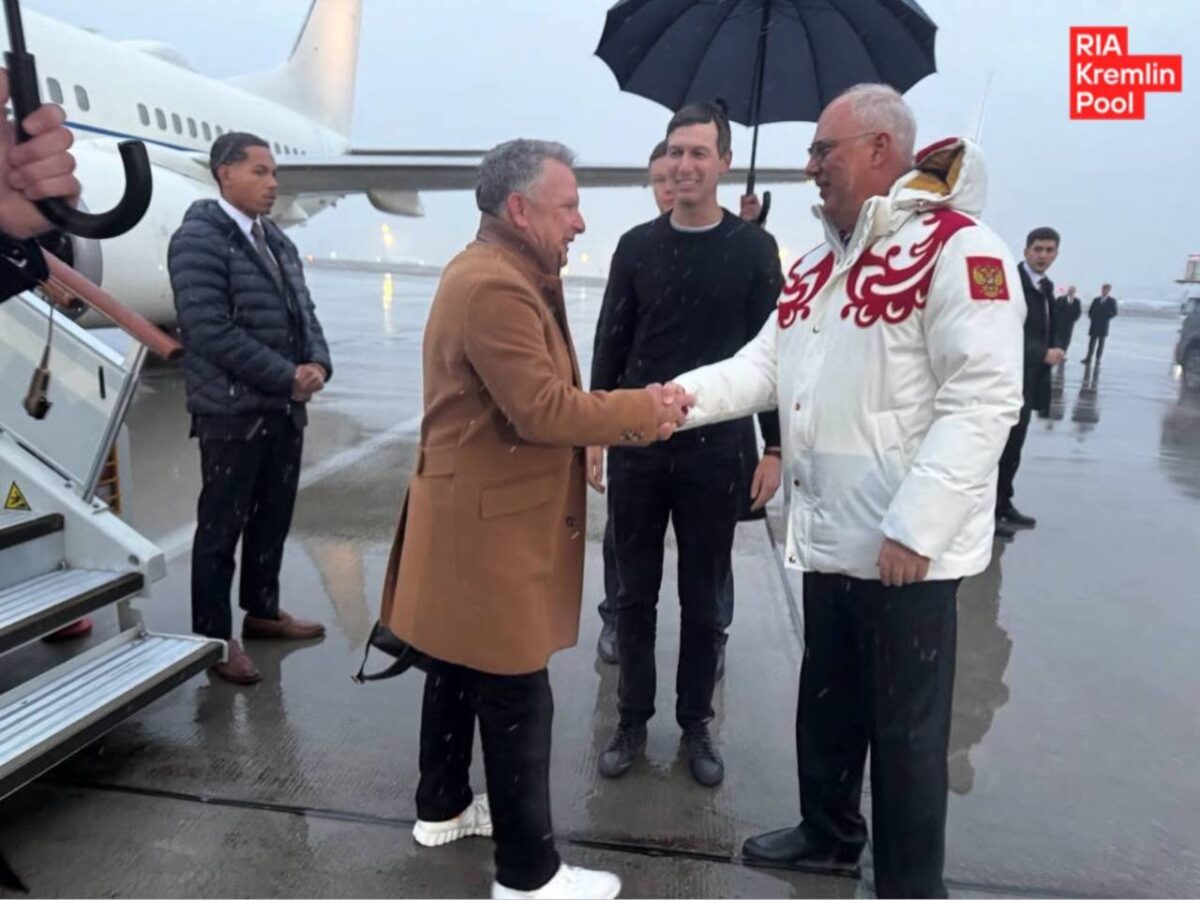 Russian president’s special envoy for foreign investment Kirill Dmitriev (right) welcomed US negotiators Witkoff and Kushner at Moscow airport in November (Source: RIA Kremlin ru, Telegram)
Will they shake hands?
Ah! That is quite a complicated question. I too faced such a challenge [in 2022]. Protocol dictated that we should shake hands, but you simply cannot offer them your hand.
It is incredibly difficult – an immensely complicated matter.
In Ukraine, there has been much discussion about the ombudsman, Dmytro Lubinets, shaking hands with his Russian counterpart, Yana Lantratova.
It is an unusual situation, but everyone must find their own way.
One fundamental thing must be understood: when you are a professional negotiator, you have to leave all your emotions in the next room.
After all, you have come here to work in the interest of whoever sent you. It is not about your emotions, but about agreeing a lasting peace in Ukraine’s interest. If you cannot do that, do not travel anywhere.
I too had such a dilemma. At a personal meeting, I told the Ukrainian president quite sincerely that I do not feel qualified as a negotiator.
He replied: “Oleksii, I understand you, but it is necessary. I feel the same way myself, but we need to resolve the issue of humanitarian corridors, to enable people to leave Mariupol, Berdiansk and occupied Volnovakha. And secondly, we must agree at least on an exchange of prisoners.”
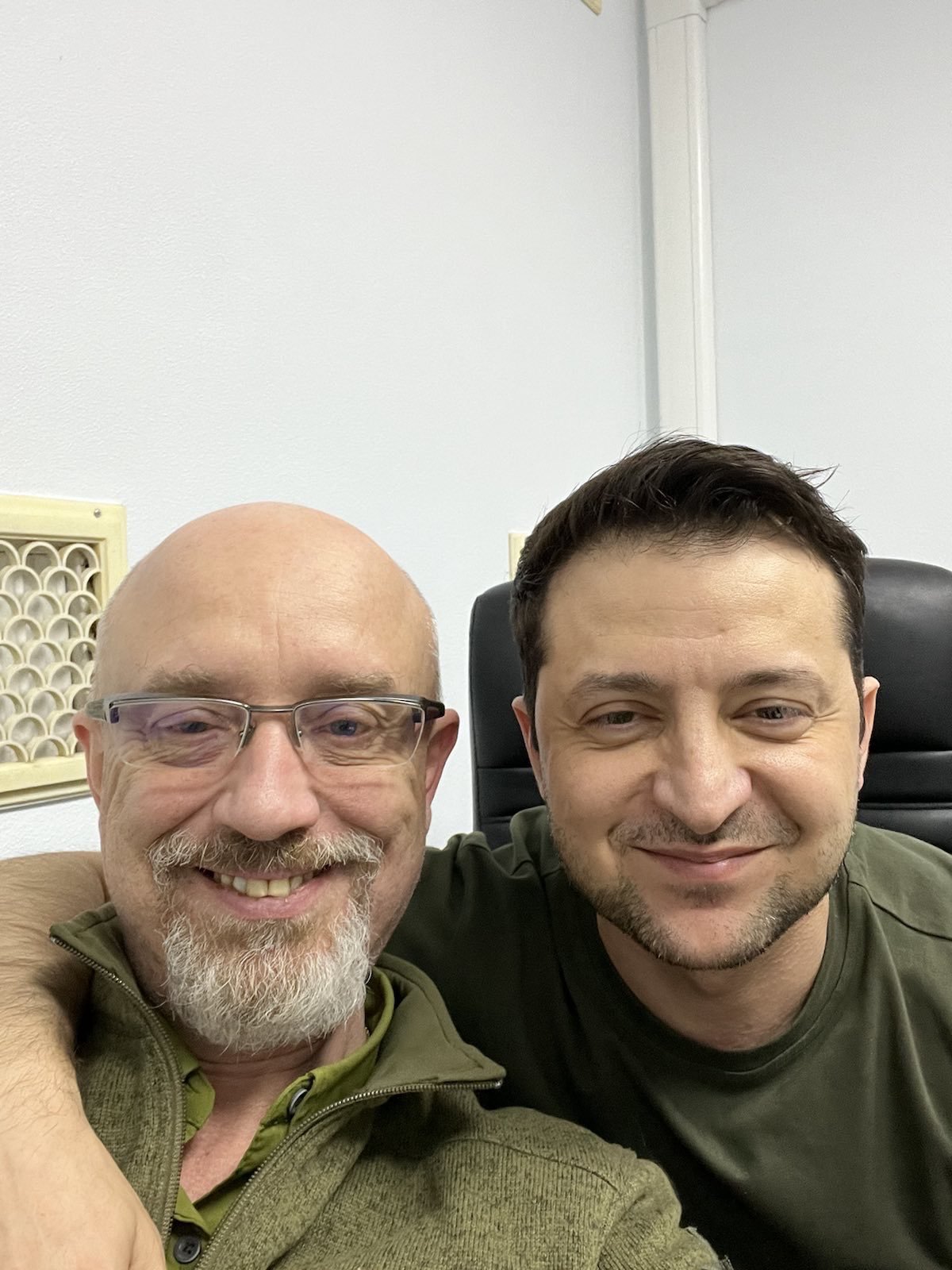 Reznikov with Zelensky at the beginning of Russia’s full-scale war. (Source: Oleksii Reznikov via X)
So I put all my emotions in my pocket and composed myself and said to myself: “You are a negotiator – you must bring people something positive.”
That is why I see no problem in how Europeans, Ukrainians, Russians, and Americans work together.
There will be no shouting matches at the table or behind closed doors. After all, such dramatic scenes tend to play out only in front of the cameras as a public relations exercise. Everyone wants to look like they’ve won.
And in such complex negotiations, agreements tend to be written in the format of constructive ambiguity. For instance, if you look at the Good Friday peace deal between Ireland and Britain, you will see that it was written in a way that allowed the Irish Republican Army to stand before its own people and say: “We won.”
Any agreement that is reached now will be with constructive ambiguity where each side will interpret it as it likes.
But I think the most important aspect of peace talks is whether negotiators will have direct contact with their bosses. At Belarus talks, those sitting at the table did not have direct contact.
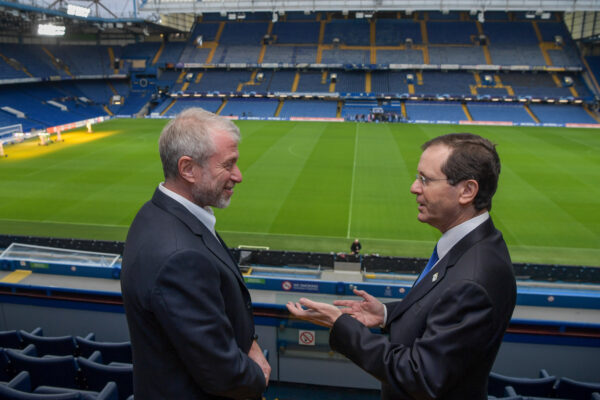
There was one person who had access to the top, but he was not even sitting at the table. [Russian oligarch] Roman Abramovich was busy walking around, observing from a distance and taking coffee breaks.
Read more
Top Russian oligarch Abramovich loses third EU lawsuit, as Brussels plans tougher blacklist
It is said that Ukraine was pushed to reject Russia’s peace terms in 2022 in Istanbul by then-British prime minister Boris Johnson.
That suggestion is “durnia” – the Ukrainian word for nonsense. Nobody can influence Zelensky, he makes his own decisions. Johnson’s opinion carried great weight with our president, but not in terms of a dilemma over whether to keep fighting or not.
Personally, I think the main reason for the sharp change in the negotiation process with the Russians was not Johnson, but Bucha. When the Russians withdrew from Bucha, Irpin, and Hostomel, they appeared to have shown some goodwill.
The very next day, I went there with interior minister Denys Monastyrskyi and general Oleksandr Syrskyi, who was then responsible for the defence of Kyiv. I saw with my own eyes the bodies of the dead with their hands tied behind their backs.
It was horrific. That was when we understood that we were fighting an army of rapists, murderers and looters. It was this emotional shock that changed our view on negotiating, not Johnson.
Did you always believe you would manage this war?
In December 2021, the US Senate Committee on Foreign Relations held a closed session. The Pentagon and US intelligence presented a report on the possibility of a Russian invasion of Ukraine.
The information then leaked to the press. Everyone kept saying that in the event of an invasion, Kyiv would fall within three days. Ukraine came to resemble someone given a terminal diagnosis. A neighbour brings them flowers and oranges, but will not invest money or anything else in them. After all, they will die tomorrow.
That was why they supplied us only with weapons suited to guerrilla warfare and street fighting — their maximum range was two and a half kilometres. Everyone thought Ukrainians would fight as guerrillas. But the Ukrainian people disagreed.
Indeed, Ukraine has endured, while Europe does not provide enough aid. As defence minister, what annoyed you most about dealing with Europe?