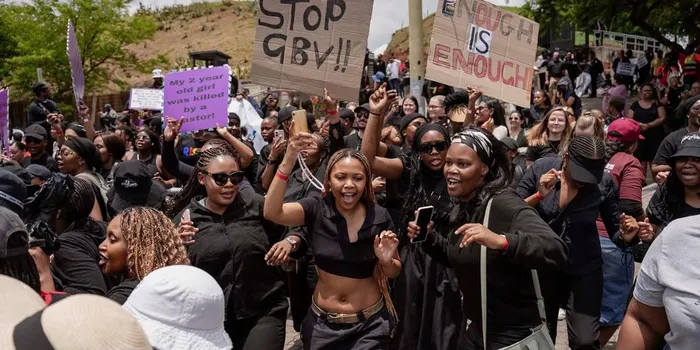
The national GBVF council has yet to secure offices, appoint a CEO or open a bank account. Advocacy groups say the delays raise serious questions about accountability and funding.
The National Council on Gender-Based Violence and Femicide is struggling to get off the ground, with its chairperson warning Parliament that it is unlikely to meet the deadline for a costed national action plan. Advocacy organisations have condemned the delays, raising concerns that millions of rands allocated to the fight against GBVF could remain unspent.
Appointed in August, the council has yet to secure offices, appoint a chief executive officer or open a bank account, MPs heard this week.
Chairperson Dr Lebogang Manthibe Ramalepe told Parliament’s portfolio committee on women, youth and people with disabilities on Tuesday that the council was unlikely to meet the legally prescribed deadline to draft a costed action plan to address gender-based violence and femicide.
The lack of progress has drawn sharp criticism from organisations working to combat GBVF, with concerns that administrative delays are undermining the country’s response to the crisis.
People Opposing Women Abuse (POWA) described the situation as “deeply disturbing”.
POWA executive director Fatima Shaik said the organisation was profoundly disappointed, saddened and angered by revelations that the council remained largely non-operational months after its members were appointed.
“This is not simply an administrative delay; it is a failure of leadership, planning and accountability in a country where women continue to be raped, assaulted and murdered.”
Shaik said South Africa had spent years developing legislation, policies, strategies and institutional structures to address GBVF. The council was established because the country’s response had been fragmented, poorly coordinated and inadequately accountable, she said.
“How is it possible that the government had years to prepare for this institution, yet failed to ensure that the basic arrangements necessary for it to function were in place? Who is being held accountable?”
Shaik said the possibility that millions of rands allocated to the council could remain unspent and be returned to the National Treasury was particularly disturbing.
“At POWA, we know what chronic underfunding looks like. Frontline organisations struggle to keep shelters open, pay professional staff, and provide counselling, legal assistance, and other essential services. We are expected to respond immediately to women in crisis, often with funding that does not cover the actual cost of providing these services.”
She said it would be difficult to explain to organisations struggling to keep the lights on that millions allocated to the national GBVF response might go unspent because the institution responsible could not function.
Organisations warn of consequences if funds go unspent
Sonke Gender Justice’s Mpiwa Mangwiro-Tsanga also expressed concern that money intended to fight GBVF could be returned to the National Treasury.
Mangwiro-Tsanga described the challenges facing the council as deeply concerning, particularly in a country where GBVF continues to ravage communities and claim lives.
She said the possibility that much-needed financial resources could be returned because of institutional and operational failures was particularly distressing.
“It would be a slap in the face to survivors, communities and everyone working tirelessly to end GBVF.”
She also called on the government to urgently address the challenges and ensure that resources committed to fighting GBVF translated into tangible action and results.
Oxfam’s Dharini Rangasamy described GBVF as a critical issue that needed to be addressed within the country’s context.
“Whilst we are unaware of the causes for the delay in the GBVF Council activities, we do know that there are many other organisations and individuals who will be at the forefront during the upcoming 16 Days of Activism.
“Creating awareness and lobbying for a coordinated and impactful GBV response focusing on strengthening the existing structures should be an immediate mandate for the Council to address when they are up and running,” she said.
The concerns come as organisations continue to call for a more coordinated response to gender-based violence. Activists have previously raised concerns about the scale of GBVF, while the annual 16 Days of Activism campaign is due to begin on November 25.
Gender equality commission calls for Treasury to account
Reacting to the council’s presentation in Parliament, Commission for Gender Equality (CGE) acting chairperson Mfundo Nomvungu said it was a travesty of justice that the country was experiencing such a situation.
Nomvungu pointed to the National Treasury, saying it should be more amenable to properly resourcing institutions such as the council, the CGE and the Department of Women, Youth and People with Disabilities.
“I think we mustn’t, as the CGE, the department, and other institutions, more, especially you as the portfolio committee, you shouldn't accept that there is no money to properly resource these institutions that you are overseeing…”
Nomvungu suggested that the committee invite the National Treasury to explain its formula for allocating resources to institutions mandated to fight GBVF.
The concerns over funding also come amid ongoing criticism of gaps in support for survivors. Reports of rape survivors being turned away when police stations run out of forensic kits have highlighted the challenges facing frontline services.
Organisations have also called for stronger coordination and accountability across the response to gender-based violence, including improved support for survivors and more effective action by state institutions.