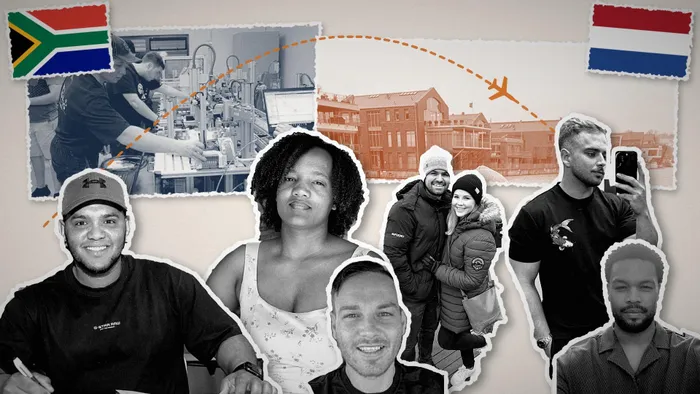
From Kempton Park to Groningen, Mitchells Plain to Rotterdam, South Africans share what it took to start over in the Netherlands
Donovan Cilliers was 25 when he sold his house in Kempton Park, resigned from a well-paid job and moved halfway across the world to the Netherlands.
And so, just over 9,000km away from home, after landing a job with the Dutch national railway company, he found himself starting a new chapter as a bachelor in a foreign country, braving its bitterly cold winters and learning a language he had never spoken before.
“You always doubt yourself, like is this going to work out?” he said, describing the thoughts that went through his mind at the time.
“I had given up everything to come to the Netherlands, with no guarantee that it would work out.”
But, luckily for him, the gamble paid off.
Now 28, Cilliers is a foreman at Nederlandse Spoorwegen (NS), overseeing 28 men who service and repair trains.
Somewhere along the way, Cilliers fell in love with a Dutch woman, and the couple is now house-hunting and hoping to start a family next year.
Cilliers is among more than 42,000 South African-born people who have made the Netherlands their home over the past 16 years, including students, professionals, skilled workers and those joining loved ones.
For those with technical skills, the Netherlands has become an increasingly attractive destination, with recruitment agencies offering SA engineers, millwrights and automation specialists euro salaries, relocation assistance and long-term career opportunities.
And depending on who you ask, this presents a challenge for SA manufacturers, who need skilled workers to modernise the sector but are struggling to retain experienced technical staff.
Such is the appeal of the Netherlands that annual arrivals of South Africans have quadrupled since 2010, rising from 948 to 3,863 last year, according to Statistics Netherlands.
At the start of 2026, 51,078 people of SA origin lived in the Netherlands, including children born there to SA parents.

SA’s ambassador to the Netherlands, Vusi Madonsela, says South Africans are highly regarded across the Dutch economy.
SA’s ambassador to the Netherlands, Vusi Madonsela, said South Africans were highly regarded across the Dutch economy, particularly in IT, engineering, financial services, accounting and academia.
He told IOL Dutch employers appreciated the skills, training and strong work ethic South Africans brought to the job.
“We recognise that the recruitment of skilled professionals abroad can, in certain circumstances, place additional pressure on the domestic labour market,” Madonsela said.
“However, it also creates invaluable international networks and professional linkages that can ultimately benefit SA.
“When these individuals eventually return to SA, they bring with them valuable knowledge and experience.”
The Netherlands, home to about 18.2 million people, is the second most densely populated country in the European Union after Malta.
Amsterdam is its capital, but the government sits in The Hague.
The Hague is also home to the International Court of Justice, where Pretoria brought its genocide case against Israel in December 2023 over Israel’s war on Gaza, which has left hundreds of thousands of Palestinians dead.
The court ordered Israel in 2024 to take all measures to prevent acts of genocide in Gaza and to stop its offensive on Rafah, and in March 2026 the Netherlands itself intervened in the case.
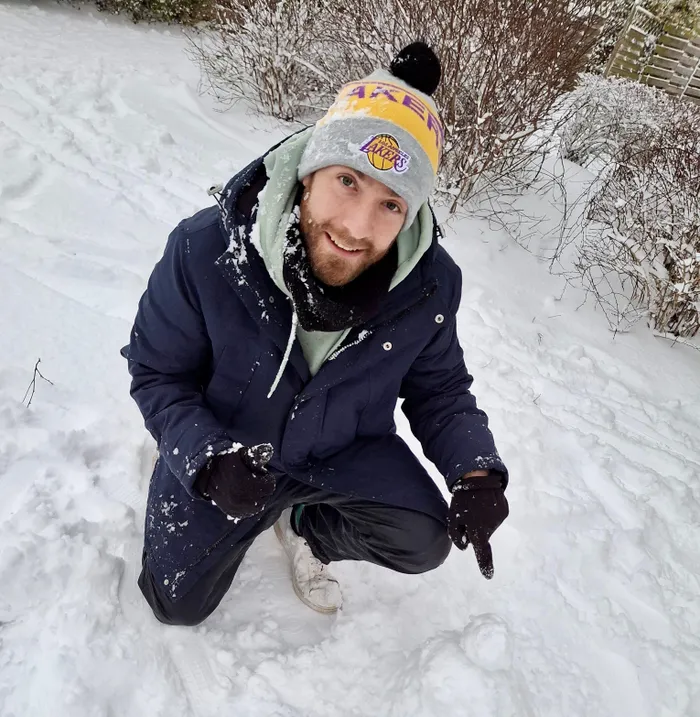
Cold feet? Not for Donovan Cilliers, 28, who left Kempton Park for a new life in the Netherlands.
Cilliers told IOL by phone that the Eindhoven agency Research Square, which placed him at NS in September 2023, handled almost all his paperwork.
He said his highly skilled migrant visa came through within about four weeks of the offer.
Despite receiving a €1,500 onboarding bonus, worth just over R27,800, the move was costly.
He said he had to pay a month’s rent upfront, as well as a deposit equal to two months’ rent.
“For the first month I paid over R115,000, that was the most costly,” he said.
The average monthly rent in the Dutch private rental market was €1,914, about R35,200, between July and September this year, according to rental platform Pararius.
At work, his team’s target was to service three trains and get them back on the tracks each day.
He said he earned about four times what he had in SA, though he paid 43% tax and still had to file an annual tax return with the SA Revenue Service.
Cilliers said the biggest difference was the sense of safety, explaining that back in Kempton Park, even the slightest noise at night would wake him in a cold sweat, fearing someone had broken in.
“Since I’ve been in the Netherlands, I’ve never locked my front door," he said.
"I’ve been on holiday for a month and my front door was wide open the entire time."
Dutch police recorded about 22,000 house break-ins in 2024, down from 71,000 a decade earlier, while SA police recorded 34,075 burglaries at homes in just three months that year, from April to June.

Signed, sealed, delivered. Pictured here is Zandre Blaauw, 31, who left the Western Cape for a job in the Netherlands.
Zandre Blaauw, 31, was working as a machinist in Paarl when a recruitment agency contacted him on LinkedIn about three years ago.
“For me, it was like 'hey, what is this? Is this a scam?'.
"And I thought that because, you know, it [looked] too good to be true,” Blaauw said.
The process took three to four months, and the agency told him when to resign.
He flew out on August 28, 2023, met five other newly-arrived South Africans in Groningen that first week, and spent a while on his own before his girlfriend and their two sons joined him.
His elder son, who turned seven on Monday, the same day as his father, spoke only Afrikaans when he started school.
“At first it was challenging," Blaauw, who also spoke to IOL by phone, said.
"But he loves going to school because the kids are so friendly, the teachers are friendly."
School ends at 2.15pm, and at 11.45am on Fridays, which to Blaauw shows how seriously the Dutch take family time.
“Your private life is your private life. Work life is your work life,” he said.
He said the hardest part was having no family nearby — especially when something goes wrong at home — and flights are expensive.
Medical insurance is a must, he said, and fuel was so expensive that they drive to Germany to fill up.
Many people in the Netherlands avoid the cost altogether by cycling, which is how the Dutch get to work, school and the shops.
He understands Dutch well, he said, but his tongue still "does a backflip" when he speaks it.
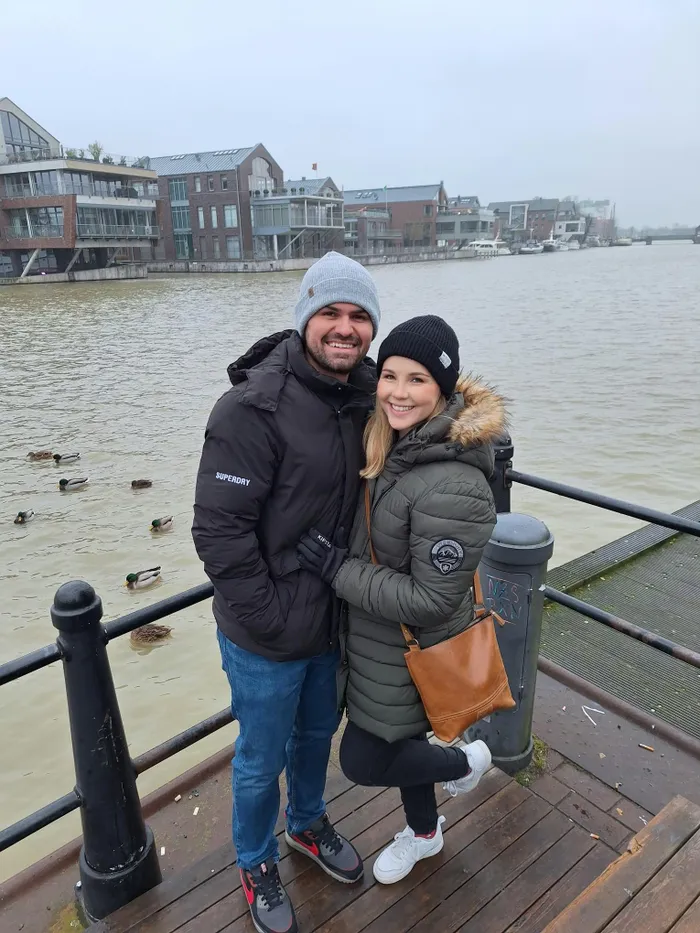
Beanies, puffer jackets and big smiles for former Isidingo actress Lee Boshoff, right, and her husband, Leander, three years into their Dutch adventure.
Former Isidingo actress Lee Boshoff made the move to the Netherlands more than three years ago, after her husband, Leander, was offered a job there.
She worked full-time as an actor on stage and screen and taught at a drama school, while Leander ran a locomotive engineering company.
“I loved every second and every moment of it and I wouldn’t have traded it for anything in the world,” she said.
The couple had talked about emigrating for years, but once they settled on the Netherlands, events moved quickly.
Within three months, they had packed up their lives and moved to the Netherlands, often referred to as the Cycling Nation.
As the partner of a highly skilled migrant, Boshoff was entitled to work in the Netherlands, but it took her two and a half years to find a job.
She works at a company in Rotterdam, where all but one of her colleagues are Dutch.
“They keep on saying 'yes, everyone here speaks English', but I disagree with that statement,” she said.
The couple video-call their families three or four times a week and gather with other South Africans for big rugby matches.
She said she hoped to return to acting and advised other partners to get out of the house, seek out South African communities and learn the local language as quickly as possible.
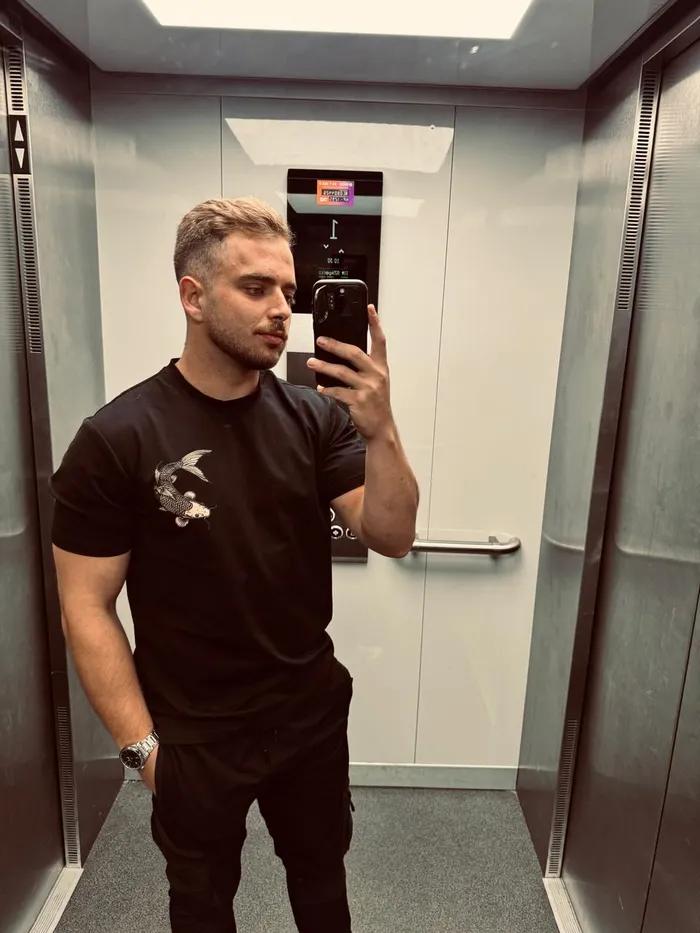
On the way up, millwright Ryan Ras, 26, from Pretoria North, has swapped South Africa for a new life in the Netherlands.
Ryan Ras, 26, spends his days in Winkel, North Holland, building giant amphibious machines that suck mud and soil out of riverbeds.
The millwright grew up in a full house in Pretoria North, raised by his grandparents and an aunt and uncle who he said were all like parents to him.
“When I was younger, I used to work with my granddad in the backyard stripping some old computers and taking the copper for scrap metal,” Ras said.
“That’s where I started learning to love working with my hands and taking things apart.”
The dream of working overseas came from two family friends he called his uncles, one of whom worked for the UN in Switzerland, and when they died, they left him money to study.
He said he used the money to train as a millwright at Sol-Tech, an artisan college in Pretoria, and then moved from job to job, from Meyerton to Rosslyn and Hartbeespoort, before landing at a packhouse in Robertson in the Western Cape.
“That is where I learnt most of my experience and how to figure out something in a tight position,” he said.
Recruitment agency Xelvin first approached him three years earlier, but advised him to return once he had qualified and gained some experience.
It was only after his grandfather passed away that he found the push to finally make the move.
He said many people had doubted the offer was genuine because it included a €3,000 relocation allowance, worth about R55,200, which he had to repay over two years.
He landed in the Netherlands on March 11 and now lives in Alkmaar, and the welcome was not a warm one.
“First impression was it is cold, it is wet, and the people just go on about their lives,” he said.
The Dutch even have a saying for anyone who complains about the rain, "je bent niet van suiker", which means you are not made of sugar, so you won’t melt.
When the loneliness became too much, he would head to the nearest bar, strike up conversations with strangers and, in time, made friends.
He had been warned that the Dutch were unfriendly, but found the opposite to be true.
At work, the day is broken up by several coffee breaks, and he said the Dutch called a cup of coffee a “bakkie”, the word South Africans use for a pickup truck.
He said Afrikaans made Dutch easy to pick up, with a few pitfalls.
Ras, who shares videos about his life in the Netherlands, said he planned to stay for five to 10 years, grow his social media business and perhaps buy a house in the Western Cape one day.
“I can plan, but God already has a plan,” he said.
Bryan Ford, 31, had spent years working rotating shifts as a millwright at a SA company, with little prospect of moving up the ranks, when he fired off about 100 job applications in the middle of the night in January 2023.
“I just couldn’t do it anymore,” Ford, of Richards Bay, KwaZulu-Natal, said.
By 8am, a Dutch recruitment company had replied, and by April, he and his fiancée were living in the Netherlands.
He had thought the offer was a scam at first, until a friend who was already living in the Netherlands vouched for the agency.
Because the couple had been engaged but not yet married, they had to prove their relationship to the Dutch authorities with their Facebook and Instagram profiles, emails and WhatsApp messages.
Ford now works as an electrical and instrumentation technician in the Groningen area, and said that while the start had been tough, he had no regrets.
“You could say like the last year and a half, I have zero regrets of coming here,” he said.
“And besides the family and all that stuff, of course, we prefer not to go back."

Software developer Fawaaz Dassie followed his heart from Mitchells Plain to the Netherlands, and says it’s one of the best decisions of his life
Not everyone who makes the move is an artisan.
Fawaaz Dassie, 32, a software developer from Mitchells Plain, followed his heart.