DBS separately named independent director Anthony Lim as its next chairman, succeeding Peter Seah after 16 years.
A DBS company signage is seen on a building facade at the central business district in Singapore on Mar 14, 2025. (File photo: AFP/Roslan Rahman)
A DBS company signage is seen on a building facade at the central business district in Singapore on Mar 14, 2025. (File photo: AFP/Roslan Rahman)
SINGAPORE: DBS Group, Singapore's biggest bank, reported a 5 per cent fall in third-quarter net profit on Thursday (Nov 5), missing market expectations as weaker trading income weighed on earnings amid heightened global uncertainty.
Net profit for the July-to-September quarter fell to S$2.81 billion (US$2.20 billion) from a year earlier, below the S$2.90 billion average forecast of four analysts surveyed by LSEG.
DBS also announced that independent director Anthony Lim will succeed Peter Seah as chairman on Jan 1, 2027, as part of a planned leadership renewal.
Mr Seah, who has chaired the bank for 16 years, will retire on Dec 31 before taking on a one-year appointment as senior advisor, DBS said in a separate media release.
CNA Games
 Guess Word
Crack the word, one row at a time
 Buzzword
Create words using the given letters
 Mini Sudoku
Tiny puzzle, mighty brain teaser
 Mini Crossword
Small grid, big challenge
 Word Search
Spot as many words as you can
Show More
Show Less
The profit decline came despite resilient wealth management and fee income, as volatile financial markets and rising global risks weighed on the bank's performance.
DBS, Southeast Asia's largest lender by assets, said markets trading income plunged 65 per cent year-on-year to S$152 million, citing "unfavourable equity market conditions".
Its net interest margin, a key measure of lending profitability, narrowed by 9 basis points from a year earlier to 1.87 per cent.
The weaker results come as Singapore's banks navigate a more challenging operating environment, with surging global bond yields, a sell-off in technology stocks and the ongoing Middle East conflict adding to market volatility.
The decline underscores how surging global bond yields, a rout in high-flying technology stocks last quarter and the ongoing Middle East conflict are beginning to bite into Singapore lenders' earnings after strong wealth management momentum cushioned their bottom lines in the first half.
These pressures have begun to weigh on lenders' earnings, following a strong first half supported by robust wealth management activity.
"While the global economy has remained resilient, the outlook has become more uncertain," DBS CEO Tan Su Shan said in a statement.
"As we enter 2027, we will stay nimble to capture opportunities while prudently managing risks."

WEALTH MANAGEMENT A BRIGHT SPOT
Despite the weaker trading performance, DBS continued to benefit from Asia's growing wealth management market.
Asia's ongoing wealth boom continued to bolster the earnings of Singapore's largest lender.
For the quarter, wealth management fees rose 9 per cent from a high base a year ago to S$864 million, supported by growth in assets under management.
Transaction services fees recorded a new high, while loan-related and card fees similarly increased, taking its net fee income up an annual 6 per cent to S$1.43 billion.
For its 2027 outlook, DBS said it expects total income to rise in the mid-single-digit range, assuming two more US Federal Reserve rate hikes by the end of next year, alongside a gradual rise in domestic interest rates and the Singapore dollar.
The "structural growth" in wealth management is also expected to continue, the bank said.
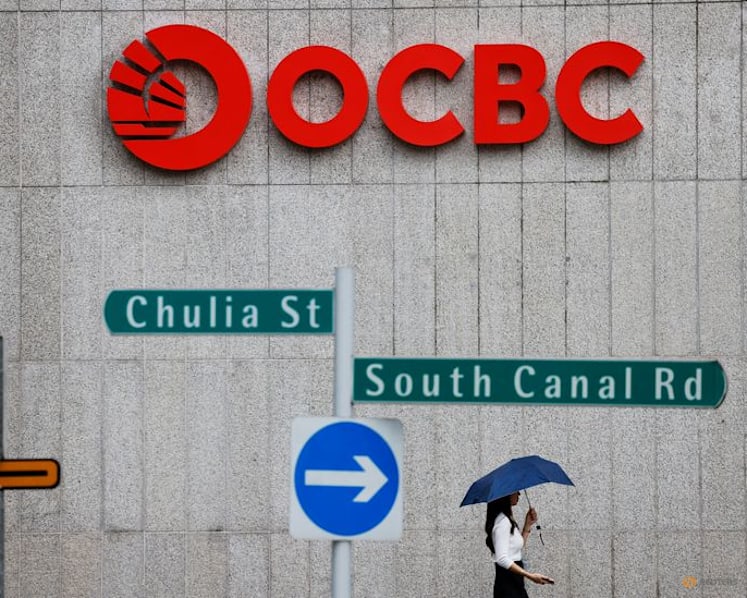
DBS is the second of Singapore's three local banks to report its third-quarter earnings, following UOB on Wednesday. OCBC has yet to release its results.
UOB reported a third-quarter net profit of S$1.3 billion, while net interest income held steady at S$2.3 billion from the previous quarter as continued loan growth helped offset margin pressures.
The bank's net fee income rose 19 per cent year-on-year to a record S$733 million, driven by growth in wealth, cards and loan-related activities. Customer-related treasury income also reached a new high.
UOB's total expenses fell 4 per cent quarter-on-quarter to S$1.6 billion, while its non-performing loan ratio stood at 1.5 per cent.
Week in Review

Our chief editor shares analysis and picks of the week's biggest news every Saturday.