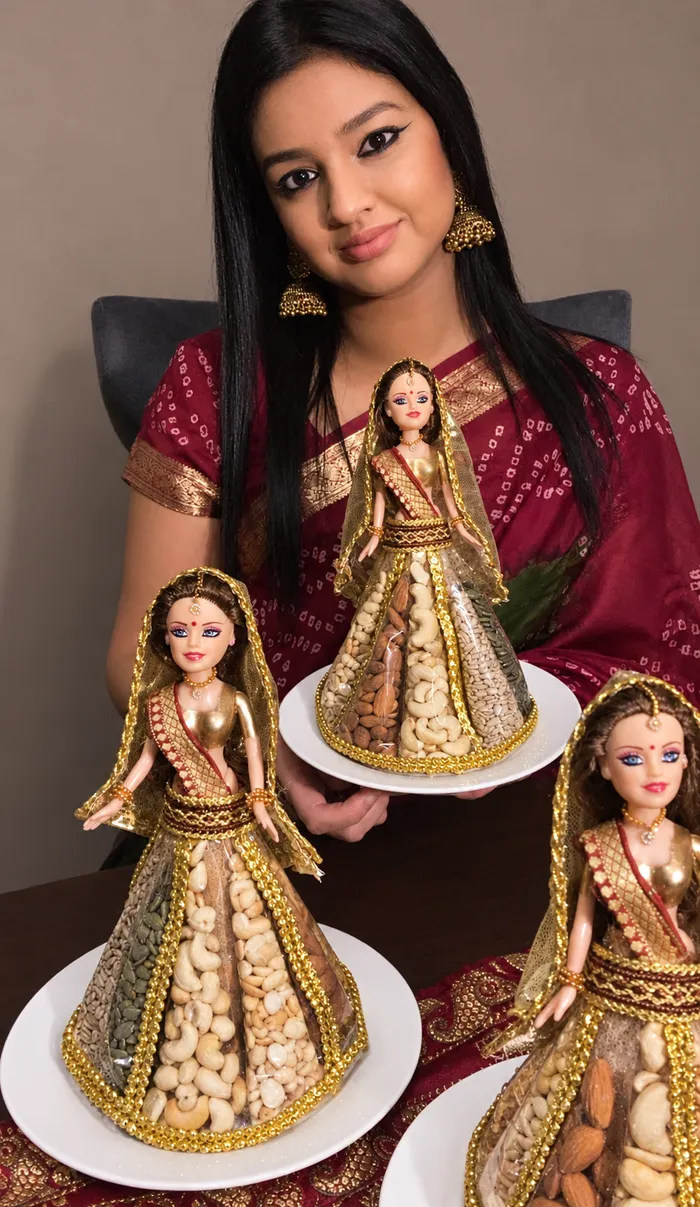
Devina Haripersad getting creative with the Diwali dolls that she will be handing out as her healthy Diwali parcel this year.
GAUTENG resident Devina Haripersad has transformed ordinary dolls into traditionally dressed Indian women adorned with colourful skirts made from mehndi cone sleeves filled with nuts, seeds and savoury snacks.
The engineering journalist said she enjoyed finding new ways to make her annual Diwali gifts special, putting thought and effort into creating something different for her family each year.
“This year, I wanted to find a creative way to incorporate healthier snack options into our Diwali celebrations without losing the excitement and joy of receiving a beautifully presented gift. I eventually found the right inspiration on Instagram,” said Haripersad.
She said she purchased five inexpensive dolls and set about giving them a traditional Indian makeover, combining handmade clothing and jewellery.
The dolls’ elaborate skirts were made using transparent cellophane mehndi cones filled with peanuts, cashew nuts, sunflower seeds, pumpkin seeds, almonds, chevda and sev.
Arranged together, the cones create the flared silhouette and rich texture of a traditional Indian lehenga.
“The idea was to create something that would be beautiful to look at while encouraging a selection of healthier (snack) choices.”
With the concept in mind, Haripersad began preparing in advance to give herself enough time to bring her vision to life.
“I started early this year because I knew the process would take time, and I wanted to enjoy making the dolls without rushing. So I made it a part of my creative time when I generally do crafts - a weekend hobby of mine.”
Every detail was carefully assembled by hand.
Haripersad began by painting bindis on the dolls and enhancing their eye makeup to give them a more traditional Indian appearance.
She also tackled their unruly hair, soaking it in fabric softener to make it easier to manage before smoothing it into traditional plaits.
Haripersad shiny organza fabric to make their dupattas, and the scarves traditionally draped over the head or shoulders.
Beads and cotton were fashioned into jewellery, completing their festive attire.
The final touch was assembling the snack-filled mehndi cones into the dolls’ voluminous skirts.
“Each part required patience, but I enjoyed watching the dolls gradually take shape. It was rewarding to see how much I could change an ordinary toy with a little imagination and some handmade details.”
For Haripersad, the idea also reflects a personal effort to bring balance to the kitchen counters that often become laden with the abundance of sweet treats that families receive from so many loved ones.
She acknowledged that “exchanging sweetmeats” was a cherished tradition, but to avoid over indulgence, she decided to create a healthy option.
“The joys of our culture and traditions don't have to revolve around sugar.”
Haripersad said fruit, nuts and seeds have long been part of Indian food traditions. Her intention was not to introduce a new way of celebrating Diwali, but to incorporate these familiar foods more often as Indian families worked on reducing their sugar intake.
She plans to gift the five dolls to the grandchildren of her late mother, Sharla, and her mother's four sisters, as the dolls’ beauty and traditional countenance reminded her of her mother and aunts.
She said that they were a generation of women in her life who played an important role in shaping her love for Diwali, and she wanted to honour that.
"I hope the recipients enjoy the creativity behind them. I know my five-year-old niece Anvika will love it, and seeing her associate the excitement with this traditional festival will be so rewarding to me,” she said.