TEHRAN - Autumn is one of the most inviting times to travel across Iran. As summer heat gives way to cooler days, the country’s landscapes begin to change, from the forests of the Caspian region to the deserts of the central plateau and the warm shores of the Persian Gulf.
The season also offers a quieter side of travel. With the summer holidays over, many destinations see fewer domestic visitors, although popular sites can remain busy on weekends. Autumn is a good time to explore Iran’s natural attractions at a more leisurely pace, whether on a forest walk, a desert excursion or a journey through rural communities.
Here is a selection of seven destinations that showcase the country’s varied autumn scenery.
Mesr Desert, golden sands and quiet horizons
Situated in Isfahan province, Mesr is one of Iran’s best-known desert destinations. Its sweeping dunes, open horizons and striking contrasts between sand and salt flats make it a compelling place to experience the country’s arid landscapes.
The surrounding region has several attractions, including Takht-e Arous, Bayazeh village and Namak-Khor Lake. The salt flats, marked by polygonal patterns, offer a different landscape from the rolling sand dunes. Mesr also attracts adventure enthusiasts, particularly those interested in off-road driving, although its routes require caution and appropriate vehicles.
Summer temperatures can make exploring the desert uncomfortable. Autumn brings more favorable conditions, allowing visitors to walk across the dunes, photograph the landscape and spend time outdoors. The cooler weather is also suitable for overnight stays, though desert nights can be considerably colder than the daytime.
Mesr lies about 600 kilometers from Tehran and roughly 200 kilometers from Isfahan. Travelers from the capital can reach the area via Semnan and Jandaq.
For those seeking a break from urban life, Mesr offers a chance to experience the quiet and expansive beauty of Iran’s desert country.
Olsabelangah, a mountain village above the clouds
Olsabelangah, a mountain village in Gilan province, is known for its green meadows, wooden houses and sweeping views of the surrounding hills. Located about 25 kilometers south of Masal and 50 kilometers west of Rasht, it stands at an elevation of approximately 1,489 meters.
The village is especially appealing when clouds drift across the valleys, creating the impression of a sea of clouds beneath the surrounding heights. In autumn, the changing vegetation and occasional mist lend the landscape a different character from its lush summer appearance.
Olsabelangah has a distinctive rural setting. Construction is restricted under the supervision of natural resources authorities, helping preserve the area’s landscape. The village is not connected to the national electricity grid and relies on generators and solar panels. Water comes from local springs.
After midnight, the village becomes particularly quiet. Visitors staying overnight may find a flashlight useful when walking around after dark. Local honey and dairy products are among the items travelers can purchase.
The journey from Masal follows a mountainous road for approximately 25 kilometers. The drive, with its views of hills and valleys, is part of the experience. Olsabelangah is a worthwhile choice for travelers looking to spend time in the highlands of northern Iran.
Alangdarreh Forest, an autumn palette near Gorgan
Five kilometers southwest of Gorgan, the capital of Golestan province, Alangdarreh Forest Park is one of northern Iran’s most attractive natural destinations. Its extensive tree cover, winding paths and recreational facilities make it popular with families, hikers and cyclists throughout the year.
Autumn, however, gives the forest a particularly striking appearance. Green foliage gradually gives way to yellow, orange and brown, creating a colorful canopy over the walking trails. Fallen leaves collect along the paths, while cool air and occasional rain add to the atmosphere.
The park offers several ways to enjoy the landscape. Visitors can hike, cycle, picnic or simply take a leisurely walk beneath the trees. Facilities include a health trail, bicycle stations, playgrounds and sports areas.
Alangdarreh’s proximity to Gorgan makes it convenient for travelers who want to experience the autumn colors without committing to a long journey into the countryside. It is also a useful starting point for exploring other attractions in Golestan province.
For travelers coming from Tehran, the journey to Gorgan can be made through northern Iran’s scenic roads. The Haraz route is one option, passing through several towns and cities along the way.
A visit to Alangdarreh offers a simple but rewarding autumn experience: a forest walk, fresh air and the changing colors of northern Iran.
Kish Island, autumn sunshine on the Persian Gulf
While northern Iran’s forests become cooler and more colorful in autumn, Kish Island offers a warmer alternative. Located in Hormozgan province in the Persian Gulf, the island is among Iran’s most popular tourist destinations, known for its beaches, shopping centers, recreational facilities and historical attractions.
Autumn is an appealing time to visit because the island’s intense summer heat begins to ease. The coastal environment becomes more comfortable for outdoor activities, and visitors can enjoy beach walks, sightseeing and shopping without the exhausting temperatures of summer.
Water-based recreation is another attraction. Sea clubs on Kish offer various activities, including water sports and marine entertainment. During early autumn, conditions may still be suitable for swimming, although the weather can vary and occasional rainfall may disrupt outdoor plans.
The island also has historical and natural attractions, giving visitors reasons to explore beyond its beaches and shopping areas. A trip can combine leisure with sightseeing, making Kish an appealing destination for couples, families and travelers looking for a change of scenery.
Autumn on Kish differs considerably from the season in northern and central Iran. The island generally remains warm, providing a welcome escape for those who prefer mild weather and coastal landscapes.
Travelers planning to reach Kish by car from Tehran face a long road journey through central and southern Iran. The final leg involves boarding a ferry at Bandar Lengeh or Bandar Charak. Those taking their vehicles should check ferry schedules and transport arrangements before departure.
Kish offers a different interpretation of autumn travel in Iran, with sunshine, beaches and recreational activities replacing forest walks and mountain scenery.
Yush, a rural retreat in the Alborz Mountains
Nestled on the slopes of the Alborz Mountains in Mazandaran province, Yush is best known as the birthplace of Nima Yushij, the poet widely regarded as the father of modern Persian poetry.
His ancestral house is the village’s principal historical attraction and draws visitors interested in Persian literature. Yet Yush has more to offer than its literary heritage. Surrounded by mountains, gardens and a river, the village provides a peaceful rural setting that becomes particularly attractive during autumn.
As the season progresses, the trees change color, adding shades of yellow and orange to the landscape. The gardens and river bring a softer contrast to the mountainous surroundings, while the village’s quieter atmosphere makes it an appealing place to escape the bustle of Tehran.
A visit to Yush can easily combine a look at Nima Yushij’s house with a walk through the village and its surrounding countryside. For those interested in rural tourism, the experience offers a glimpse of life in a mountain settlement in northern Iran.
Yush is approximately a three-hour drive from Tehran, depending on traffic and road conditions. The Chalus road is a scenic option, although the journey may take longer. Its winding mountain roads and changing views make the drive an attraction in its own right.
For travelers interested in literature, nature and rural landscapes, Yush is a destination where cultural heritage and autumn scenery come together.
Nayband Village, a green oasis in the desert
In the arid landscapes of South Khorasan province, Nayband village stands out for its greenery. Located approximately 225 kilometers south of Tabas along the Tabas-Kerman road, the settlement is surrounded by desert terrain but sustained by springs and traditional water channels.
Unlike many desert villages, Nayband has extensive gardens and cultivated land. Citrus trees, palms, wheat, barley, legumes and vegetables are grown in the surrounding fields, creating a striking contrast with the dry landscape beyond the settlement.
The presence of water has played an important role in the village’s development. Springs in the Rostam and Zardgah areas, along with traditional water systems, have helped support agriculture and rural life.
The village’s distinctive scenery reflects the relationship between its residents and the surrounding environment. Gardens and cultivated plots occupy the available land, while the desert mountains form a dramatic backdrop.
Autumn is a favorable time to visit Nayband, as temperatures become more comfortable for exploring the settlement and its surroundings. The season also offers an opportunity to appreciate the village’s agricultural landscape and the contrast between cultivated greenery and the arid terrain.
Nayband is an appealing destination for travelers interested in discovering less familiar parts of Iran. Its location along the Tabas-Kerman route makes it suitable for those exploring central and southeastern Iran.
To reach the village, visitors can travel south from Tabas along the Tabas-Kerman road, passing Khorit, Dehukh and Zenowghan before taking the road to Nayband.
For travelers seeking a different kind of autumn destination, Nayband offers an experience shaped by desert geography, traditional agriculture and rural life.
Near Shahroud in Semnan province, the Cloud Forest, known locally as Jangal-e Abr, is one of Iran’s distinctive natural attractions. Its mountainous terrain, dense vegetation and frequent cloud formations create a landscape unlike the surrounding arid regions.
The forest is particularly known for the clouds that move across its hills and valleys, sometimes enveloping the woodland in mist. The combination of forest cover, mountain scenery and shifting weather makes it an appealing destination for nature lovers and photographers.
Autumn adds another dimension to the landscape. The changing foliage brings seasonal colors to the trees, while cooler temperatures make walking and exploring more comfortable than during the summer months.
Visitors can enjoy nature walks and take in views of the surrounding hills and valleys. The forest’s misty atmosphere also offers opportunities for photography, particularly when clouds move through the trees.
However, conditions in the mountainous area can change quickly. Rain, fog and lower temperatures are possible, so visitors should prepare accordingly and take care when exploring the trails.
Jangal-e Abr is a worthwhile destination for travelers exploring Shahroud and Semnan province. Its forested landscape offers a striking contrast to the region’s deserts and dry plains.
For those interested in Iran’s natural diversity, the Cloud Forest provides an opportunity to experience a different side of the country.
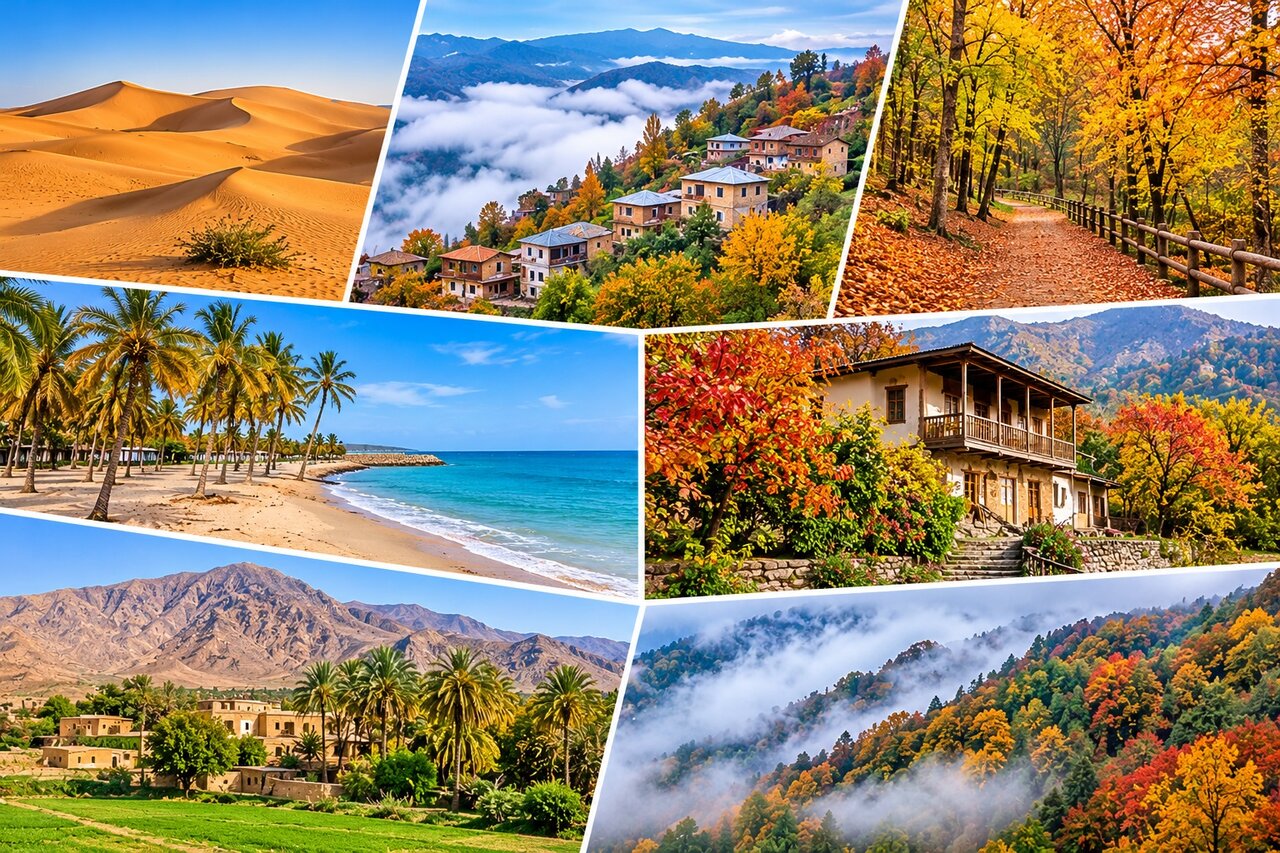
PHOTO: From top left, Mesr Desert in Isfahan province, Olsabelangah village in Gilan province and Alangdarreh Forest in Golestan province; Kish Island in Hormozgan province and Yush village in Mazandaran province; Nayband village in South Khorasan province and Jangal-e Abr (Cloud Forest) in Semnan province. The destinations offer a glimpse of Iran’s diverse landscapes during autumn.